
Tax Exemption on Donations to an NGO in Nepal
Nepal's donation deduction was raised from Rs 100,000 to Rs 300,000 from FY 2083/84 — but it is still capped at 5 percent of adjusted taxable income, and still only applies to organisations the Inland Revenue Department has approved. How to check, and what a usable receipt looks like.
In this article (6)
If you give money to an NGO in Nepal and want it to reduce your tax, two things decide what you get back. The first is the ceiling: under Section 12 of the Income Tax Act 2058, the most you can subtract from your taxable income in a year is Rs 300,000 or 5 percent of your adjusted taxable income, whichever is lower. The second is the recipient: the deduction only exists if the organisation has been approved as tax-exempt by the Inland Revenue Department. Registration at a District Administration Office is not the same thing, and plenty of small, genuine, hard-working organisations in Nepal do not hold that approval.
Most pages you will find on this subject still quote Rs 100,000. That figure was correct until last year. The Finance Act 2083, published in the Nepal Gazette on 2083.03.30, amended Section 12(2) and tripled the cash ceiling from one lakh to three lakh with effect from fiscal year 2083/84. The 5 percent ceiling was left untouched, which matters more than the headline, as the arithmetic below shows.
What Section 12 actually allows
The text of Section 12 says a person may claim to subtract a donation or gift given to "an organisation entitled to tax exemption approved by the Department", and that the amount deductible shall not exceed the stated ceiling or five percent of adjusted taxable income, whichever is the lesser. Two riders are worth knowing.
| Where the money goes | Deductible? | Ceiling |
|---|---|---|
| Organisation with Department-approved tax-exempt status | Yes, Section 12 | Rs 300,000 or 5% of adjusted taxable income, whichever is lower |
| Registered NGO without that approval | No | — |
| Prime Minister's Disaster Relief Fund / Reconstruction Fund | Yes, Section 12B | No ceiling stated in the section |
| Company CSR spending required by prevailing law | Yes, new Section 12घ from FY 2083/84 | 1% of total taxable income |
The first rider is Section 12B, which lets a person deduct any amount contributed to the Prime Minister's disaster relief and reconstruction funds, with no cap written into the section. The second is that the Government may, by Gazette notification, allow a full or partial deduction for a specified purpose in a special situation. Neither of these is a general route around the Section 12 limit.
Why the 5 percent line, not the three lakh line, is the one that binds
Work it through. If your adjusted taxable income for the year is Rs 1,200,000, five percent is Rs 60,000 — so Rs 60,000 is your maximum deduction, no matter how much you give. To reach the new Rs 300,000 ceiling you need adjusted taxable income of Rs 6,000,000 or more. For almost every salaried donor in Nepal, the percentage is the real limit and the three lakh figure never comes into play.
One more thing donors regularly misread: a deduction reduces taxable income, not tax. A Rs 20,000 deduction does not save you Rs 20,000. It saves you Rs 20,000 multiplied by whatever marginal rate you sit at. Your accountant or your nearest Inland Revenue Office can tell you that figure for your own slab; this page cannot.
The approval almost nobody checks
Section 2 of the Income Tax Act defines an organisation entitled to exemption as a social, religious, educational or benevolent organisation of a public nature established without profit motive. But the status is not automatic on registration. An organisation applies separately to the Inland Revenue Department, and under Rule 3 of the Income Tax Rules 2059 it files its registration certificate, its constitution, its PAN certificate and, where applicable, audit reports; the Department examines these before issuing a tax exemption certificate, which then has to be renewed. Separately, every registered NGO — exempt or not — must still file an annual income tax return with the IRD.
So a charity can be entirely legitimate — properly registered, renewed, audited, affiliated to the Social Welfare Council — and still not give you a Section 12 deduction, because it never applied for or never renewed that one certificate. That is not a scandal. It is a paperwork fact, and it is the single thing a donor should ask about before assuming a tax benefit.
How to ask, in one message
- "Does your organisation hold a tax exemption certificate from the Inland Revenue Department under the Income Tax Act 2058? If yes, please send a scan and your PAN number."
- Check the name on the certificate matches the name on the bank account you are about to pay into.
- Check the renewal is current for the running fiscal year, not an expired one from three years ago.
- If the answer is no, decide on the merits of the work. Give anyway if you believe in it — just do not budget for a deduction you will not get.
These sit alongside the broader checks in our guide on what to check before donating to a charity in Nepal, and the Nepali-language version, नेपालमा दान कुन संस्थालाई दिने.
What a donation receipt from an NGO in Nepal should contain
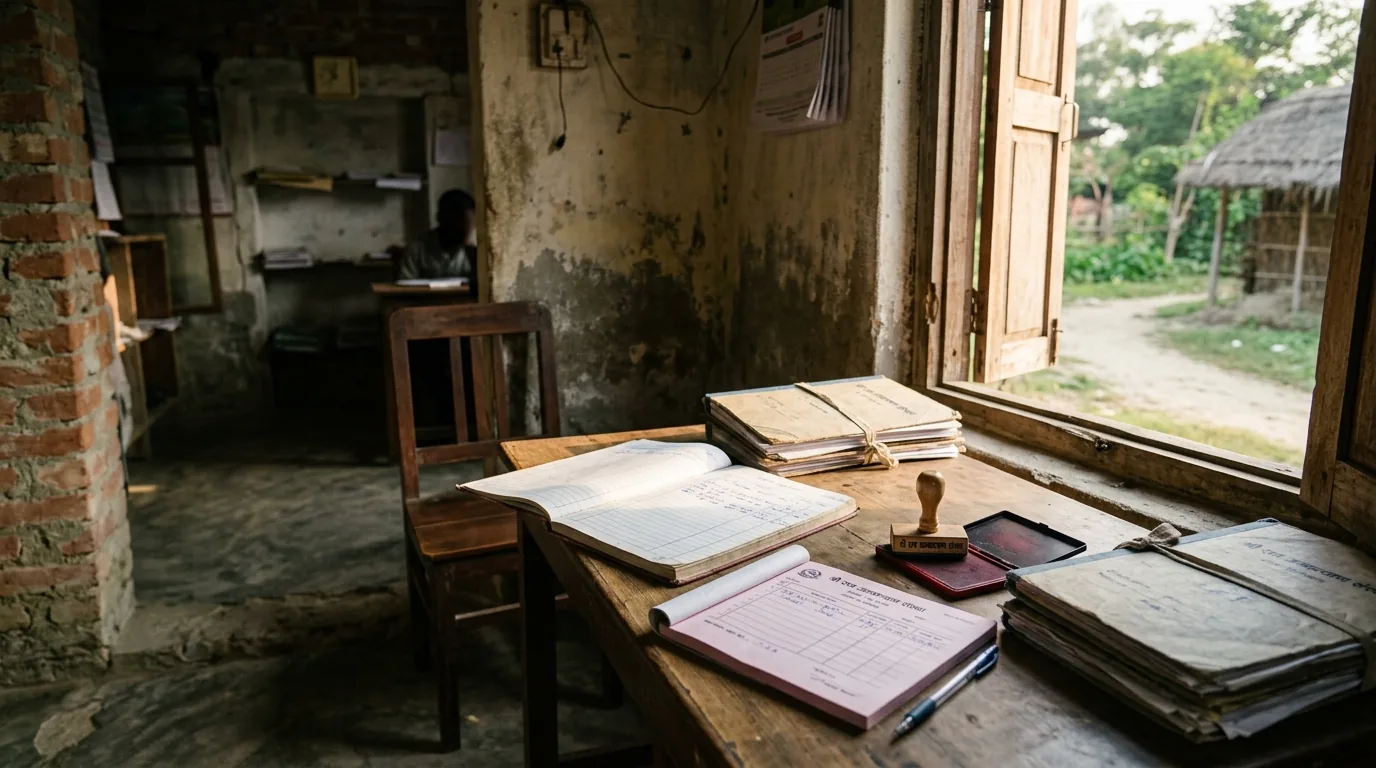
The Act does not prescribe a receipt format, so the standard comes from what a tax officer or an auditor will accept. A receipt that will survive scrutiny carries the organisation's registered name exactly as on its registration certificate, its PAN number, a serial number, the date, the amount in figures and words, the donor's name, a one-line statement of purpose, and a signature with the organisation's stamp. Keep the bank transfer advice or cheque counterfoil with it — a cash donation with no banking trail is the weakest version of the same claim.
Salaried donors should hand the receipt to their payroll or accounts section during the fiscal year so it is factored into withholding, rather than discovering it after Ashad. Anyone filing an income return claims it there. If the amount is large enough to matter, take a qualified tax practitioner's advice rather than this article's.
Companies: Section 12 and the new CSR deduction
A company's ordinary donation is governed by the same Section 12 ceiling. What changed for FY 2083/84 is the arrival of a new Section 12घ allowing a deduction for corporate social responsibility expenditure incurred as required by prevailing law, capped at 1 percent of total taxable income for the year. Until this amendment, CSR spending had no explicit deduction provision in the Income Tax Act at all, even though the CSR fund obligation itself sat in separate industrial legislation. Whether a particular payment is a Section 12 donation or Section 12घ CSR expenditure is a question for your auditor, not for us — but it is now worth asking, because the answer changes which ceiling applies. Our CSR partnership page for companies working in Madhesh sets out the documents a partner organisation has to supply for your audit file.
Where we stand, as a non-profit organization in Nepal
We would rather lose a donation than mislead someone about a tax benefit. Shrijanshil Nepal, a non-profit organization in Nepal, is registered and based in Ganeshman Charnath Municipality, Dhanusha, in Madhesh Province, and works in the wards around it on health camps, drinking water, scholarships and women's skill training. If you are planning a gift large enough for the deduction to matter, write to us and ask directly whether we hold a current Inland Revenue Department exemption certificate and for our PAN. You will get a straight yes or no in writing, with the document attached if the answer is yes. Anyone who answers that question vaguely, from any organisation, has told you something.
Questions donors ask
Is a donation to an NGO tax deductible in Nepal?
Only if the receiving organisation has Inland Revenue Department approval as a tax-exempt organisation. Where it does, Section 12 allows the donation to be subtracted from taxable income within the Rs 300,000 / 5 percent limit.
How much donation is tax free in Nepal?
For FY 2083/84, Rs 300,000 or 5 percent of adjusted taxable income, whichever is lower. The previous ceiling was Rs 100,000. "Tax free" is loose language — the amount is deducted from income, so the cash value depends on your marginal rate.
Does registration at the District Administration Office give an NGO tax-exempt status?
No. Registration, renewal, SWC affiliation and IRD tax exemption are four separate things. An organisation can hold the first three and not the fourth.
Can I deduct a donation of goods instead of cash?
Section 12 refers to a donation or gift, but valuing in-kind goods for a tax claim is contentious and needs professional advice. For how in-kind giving is recorded on our side, see our note on donating books and uniforms.
Is there any donation with no ceiling?
Contributions to the Prime Minister's Disaster Relief Fund and the Reconstruction Fund are deductible under Section 12B with no limit written into the section.
If the tax question is settled and you simply want to know what the money does on the ground, read the causes this charity in Nepal runs and about our registration and committee, then pick one programme and ask us for its current cost per household before you decide the amount.
Leave a comment
Your email address will not be published. Required fields are marked *