Donate Books and Uniforms to an NGO in Nepal
In community schools the state already pays for textbooks, but not for uniforms, shoes, bags or stationery. A receiving charity in Dhanusha explains what in-kind donations get used, what gets stored and forgotten, and how a handover is recorded so it survives an audit.
In this article (5)
If you want to donate books and uniforms to an NGO in Nepal, begin with one fact that changes most people's shopping list: in a community school the state already pays for textbooks, and it does not pay for uniforms, shoes, bags, exercise books or a midday meal. The Ministry of Education's own account of what free education currently covers lists teachers' salaries, textbooks and some scholarships, and lists stationery, uniforms, meals and insurance as things families still buy themselves (Kathmandu Post). Shrijanshil Nepal is a non-profit organization in Nepal based in Ganeshman Charnath Municipality, Dhanusha, Madhesh Province, and we distribute school and health supplies ourselves. This is the receiving side of the transaction: what a village charity can genuinely use, what sits in a store room, and how the handover is written down.
What a charity in Dhanusha can actually use
The test for any in-kind donation to a charity in Nepal is simple. Is somebody already paying for this item, and if nobody is, is the household paying for it out of a daily wage?
| Item | Who pays for it now | Worth donating? |
|---|---|---|
| Grade 1–10 textbooks, community school | Federal budget, routed through the local level | Rarely. The school already receives them |
| School uniform, sweater, shoes | The family | Yes, and this is what stops attendance first |
| Exercise books, pens, geometry box, school bag | The family | Yes |
| Sanitary pads | A federal budget programme for public schools since 2019/20 (The Himalayan Times) | Ask the school first; supply is uneven |
| Story and reading books in Nepali or Maithili | Nobody | Yes, if the reading level matches the grade |
| Household water filters | The family | Only with a plan for replacement candles |
| Used clothing shipped from abroad | — | No. Import of second-hand goods is banned |
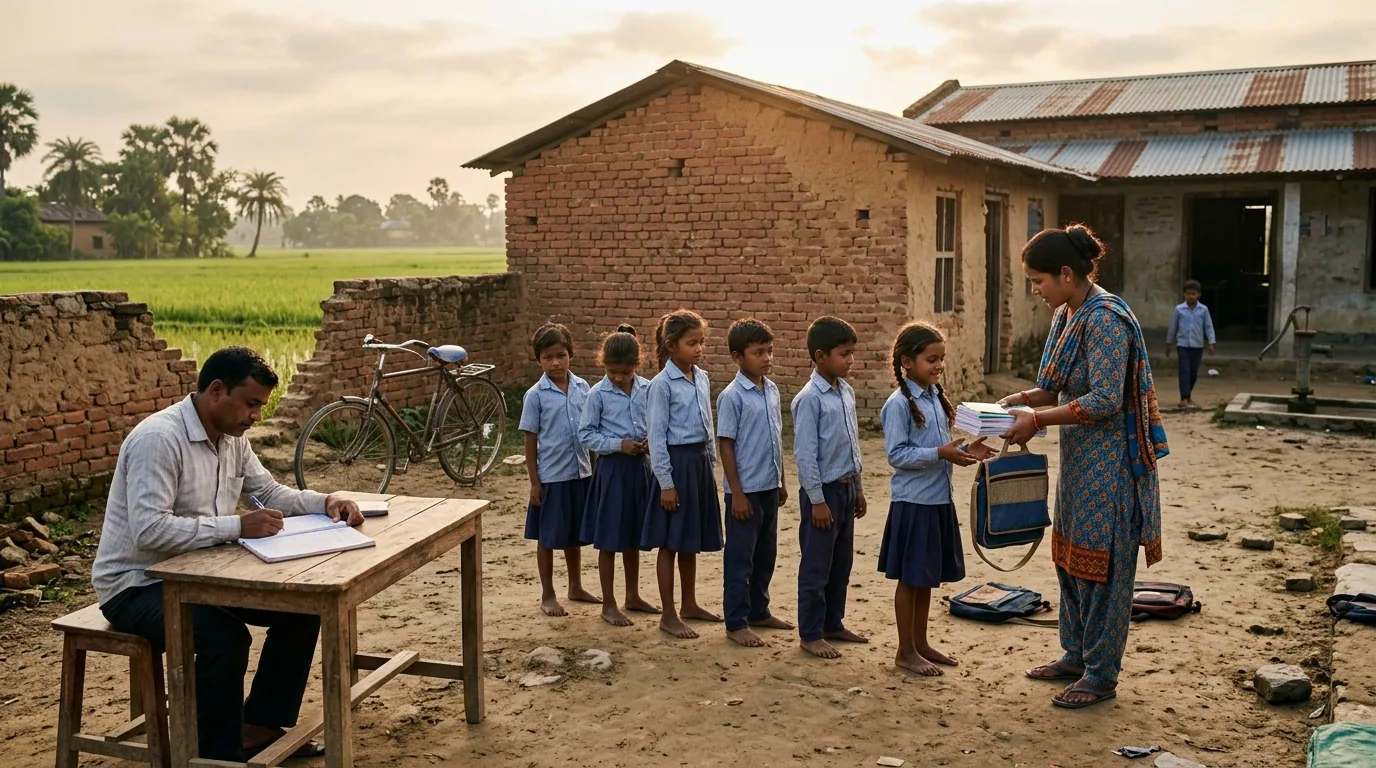
Uniforms carry one condition that outsiders almost always miss. Each school sets its own colour and pattern, so a uniform bought without the school's specification and a size list is a uniform no child can wear to class. Before anyone buys cloth, we ask the headteacher for the design and a list of sizes by name. The same logic runs through our education programme for children in Dhanusha, where fees, books and uniforms end schooling far more often than ability does.
What ends up wasted
- English-language books far above reading level. A donated shelf of adult paperbacks in a Grade 4 classroom is decoration.
- Adult-size clothes sent for children. Sorting and storing them costs more than they are worth.
- Medicines. A social organisation cannot lawfully hand out medicine on its own judgement. Drugs belong with a health post or a licensed prescriber at a camp.
- Equipment with no spare part within a day's travel. A filter, a printer or a solar lamp with no local supplier of the one part that fails is a one-season gift.
- Half sets. Forty shirts and no trousers help nobody.
We would rather tell a donor no in advance than accept goods and store them. That is not politeness, it is the only way the next donor's gift keeps its value.
How a non-cash donation to a charity in Nepal is recorded
Goods have a weaker paper trail than money unless the organisation deliberately builds one. Cash leaves a bank statement behind it; a carton of exercise books leaves nothing unless somebody writes it down. A receiving organisation should be able to show you four things:
- A goods received note recording the item, quantity, condition, the donor's name and the date, signed on receipt.
- A value in the books. The Accounting Standards Board's Nepal Accounting Standards for Not-for-Profit Organizations is now mandatory for Nepali NPOs, and donations in kind are to be measured at fair value and disclosed in the notes to the accounts rather than left off the face of the statements (summary of the standard).
- A distribution list naming each recipient, signed by the recipient or guardian and countersigned and stamped by the school or the ward office that witnessed the handover.
- A line in the annual report and the audit presented to the general assembly. If goods appear nowhere in those documents, nobody outside the office can tell what happened to them. The same documents are described in our note on where a donation to a charity in Nepal actually goes.
Ask for the second and third of these before you give. A charity that cannot produce a goods received note for a sack of exercise books will not produce one for yours either.
Goods sent from abroad: approval and customs
This is where most well-meant shipments fail, and it has nothing to do with the charity's willingness.
First, approval. Under section 16 of the Social Welfare Act, 2049, a social organisation that wants material, technical or economic assistance from a foreign country, organisation or individual has to submit a project proposal and application to the Social Welfare Council, which then gives permission in coordination with the concerned ministry within forty-five days (text of the Act). The word material is doing real work there. A container of goods is not exempt from the rule simply because no money changed hands.
Second, the goods themselves. Nepal has banned the import of second-hand goods outright, by notice in the Nepal Gazette under the Export and Import (Control) Act, with a narrow exception for relief materials during a disaster on a ministry recommendation (The Himalayan Times). A collection of used school uniforms gathered in another country is, in customs terms, the one category that cannot come in.
Third, duty. Relief from customs duty is set in the tax and budget legislation renewed each fiscal year, and applied by the Department of Customs at assessment. The Social Welfare Council registers organisations and approves projects; it is not a customs authority, and a Council letter does not by itself release a container, while storage and demurrage accrue daily on anything held up (Nepal Database). We have no warehouse and no clearing agent, and we say so plainly.
For a donor outside Nepal the honest route is almost always to send the value and let it be bought in Janakpur bazaar, which also keeps the money in the local economy. The checks to run before you transfer are in our guide to what to verify before donating to a charity in Nepal.
Giving from inside Nepal
If you are in Nepal, giving goods is straightforward and we welcome it. The sequence that works:
- Write or call first and say what you intend to give, roughly how much, and when.
- We check it against a live request from a ward, school or household rather than a general wish list, and tell you if it is already covered by a government supply.
- You buy to the specification we send, or hand over goods you already have for us to inspect.
- You get a goods received note. The distribution happens with the school or ward present, and the signed list goes into the file.
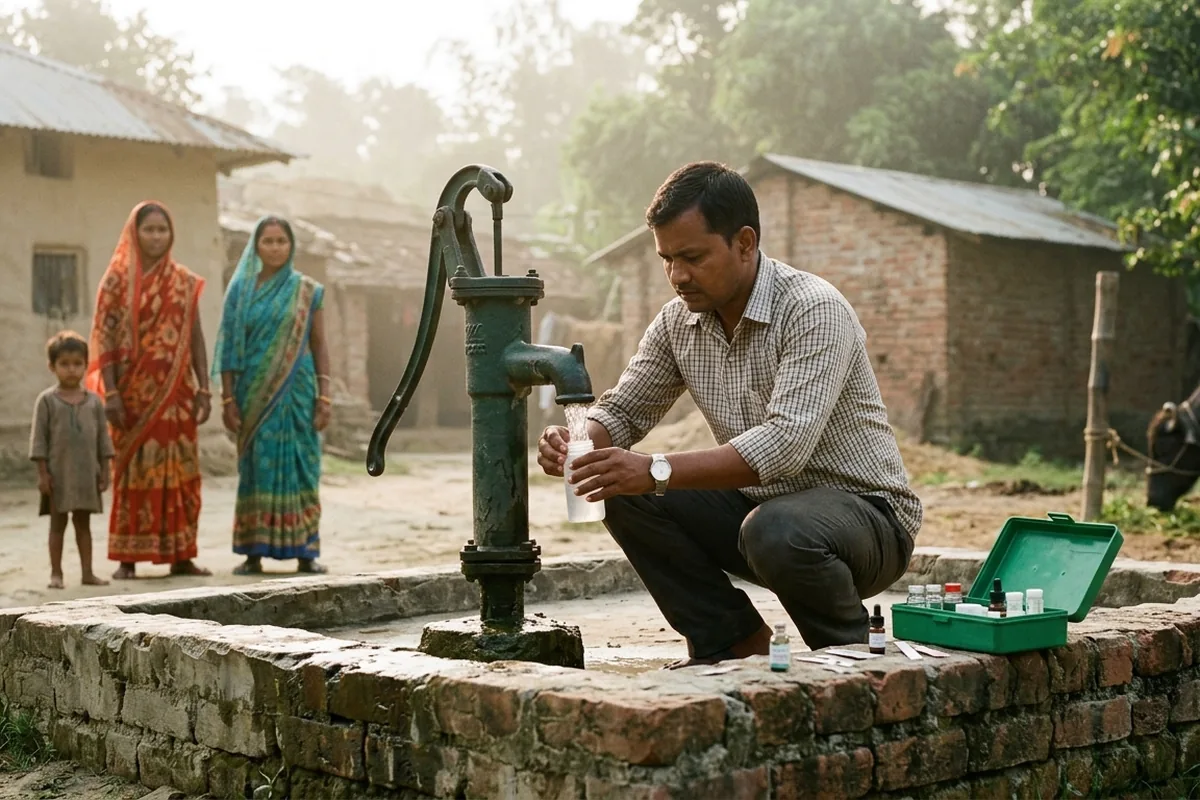
On tax, Nepali taxpayers can claim a deduction for donations to organisations approved as tax-exempt, within the statutory ceiling. How a non-cash donation is valued for that purpose is a question for the Inland Revenue Department or your accountant, not for us, so confirm it before you assume a deduction. Filters and other water items run through our clean and safe drinking water work rather than the school programme, because they need a different follow-up.
Questions donors ask
Can I donate clothes to an NGO in Nepal?
From inside Nepal, yes, if they are clean, intact and sized for the people who will wear them, and winter items are most useful before December. From abroad, no: used clothing falls under the second-hand import ban.
Do I get a receipt for a non-cash donation to a charity in Nepal?
You should get a goods received note listing the items and quantities, on the organisation's letterhead with a stamp. Treat the absence of one as a warning sign.
Can I give school supplies to an NGO in Dhanusha and watch them handed over?
Yes. Donors are welcome at a distribution, and the school or ward is present in any case. Give us enough notice to fix a date with the headteacher.
Is it better to give goods or money?
Money, if you are far away or the item needs sizing. Goods, if you already own something genuinely useful, or if you want to buy locally in bulk and know exactly what is needed.
What happens to things you cannot use?
We decline them at the start. We do not accept goods in order to be polite and then store them.
If you have something specific in mind, contact us with the item, the quantity and your district, and ask for the current size and specification list before you buy anything. You can read about our non-profit organization in Nepal and the causes this charity in Nepal runs first, and verify our registration at the District Administration Office in Dhanusha before you hand anything over.
Leave a comment
Your email address will not be published. Required fields are marked *