NGO vs INGO in Nepal: The Difference That Matters
An NGO registers at the District Administration Office; an INGO signs a general agreement with the Social Welfare Council. That is the legal difference. The one a village feels is who is still working in the ward in year four.
In this article (7)
The difference between NGO and INGO in Nepal is one line of law. An NGO is an association registered by Nepali citizens at the District Administration Office of the district where it works. An INGO is a foreign organisation that has signed a general agreement with the Social Welfare Council in Kathmandu before it may operate here at all. Almost everything else people argue about — the salaries, the vehicles, the size of the budget, how long the programme lasts — follows from that single difference in where the paper was signed and who signed it.
This is written from inside the first category. Shrijanshil Nepal is a non-profit organization in Nepal registered in Ganeshman Charnath Municipality, Dhanusha, Madhesh Province. We have been on both sides of the table often enough to say plainly what a local organisation can do that an INGO country office cannot, and what it plainly cannot do.
The two structures side by side
| NGO (local / national) | INGO (international) | |
|---|---|---|
| Where it is created | District Administration Office of its own district | Head office abroad; presence in Nepal created by the Social Welfare Council |
| Governing law | Association Registration Act, 2034 (1977) | Social Welfare Act, 2049 (1992) and the Social Welfare Rules |
| Who founds it | A minimum of seven Nepali citizens | A foreign board, through its Nepal representative |
| Core document | Registration certificate, renewed every year | General Agreement, signed for three to five years, then renewed |
| Can it implement directly? | Yes, in its own working area | No. It must implement through a locally registered partner |
| Foreign money | Allowed only with prior Social Welfare Council approval | Its entire budget is foreign, committed in the agreement |
What an NGO in Nepal actually is on paper
Seven Nepali citizens can form an association and register it at the District Administration Office under the Association Registration Act, 2034, and that certificate is what makes the organisation legal. It is not permanent. Registration has to be renewed annually at the same office, with the audit report, the annual progress statement and the general assembly decision attached. The renewal fee is small — the International Center for Not-for-Profit Law puts it at NPR 500 as of August 2025 — but an organisation that stops renewing stops being an NGO, whatever its signboard says.
Affiliation with the Social Welfare Council is a separate step, and it is not what brings an NGO into existence. It becomes compulsory the moment foreign money is involved: under Article 16 of the Social Welfare Act, an organisation must get the Council's approval for a foreign-funded project before the money arrives, and the Council is meant to decide within 45 days in consultation with the relevant ministry. In practice, that approval is the gate between a village-level organisation and any international budget.
How many such organisations exist depends entirely on who is counting. The Council's own database listed 57,978 NGOs as active in March 2026, while a study published the same month, Counting Nepal's NGOs, put the genuinely active figure at 25,760 at the end of FY 2024–25, both figures recorded by ICNL's civic freedom monitor. A Nepali review of the sector's history notes the same curve from the other end: roughly 200 registered NGOs in 2047 BS, 1,210 by 2050 BS, and more than 58,000 today. The register is crowded; the ward is not.
What an INGO in Nepal actually is on paper
An INGO does not register at a district office and cannot. It signs a General Agreement with the Social Welfare Council — a bilateral document that sets out the sectors it will work in, the minimum amount it will bring in each year, and its reporting duties. Nepali law firms summarising the Council's practice describe that agreement as running three to five years, renewable, terminable by either side on six months' notice, with a Project Agreement to follow within three months. The project agreement is tripartite: the INGO, the Council, and the local partner organisation.
Two conditions in that framework explain most of what readers notice on the ground. First, an INGO cannot implement a project by itself; it has to appoint locally registered partners. Second, administrative cost is capped at 20 percent of the project budget. There is also a funding floor — one firm's guide states INGOs must bring in a minimum of USD 200,000 a year from outside Nepal. Anyone relying on that number for a real application should confirm the current threshold with the Council directly, since published figures vary.
The difference between NGO and INGO in Nepal that a village notices
The funding chain, in order
For an INGO the chain is: foreign public or private donor → head office → Nepal country office → project agreement → local partner NGO → ward. Each link takes a share and sets conditions, and the whole chain is anchored outside Nepal. For a local NGO with no international partner, the chain is short and shallow: membership fees, local donations, support included in a municipality's or province's annual programme, and occasional time-bound project grants. Short chains survive shocks better. They are also much smaller.
Staffing
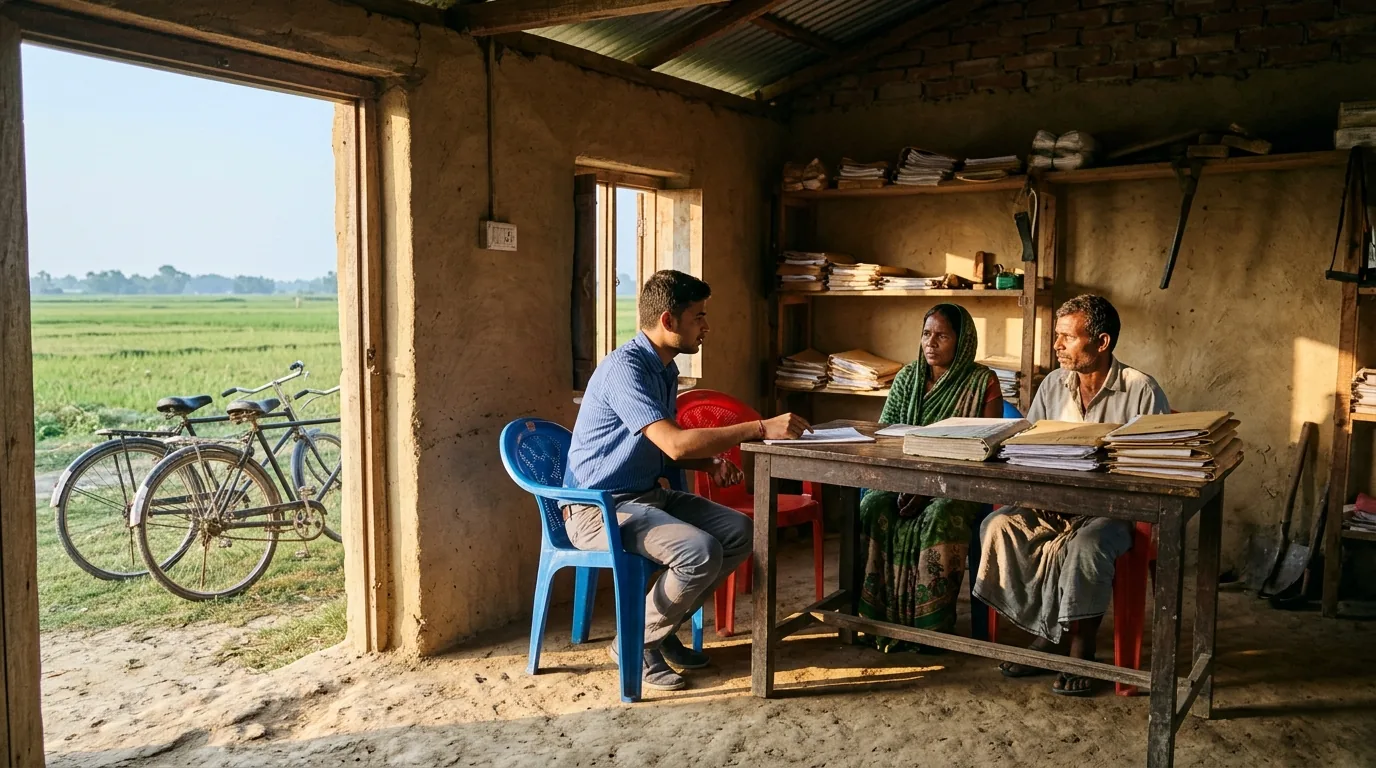
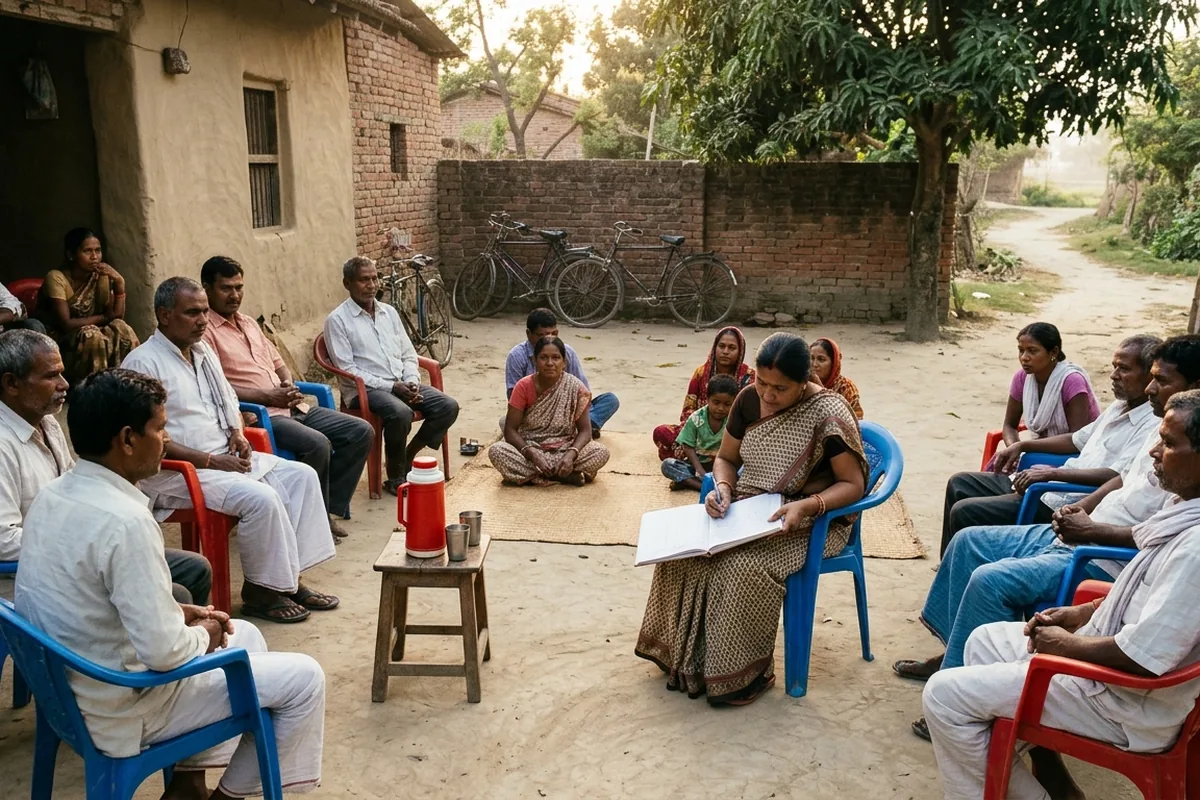
An INGO country office hires a small number of professionals on project contracts, usually based in Kathmandu or a provincial capital, with field visits. A ward-level NGO is the other shape: a handful of people who live in the working area, an elected executive committee, and volunteers. Neither is better staffing. They do different things. The INGO brings technical standards, procurement capacity and money; the local body brings the fact that the coordinator's own children attend the school where the camp is held. Comparing salary scales between the two, as the job blogs do, tells you nothing about which structure delivers.
Who is still there in year four
This is the part the registration guides never cover, and it is the honest centre of the comparison. An INGO's presence in Nepal is time-bound by design: the general agreement expires, the project agreement expires, and the head office decides elsewhere whether to renew. In the four years to August 2019 the Social Welfare Council reported that 32 INGOs had left or were winding up, with the affiliated total falling to 240 from 258 in a single year — some because global funding had tightened, six because the post-earthquake work they came for was finished.
Then came a much larger shock. In March 2025 the Kathmandu Post reported that 34 USAID projects worth Rs 46.12 billion were terminated in Nepal, affecting around 300 NGOs, consultancies and nonprofits, against a five-year country strategy signed in May 2022 worth USD 659 million; the paper noted the figures had not been independently verified. The Council's database recorded only 119 international civil society organisations as of April 2025. When a funding decision is taken in another country, the project stops, the vehicle goes, and the ward is left with whatever was built and whoever still lives there.
A local organisation does not escape this. It loses the grant too. What it does not lose is the office, the committee and the obligation, because its members are residents of the same municipality. That is the only durability a small NGO can honestly claim, and it should not be oversold: continuity is not the same as capacity.
Where a small charity in Dhanusha sits in this picture
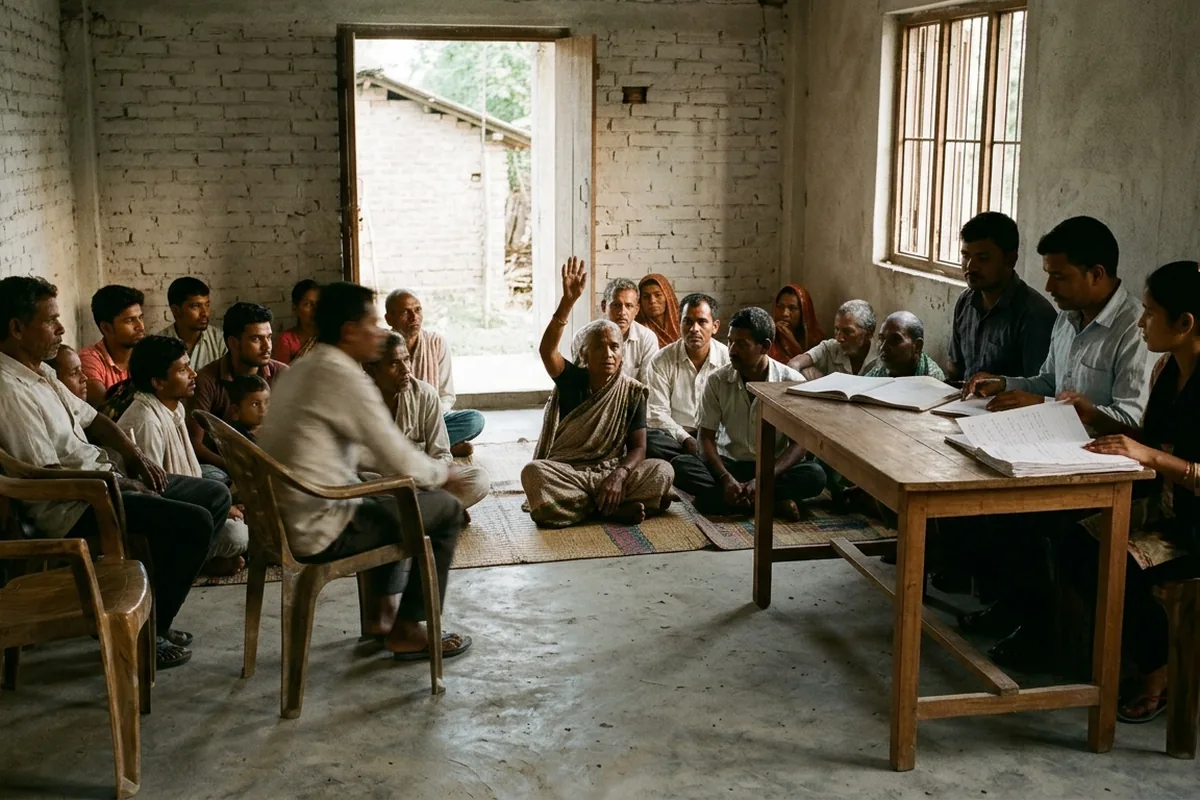
Being specific is more useful than being flattering. What an organisation like ours can do that an INGO country office cannot do directly: run a programme in a named ward under its own registration, get a ward secretary's recommendation in a day, know which tole has been skipped, and keep showing up after a project closes. The provincial health ministry's support for a cervical cancer screening camp in Ganeshman Charnath worked that way — specialists and approval from above, mobilising and follow-up from inside the ward.
What we cannot do: fund a district-wide programme from our own resources, pay professional salaries at INGO scale, deploy technical specialists, or accept foreign money without Social Welfare Council approval first. The honest list of the causes this charity in Nepal runs — education support, drinking water testing, community health, women's skill training, agriculture and tree plantation — is the scale of what a ward-level body can hold. Anyone who needs more than that needs a larger partner, and should say so rather than pretend.
How to tell which one you are looking at
- Ask for the core document. A local NGO has a District Administration Office registration certificate with a current renewal. An INGO has a general agreement with the Social Welfare Council. There is no third option for a body doing social-sector work.
- Follow the money one step up. Ask whose budget line the activity sits on. If the answer is a project agreement, ask when it ends.
- Check the register, not the website. The Social Welfare Council maintains the list of affiliated NGOs and of INGO projects; the district office holds the district register. Public directories and "INGO in Nepal list" pages are incomplete copies of those.
- Run the same checks on everyone, including us. We have set them out in how to check if an NGO in Nepal is registered.
FAQ
Can an INGO work directly in a Nepali village?
No. Under the Council's framework an INGO cannot implement a project by itself and must appoint a locally registered partner, with the project agreement signed by the INGO, the Council and that partner. What you see in the village is almost always the partner's staff.
Who funds whom?
Money moves downward: foreign donor to INGO head office to country office to local partner. It does not move upward. A local NGO's own income is membership fees, local donations and government programme support, and any foreign contribution requires prior Social Welfare Council approval under Article 16 — including small gifts from relatives abroad, as we explain in donating to an NGO in Nepal from abroad.
How many INGOs are there in Nepal?
Fewer than people assume. The Council's database recorded 119 international civil society organisations as of April 2025, against 240 affiliated INGOs reported in 2019. Counting methods differ between those two figures, so treat the trend as reliable and the exact numbers as approximate.
Does a local NGO have to affiliate with the Social Welfare Council?
Not in order to exist. District registration and its annual renewal are what make it legal. Affiliation and project approval become necessary for foreign-funded work and for Council programmes.
Is an INGO job better than an NGO job?
Pay scales and contract lengths differ widely and we have no verified salary data to offer, so we will not repeat the figures the job blogs publish. The structural point is real, though: INGO posts are tied to agreement periods, and when the agreement ends, so does the post.
If you are an INGO, a provincial programme or a municipality looking for a locally registered implementing partner in Dhanusha, the documents you should demand from any partner — and what a ward-level body can honestly deliver — are set out in our note on finding a local NGO partner in Madhesh Province. If you are a resident, a student or a donor instead, read about this non-profit organization in Nepal, or come to the office in Ganeshman Charnath and ask to see the renewal certificate before you trust anything written above.
Leave a comment
Your email address will not be published. Required fields are marked *