
Who Runs an NGO in Nepal, and Who Checks It
An NGO in Nepal is not owned by its founder. It is run by a committee the members elect, policed by an auditor, a Chief District Officer and the Social Welfare Council — and five of those documents can be demanded by anyone.
In this article (6)
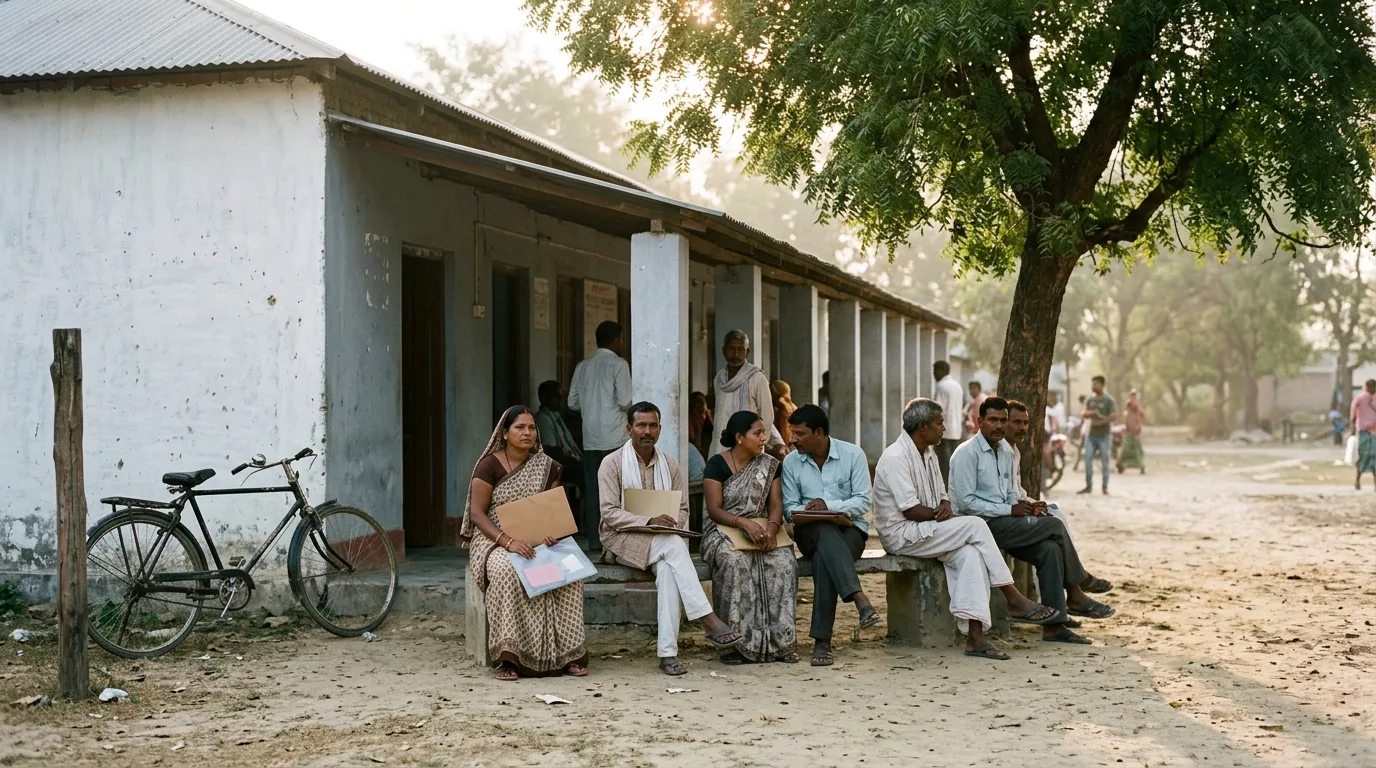
An NGO in Nepal is not run by its founder, and not by its largest donor. It is run by an executive committee (कार्य समिति) elected by the organisation's own general assembly, and that committee answers to four outside checks: a registered auditor, the District Administration Office that issued the registration, the Social Welfare Council where the organisation is affiliated to it, and — once public or foreign money is involved — any citizen with a written request. If you are asking who runs an NGO in Nepal because you are about to donate to, volunteer with or sign a partnership with Shrijanshil Nepal, a non-profit organization in Nepal or any other registered body, those bodies and the paper each one produces are what you should be asking to see.
English search results for this question are almost entirely registration-service firms explaining how to set up an NGO. This page is the other half: how an existing one is governed, and who polices it.
Who runs an NGO in Nepal: the two-body answer
Every organisation registered under the Associations Registration Act, 2034 (1977) has two internal bodies, and the smaller one reports to the larger one.
The general assembly (साधारण सभा)
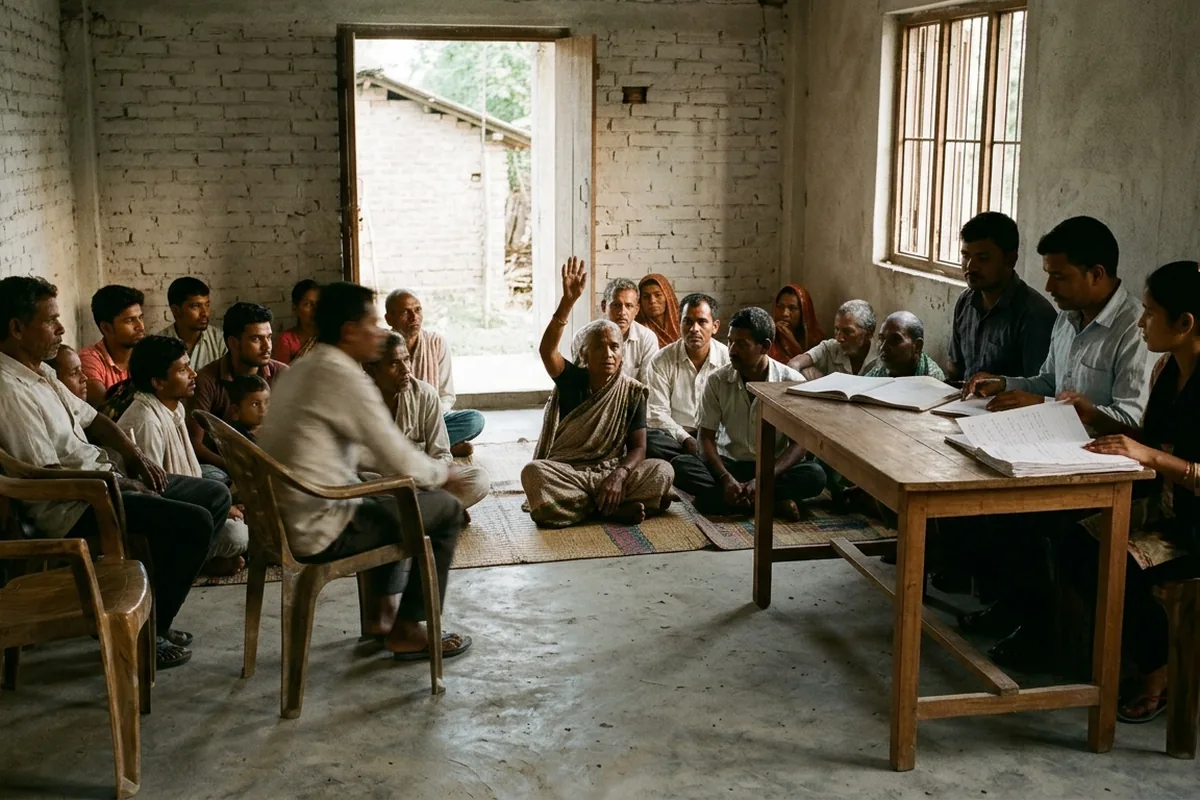
The assembly is every voting member of the organisation, and in the model statute district administration offices issue to applicants it is named the supreme organ. It meets at least once a year, within two months of the close of the fiscal year — so for a Nepali fiscal year ending at the end of Ashad, the annual general assembly falls by the end of Bhadra. Members must get at least fifteen days' written notice. A quarter of the total membership can force a special assembly, which the committee has to call within seven days. Business cannot be transacted unless 66 percent of the total membership attends; if the assembly has to be reconvened for want of quorum, 51 percent is enough (model विधान, clauses 11 and 18).
What the assembly does is the part donors rarely know. It passes the annual budget and work plan, discusses and approves the audit report, orders the committee to recover or settle any irregular amounts (बेरुजु) the auditor has flagged, appoints the auditor for the coming year, and elects the committee when its term expires (clause 12). Note the order: the auditor is appointed by the members, not by the committee being audited — only before an organisation's first annual assembly may the committee appoint one itself (clause 22).
The executive committee (कार्य समिति)
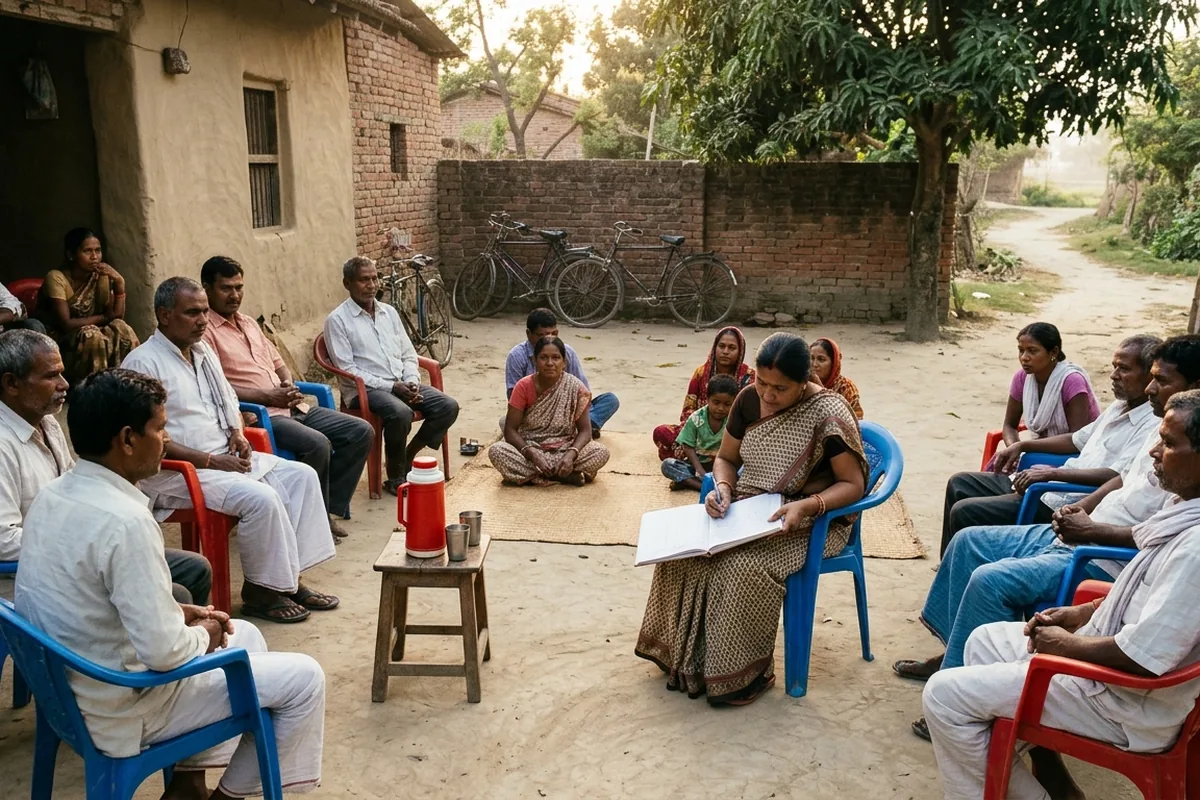
The committee is elected out of the assembly and carries the posts most people mean by "who runs it": a chairperson, a vice-chairperson, a secretary, a treasurer and ordinary members, serving a fixed term written into the organisation's own statute. It meets when the chair calls it, or immediately if 51 percent of the office-bearers demand a meeting; 51 percent is also the quorum; decisions go by majority with a casting vote for the chair; and every decision has to be written into a minute book signed by everyone present, with dissent recorded in the margin (clause 13). The bank account runs on the joint signature of the chairperson and the treasurer (clause 20), and the treasurer is the office-bearer personally charged with keeping the books straight and getting them audited (clause 17).
Three limits are worth stating plainly. A committee cannot change the organisation's objectives on its own — that needs an extraordinary general meeting, a two-thirds majority of members present, and the prior approval of the Chief District Officer (Act, section 8). A committee can be removed mid-term: a no-confidence motion signed by a quarter of the assembly and carried by two-thirds of total membership vacates the posts (model विधान, clause 25). And nobody inherits an NGO. A registered association is a body corporate with perpetual succession (section 5), and if it is dissolved its assets devolve on the Government of Nepal (section 14).
The Act's own floor is seven founding persons (section 4). In practice district offices ask for a larger committee, and registration practitioners commonly report a requirement of at least a third women on the executive committee and no all-relative boards; that is office practice rather than a line in the 1977 Act, so check the current checklist at your own DAO.
Who checks a charity in Nepal: four layers
| Who | What they can do | The document it leaves behind |
|---|---|---|
| Registered auditor | Audits the year's income and expenditure; flags irregular amounts | Annual audit report |
| General assembly | Approves or refuses the audit report and budget; elects and can remove the committee | Assembly minute (निर्णय पुस्तिका) |
| Chief District Officer, via the DAO | Registers, renews, inspects the books, fines, suspends or cancels registration | Registration and renewal certificate; the renewal file |
| Social Welfare Council | Affiliation, project approval, inspection; can recommend dissolving a committee | Affiliation certificate; approved project agreement |
The Chief District Officer's powers are real and specific. The committee must submit the statement of accounts with the auditor's report every year (section 9); the CDO may have the accounts examined by an officer of their choosing, and office-bearers, members and staff are legally obliged to hand over documents and answer questions (section 10). Failure to file the accounts carries a fine on each committee member; acting against the organisation's own objectives, or ignoring a government direction, lets the CDO suspend or cancel the registration outright (section 12). In Dhanusha that office is the District Administration Office on 041-420510 or 041-420075, per its own contact listing.
For an organisation affiliated to the Social Welfare Council, a second layer applies under the Social Welfare Act, 2049 (1992). Affiliation itself requires filing the constitution and the names, occupations and addresses of the executive committee (section 13). Material or financial assistance from the Government of Nepal or any foreign source needs a project proposal and the Council's permission, decided within forty-five days, with a narrow exception for assistance up to Rs 200,000 a year for an immediately-completed project, which needs prior notice and a report within three months (section 16). The Council may inspect an affiliated organisation's accounts, cash and kind at any time (section 18), affiliated bodies must file an audit report with a description of their work within six months of the fiscal year's close (section 23), and on the Council's recommendation the Government may suspend or dissolve a committee that works against the law or against its own constitution, with a fresh election inside three months (section 20).
The renewal file at the District Administration Office
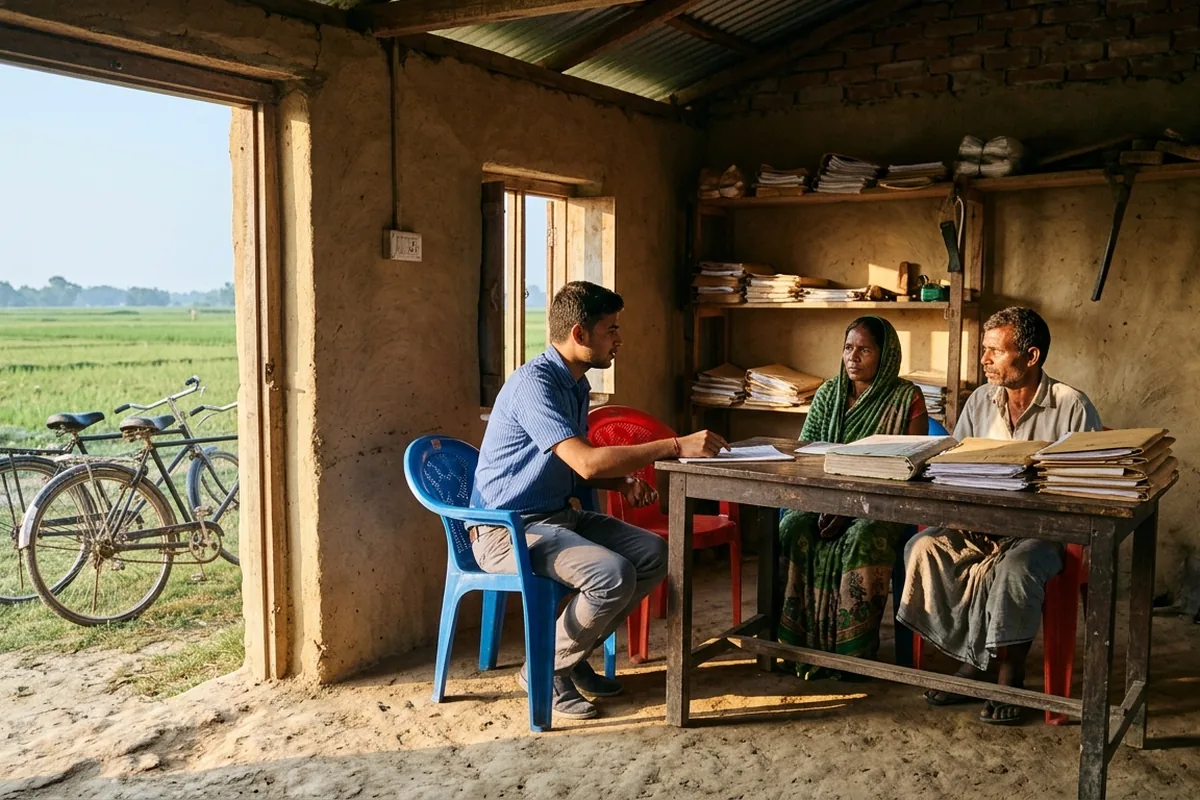
Renewal is the annual moment when all of this has to exist on paper at once. District offices publish their checklists; one DAO list runs: application, the original registration certificate, the audit report, the auditor's licence, the annual progress statement, the executive committee's decision, the minute of the general assembly held before renewal, and a local-level recommendation with tax clearance — against a Rs 10 stamp and a Rs 500 renewal fee, same day if the file is complete. A Madhesh Province DAO additionally asks for a certified roster of the current committee on letterhead, a statement of total members and assembly attendance, the minutes showing the auditor's appointment and the committee's selection, PAN and tax clearance, and the approval and monitoring letters for any foreign-funded or government programme.
That is why renewal is a better honesty test than a registration certificate. A certificate proves an organisation existed once. A current renewal proves it held an assembly, got audited and satisfied the ward and the tax office within the last twelve months. Across Nepal there are now more than 58,000 registered organisations; the renewal date is most of what separates the working ones from the rest.
Who can demand to see each document
- Any member can see the assembly minute, the budget and the audit report — they are tabled at the assembly for approval, and no committee can lawfully withhold them from the body that elects it.
- Anyone at all can ask the District Administration Office to confirm registration and renewal status, because the accounts and audit report sit on the DAO file by law (section 9).
- The CDO and the Social Welfare Council can inspect the books unannounced, and the organisation's staff must cooperate.
- Any citizen can file a written information request against an NGO that runs on money obtained directly or indirectly from the Government of Nepal, a foreign government or an international organisation — the Right to Information Act, 2064 (2007) puts such bodies inside the definition of a public body at section 2(a)(8). The answer is due within fifteen days; a refusal goes to the head of the body within seven days, and then on appeal to the National Information Commission within thirty-five.
Running these checks on us
Shrijanshil Nepal is registered in Dhanusha and based in Ganeshman Charnath Municipality, Madhesh Province. The same structure described above governs it: an elected executive committee, an annual general assembly that approves the audited accounts and appoints the next auditor, an audit report and annual progress statement filed with the District Administration Office, and a renewal that has to clear the ward recommendation and tax clearance each year. Our specialist health work has run with support from the Ministry of Health and Population, Madhesh Province; the programmes this NGO in Dhanusha runs — schooling support, drinking-water testing, health camps, women's skill training, agriculture and plantation — are each listed publicly rather than described in the abstract.
So ask. Ask for the registration and current renewal certificate and verify it at the Dhanusha DAO rather than taking our word for it; the step-by-step version of that check is written out here. Ask for the latest audit report and the assembly minute that approved it. Ask who sits on the committee and when they were elected. The Nepali counterpart of this page, on सामाजिक परीक्षण and the annual report, explains the practice of reading those same three documents aloud in front of the community that the money was spent on — which is the version that matters more in a ward than any certificate. If any organisation, including this one, will not show you the three, that refusal is your answer.
FAQ
Who is the head of an NGO in Nepal?
The chairperson (अध्यक्ष) of the executive committee, elected by the general assembly for a term fixed in the organisation's statute. A chairperson is not an owner: they chair meetings, sign the bank account jointly with the treasurer, and can be removed by a two-thirds vote of the membership.
Can one person or one family own an NGO in Nepal?
No. A registered association is an autonomous body corporate with perpetual succession (Associations Registration Act, section 5), its property is the association's and the CDO can recover anything a member misuses (section 6), and on dissolution all assets pass to the Government of Nepal (section 14). There are no shares and nothing to inherit.
How often must an NGO hold a general assembly and get audited?
Once a year for each. The model statute puts the annual general assembly within two months of the close of the fiscal year, the committee must file the statement of accounts with the auditor's report to the District Administration Office every year, and a Social Welfare Council-affiliated organisation must also file its audit report with the Council within six months of the fiscal year's end.
Who do I complain to about an NGO in Nepal?
Start with the Chief District Officer at the District Administration Office that registered it: the CDO can order an examination of the accounts, fine committee members, pursue recovery of embezzled property and suspend or cancel the registration. If the organisation is affiliated to the Social Welfare Council or receives assistance through it, the Council is the second route, and it can recommend that the Government dissolve the committee.
Can a donor see an NGO's audit report before giving?
Yes — ask the organisation directly, and cross-check at the DAO, where the audited accounts are filed each year. If the organisation runs on government or foreign funding, a written information request under the Right to Information Act is enforceable, with a fifteen-day deadline.
If you want to see how this works in practice rather than on paper, the most direct route is to join a programme day: what volunteers actually do with us includes the household verification and record-keeping that ends up in the annual progress report. Residents, ward secretaries and schools in Dhanusha can also write to us through the contact page and ask for the registration, renewal and audit documents by name. For the wider picture of what this kind of body legally can and cannot do, see what a non-profit really does in a Nepali ward and about this charity in Nepal and where it works.
Leave a comment
Your email address will not be published. Required fields are marked *