Donate to a Charity in Nepal: What to Check First
Page one of Google is full of foreign intermediaries writing about Nepal from outside. Here is how giving to a Nepal-registered charity actually works: what to check, what receipt you can get, and the foreign-donation approval rule almost nobody mentions.
In this article (9)
- Two routes for the same rupee
- Check the registration, then check the renewal
- The foreign-donation rule most donors have never heard of
- What receipt a Nepali charity can and cannot issue
- Where does your money go when you donate to a charity in Nepal?
- A note on disaster appeals
- What giving to a small charity in Dhanusha looks like
- Questions donors actually ask
- Come and look before you give
Before you donate to a charity in Nepal, four things are worth checking, and only one of them turns up on the international giving sites that dominate the search results: whether the organisation's registration is current, whether it holds the approval it needs to receive money from abroad, what kind of receipt it can lawfully give you, and whether it can name the cost of one unit of its work. This is written from inside a registered non-profit organization in Nepal — Shrijanshil Nepal, in Ganeshman Charnath Municipality, Dhanusha, Madhesh Province — and it is the list we would want a stranger to hold us to.
Two routes for the same rupee
Almost every result on the first page of an English-language search is a United States-registered intermediary: a platform that collects your card payment, takes a fee, and passes a grant to a Nepali partner. That route is legitimate and it has real advantages. It is not the only route, and the trade-offs are rarely spelled out.
| Through an international platform | Direct to a Nepal-registered charity | |
|---|---|---|
| Tax receipt | Deductible in the platform's home country | A Nepali receipt; deductible only against Nepali tax, and only if the organisation is approved for it |
| Fees | Platform fee plus card and currency conversion | Bank wire or remittance charges only |
| Who decides the spending | Grant terms set by the intermediary | You negotiate directly with the people doing the work |
| Approval needed in Nepal | Handled by the partner | May need Social Welfare Council permission — see below |
| Verification | Ratings, audits, published reports | You can walk into the office and read the ledger |
If you need a deduction on a US, UK or Australian tax return, take the platform route and treat the fee as the price of that deduction. If what you want is proximity — knowing the ward, the names, the road the money travelled down — give directly and give up the deduction. Both are defensible. Pretending one is free of cost is not.
Check the registration, then check the renewal
A local NGO in Nepal is registered with the District Administration Office under the Association Registration Act, 2034 (1977), which requires at least seven founding members who are Nepali citizens. The part donors skip is that registration has to be renewed every year, with progress reports, audited accounts, minutes and an annual plan submitted alongside a fee of a few hundred rupees; an association that lets renewal lapse for five years can have its registration cancelled outright, per the International Center for Not-for-Profit Law's country monitor.
So the useful request is not "are you registered?" but "show me the registration certificate and the most recent renewal." An organisation that is current will hand both over without hesitation, along with the last audit report. One that stalls has told you something.
Affiliation with the Social Welfare Council is a separate thing, and it is widely misunderstood. A local NGO does not need SWC affiliation simply to exist — as org-id.guide notes, local NGOs register with their District Administration Office, while the SWC list is dominated by international organisations. SWC affiliation becomes necessary when the organisation wants to take government or foreign money.
The foreign-donation rule most donors have never heard of
This is the gap in every roundup article written from outside Nepal. Under section 16 of the Social Welfare Act, 2049 (1992), an organisation seeking assistance must submit a project proposal and application to the Social Welfare Council, and the Council grants permission in coordination with the concerned ministry within forty-five days. In practice, the Council can refuse a project it judges contrary to the national interest, and banks will ask for an SWC authorisation letter before releasing transferred funds.
What this means for you as a donor:
- A project-scale gift from abroad is not instant. If you are funding a programme rather than making a personal gift, the approval has to exist before the money is useful. Ask whether it does, and for which project.
- The money must move through the banking system. A charity that asks you to wire to a personal account, or to hand cash to a relative in Kathmandu, is either cutting corners or is not what it claims. The Nepal Economic Forum has written about how often relief funding ends up routed through individuals precisely because the formal channel is slow — an explanation, not an excuse.
- Ask before you send, not after. Funds that arrive without the paperwork in place can sit in a bank while everyone writes letters.
If your gift is large enough that the answer matters, put the question to the Social Welfare Council or a Nepali lawyer directly rather than relying on any single organisation's summary, including this one.
What receipt a Nepali charity can and cannot issue
A Nepali charity can give you a numbered receipt on its letterhead. What that receipt is worth depends entirely on where you pay tax.
If you pay tax in Nepal: section 12 of the Income Tax Act, 2058 lets you deduct a donation given to an organisation entitled to tax exemption approved by the Inland Revenue Department, capped at Rs 100,000 or five percent of your adjusted taxable income, whichever is lower. The approval is the operative word. Ask whether the organisation holds it before you assume the receipt will clear.
If you pay tax in the United States: the IRS is blunt — contributions to a foreign organisation are not deductible, with a narrow treaty exception for Canada. A Nepali receipt is proof that you gave; it is not a deduction. Most other countries take a similar line, tying relief to charities registered at home. Check your own rules before you plan around it.
Where does your money go when you donate to a charity in Nepal?
"What percentage goes to the programme?" is the question everyone asks and it is close to useless, because any organisation can produce a flattering ratio by relabelling costs. The better question is a unit cost: what does one water-quality test cost, one health camp, one student's year of fees and uniform? A charity doing the work can answer in a sentence. A charity that cannot is either new or vague, and you should know which.
Some anchors to translate a foreign figure into a local one. Nepal's statutory minimum wage since Shrawan 2082 is Rs 19,550 a month, Rs 754 a day or Rs 101 an hour. At the Nepal Rastra Bank rate of roughly Rs 153 to the US dollar (check the day's rate), USD 100 is about Rs 15,300 — roughly twenty days of minimum-wage labour in a district like Dhanusha. That is a real amount of work. It is also small enough that it should come with a specific, written plan, not a general appeal.
Nepali giving is not a foreign invention, either. Roughly 70 percent of philanthropic funding in Nepal comes from international sources, and of the 51,513 organisations affiliated with the Social Welfare Council as of mid-2020, only around 7,000 were reported active. Both numbers argue for the same thing: check that the specific body in front of you is working, not just listed.
A note on disaster appeals
Floods and earthquakes bring out fraudsters faster than they bring out relief. After the August 2026 flooding, Nepal Police warned of fake relief funds, counterfeit QR codes and impersonation calls, and advised donors never to deposit into personal accounts claiming to be an official fund, and never to share a PIN or one-time password. No government office in Nepal asks for an OTP to release relief money. If an appeal reaches you through a forwarded message, verify the account through the organisation's own website or a phone call before sending anything.
What giving to a small charity in Dhanusha looks like
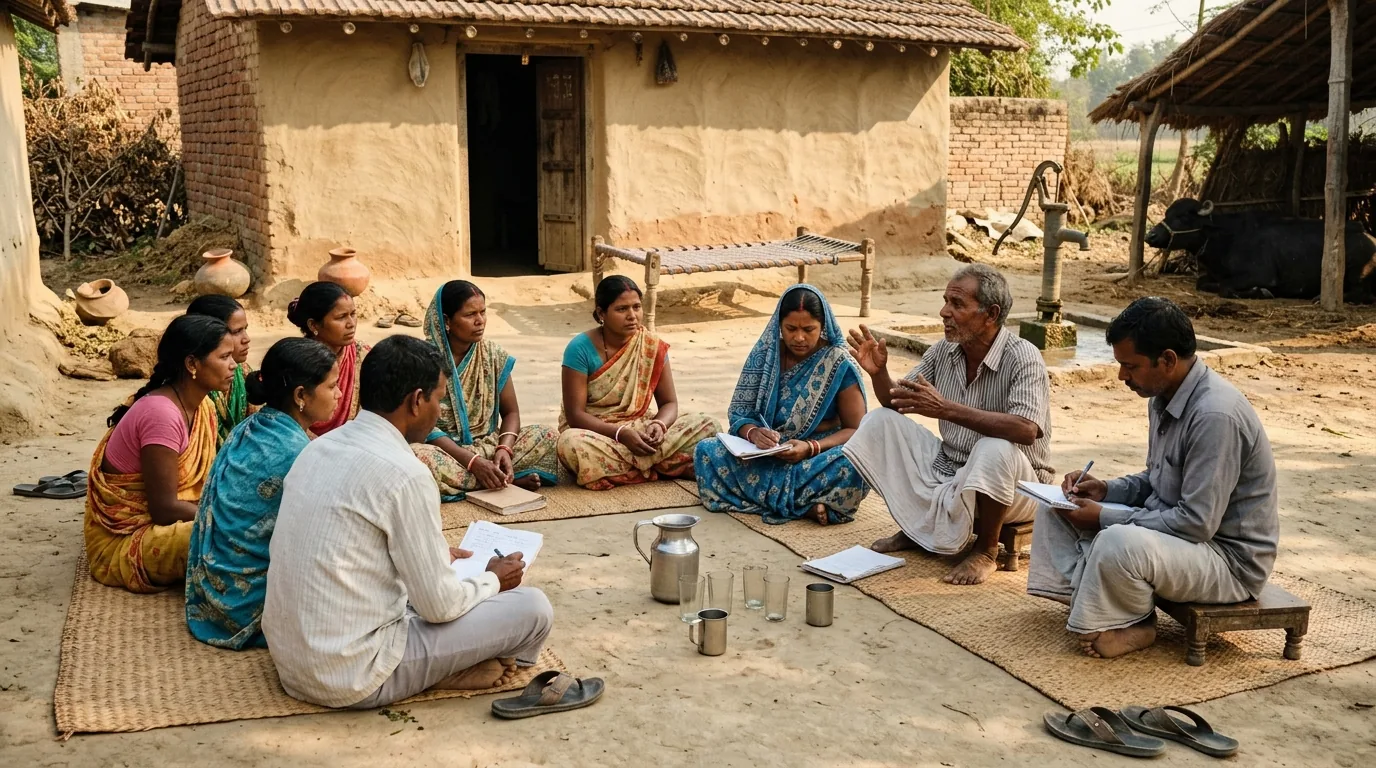
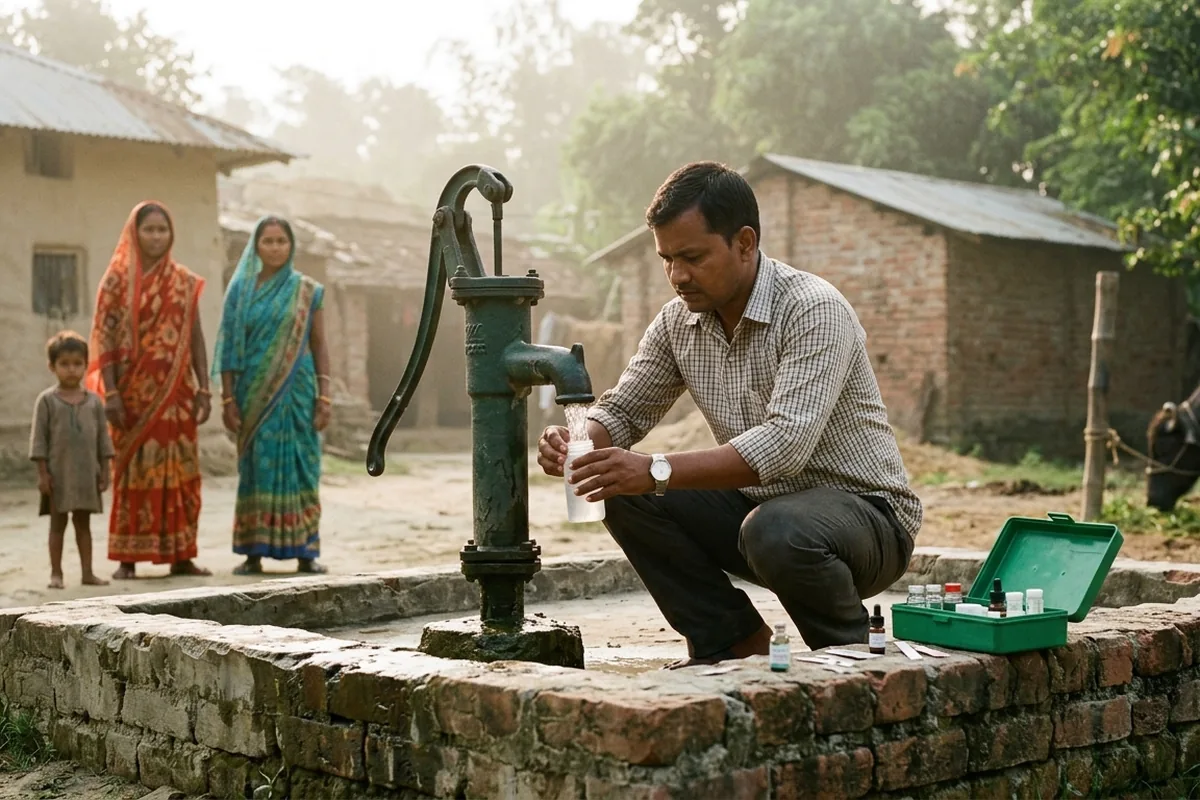
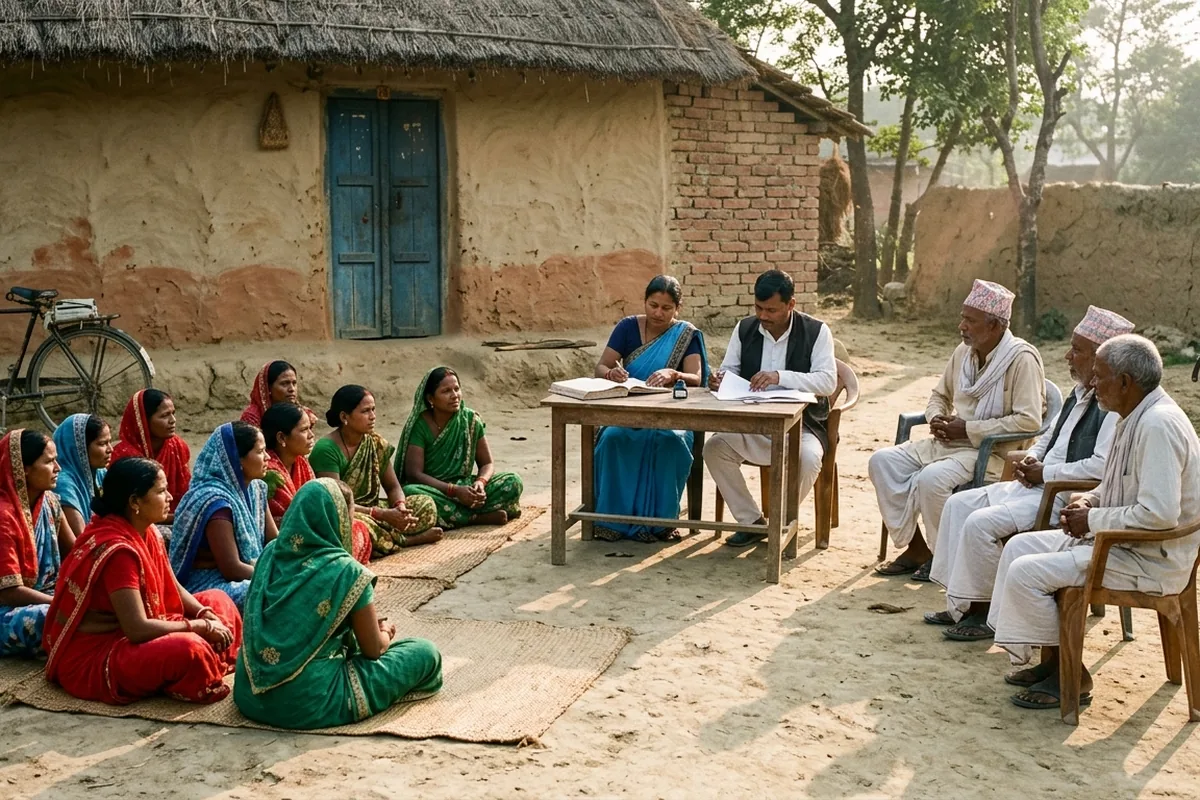
We run six programmes, and they are the ordinary, unglamorous kind: clean and safe drinking water, where the work is testing tube wells rather than cutting ribbons, and education for every child, where the barrier is usually fees, uniforms and books rather than ability. The full list of causes this charity in Nepal runs sits on one page, and you can read about our non-profit organization in Nepal — who is on the committee, where we are based — on another.
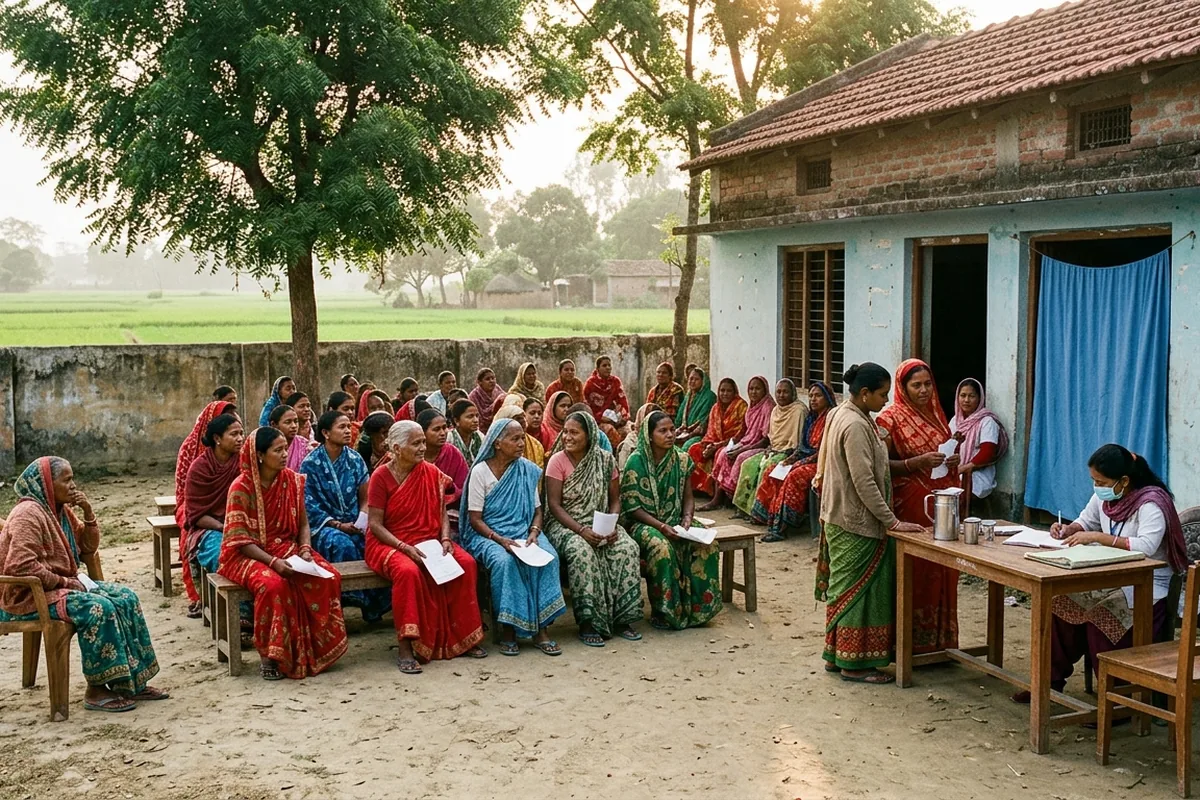
We also work with public bodies rather than around them; our free cervical cancer screening camp at Dhanki Pokhari was organised with support from the Ministry of Health and Population, Madhesh Province. That is a check you can make independently, which is the point of mentioning it.
Be clear-eyed about the limits of a small local organisation. We cannot absorb a large grant quickly, we cannot issue you a receipt that your home tax office will honour, and our overhead is low but it is not zero — someone keeps the accounts, files the renewal and pays for the fuel. What we can do is show you the ward, the household and the register.
Questions donors actually ask
Can I donate to an NGO in Nepal from abroad?
Yes, by bank transfer or a licensed remittance service into the organisation's own account. For anything at project scale, ask first whether the organisation has Social Welfare Council permission for foreign assistance under section 16, because the bank will ask for it.
Are donations to a Nepali charity tax deductible?
For Nepali taxpayers, yes, up to Rs 100,000 or five percent of adjusted taxable income, whichever is lower, and only to an IRD-approved tax-exempt organisation. For US taxpayers, no — the IRS does not allow a deduction for gifts to foreign organisations. Ask a tax adviser in your own country before assuming otherwise.
How do I check that a charity in Nepal is genuine?
Ask for the District Administration Office registration certificate, the current year's renewal, the latest audit report and the PAN. Then call the ward office and ask whether they know the organisation. Anyone genuine expects this.
Is it better to send money or goods?
Money, in nearly every case. Goods shipped from abroad attract customs handling, arrive late and are frequently the wrong size, season or specification. Cash bought locally supports local traders and reaches the household in days.
How small a donation is worth sending?
Small enough that the transfer fee does not swallow it. A wire that costs Rs 3,000 to send Rs 5,000 helps the bank, not the village. Pool small gifts, send them less often, or give time instead.
Come and look before you give
The honest invitation is not "donate now." It is this: write to us through our contact page and ask for three documents — the registration certificate, the current renewal, and a written costing for whichever programme interests you. If you are in Dhanusha or passing through Janakpur, come to Ganeshman Charnath and see a water test or a health camp being run before you decide anything. Donors who have stood in the courtyard ask better questions afterwards, and we would rather have those donors.
Leave a comment
Your email address will not be published. Required fields are marked *