
CSR Partnership With an NGO in Nepal: Madhesh Guide
A practical page for companies, banks and branch managers who must place a 1% CSR allocation before the fiscal year closes: what the law allows, what documents a partner NGO in Dhanusha must supply for your audit, and what reporting comes back.
In this article (7)
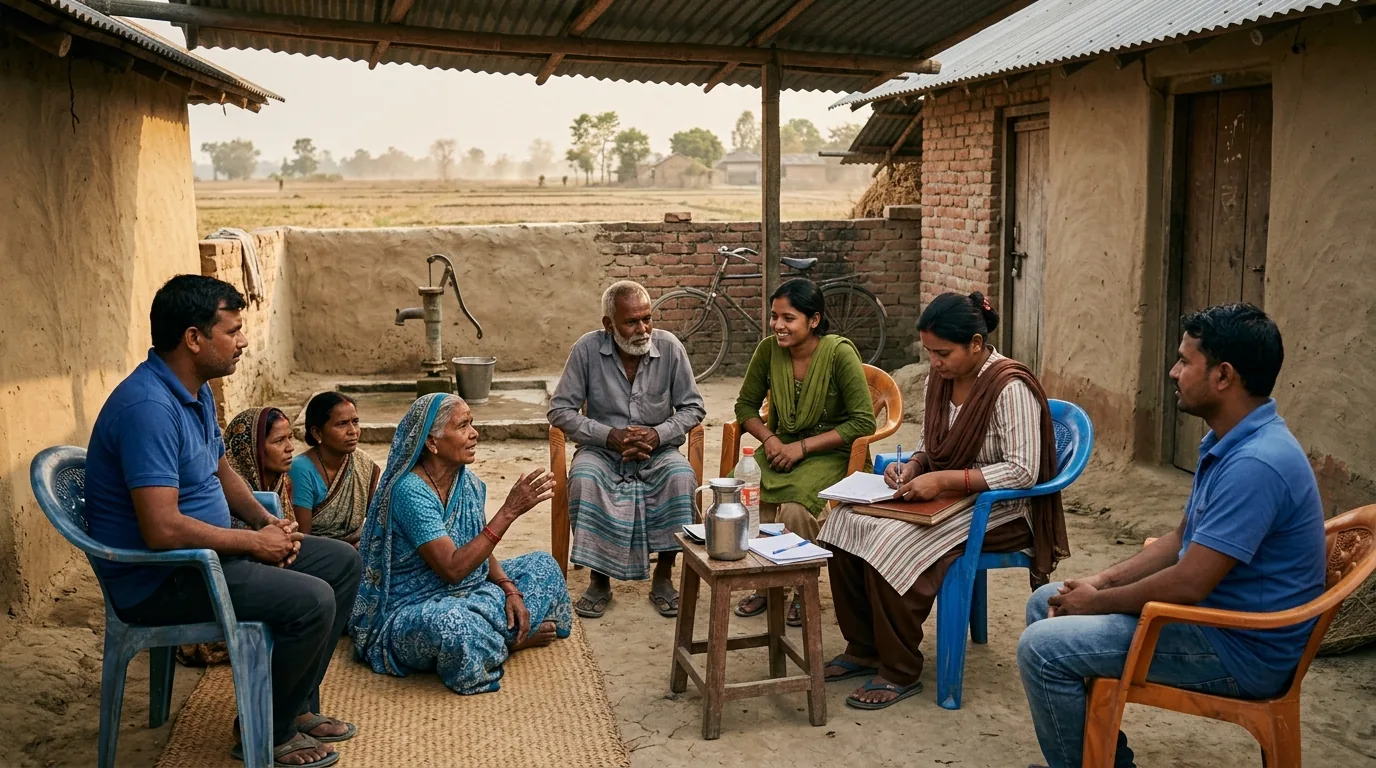
If your company has a corporate social responsibility allocation still sitting in the fund and an auditor asking what became of it, the useful question is not what CSR means. It is who can receive the money, spend it on something that still exists afterwards, and hand back paperwork that holds up. This page answers that from the receiving side of a CSR partnership with an NGO in Nepal. Shrijanshil Nepal is a registered non-profit organization in Nepal working in Ganeshman Charnath Municipality, Dhanusha, Madhesh Province. What follows is what we can take on, what documents go back to your finance department, and what we will not do.
The two CSR rulebooks, and what each one demands
Nepal has no single CSR act. Two separate regimes cover most of the money, and which one binds you changes the deadlines.
Industry.Section 54 of the Industrial Enterprises Act 2076 requires a medium or large industry, and any cottage or small industry with annual turnover above Rs 15 crore, to set aside at least one percent of annual net profit every fiscal year, spend it in prescribed areas under an annual plan, and report the spending to its registering body within six months of the fiscal year ending. Miss it and Section 43(7) allows a fine of 1.5 percent of yearly net profit, with a further 0.5 percent for each additional year the obligation stays unmet. At least 50 percent of the set-aside amount has to be spent in the area affected by the industry itself, and the work is meant to be coordinated with the local level, as practitioners reading the Industrial Enterprise Rules 2078 set out.
Banks and financial institutions. Nepal Rastra Bank requires Class A, B and C institutions to put a minimum of one percent of net profit into a separate CSR fund, to be spent in the following fiscal year. The central bank has since tightened the heads: spending is to go to housing, education, health and women's and children's empowerment among communities in extreme poverty, and each institution must file its bi-annual activity list with NRB at least 15 days before the half-year begins, under the amended CSR guidelines. Branding, institutional promotion and showpiece projects are explicitly out, and the fund cannot be confined to one favoured geography.
The practical consequence for a branch manager in Janakpur: a fund built out of FY 2082/83 profit has to be spent during FY 2083/84, which closes on 31 Ashad 2084. It is late September now. That is roughly nine months, and a project that survives an audit takes considerably longer to arrange than a cheque takes to sign.
The eight prescribed heads
Rule 43 of the Industrial Enterprise Rules 2078 lists the areas CSR money may go to, in coordination with local government:
- Disaster prevention, preparedness and rescue
- Medicine and equipment for community health institutions, health awareness, health camps
- Conservation of art, cultural heritage and monuments
- Skill development and income generation for low-income, rural, disabled, minority and marginalised groups
- Scholarships and educational materials for community schools and universities
- Pollution control, waste management, plantation, water source protection, alternative energy
- Social awareness activity
- Social infrastructure: drinking water, roads, drainage, community health buildings
Five of those heads describe work we already run. You can read the causes this charity in Nepal runs and what we actually do ward by ward in Dhanusha before you decide whether the fit is real.
What a non-profit organization in Nepal can deliver for Rs 1–10 lakh
We do not publish unit prices, because the honest figure depends on how many wards, how far the nearest health post is, how many participants a trade can absorb, and what the municipality is already funding. Ask for a written proposal and it will come with line items and a ceiling. What is reliable is the shape of a project at each size.
| Budget band | Shape of the project | What is left afterwards |
|---|---|---|
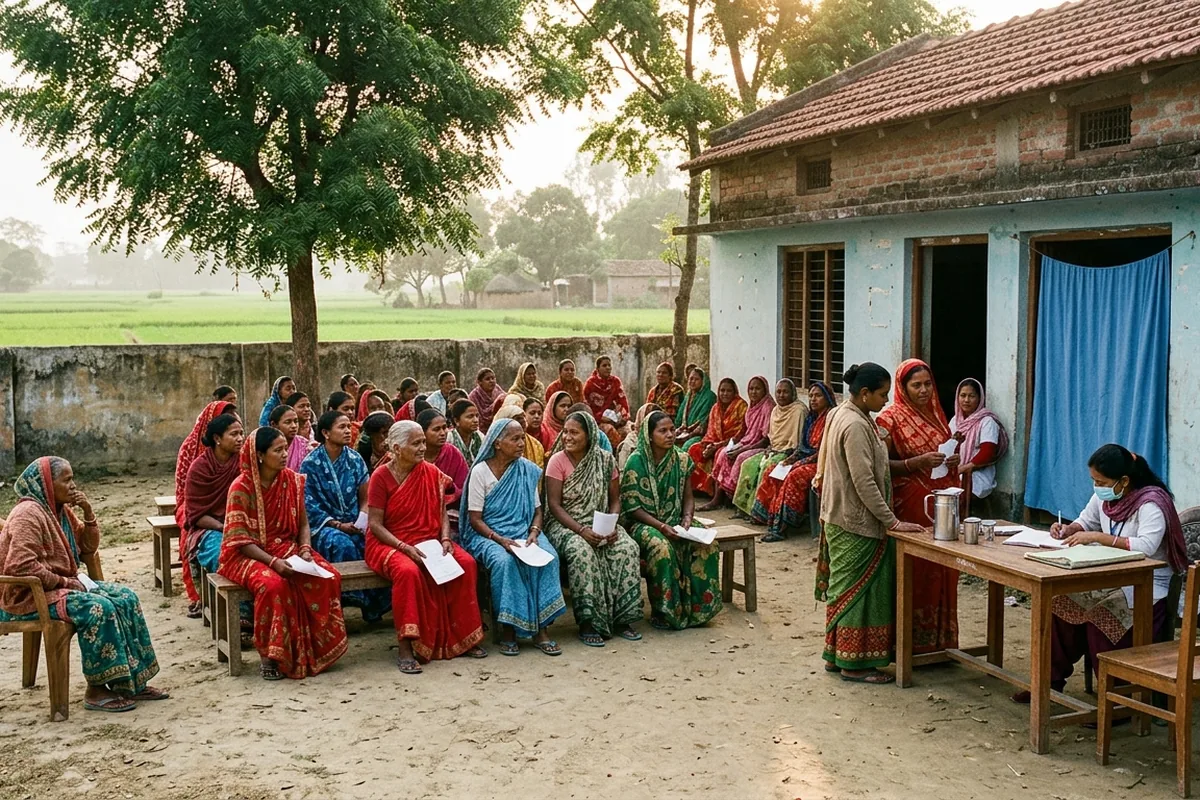
| Rs 1–2 lakh | One bounded activity in one ward: a general health camp day, a plantation drive with tree guards, a school materials distribution | Attendance register, referral list or a counted number of guarded saplings |
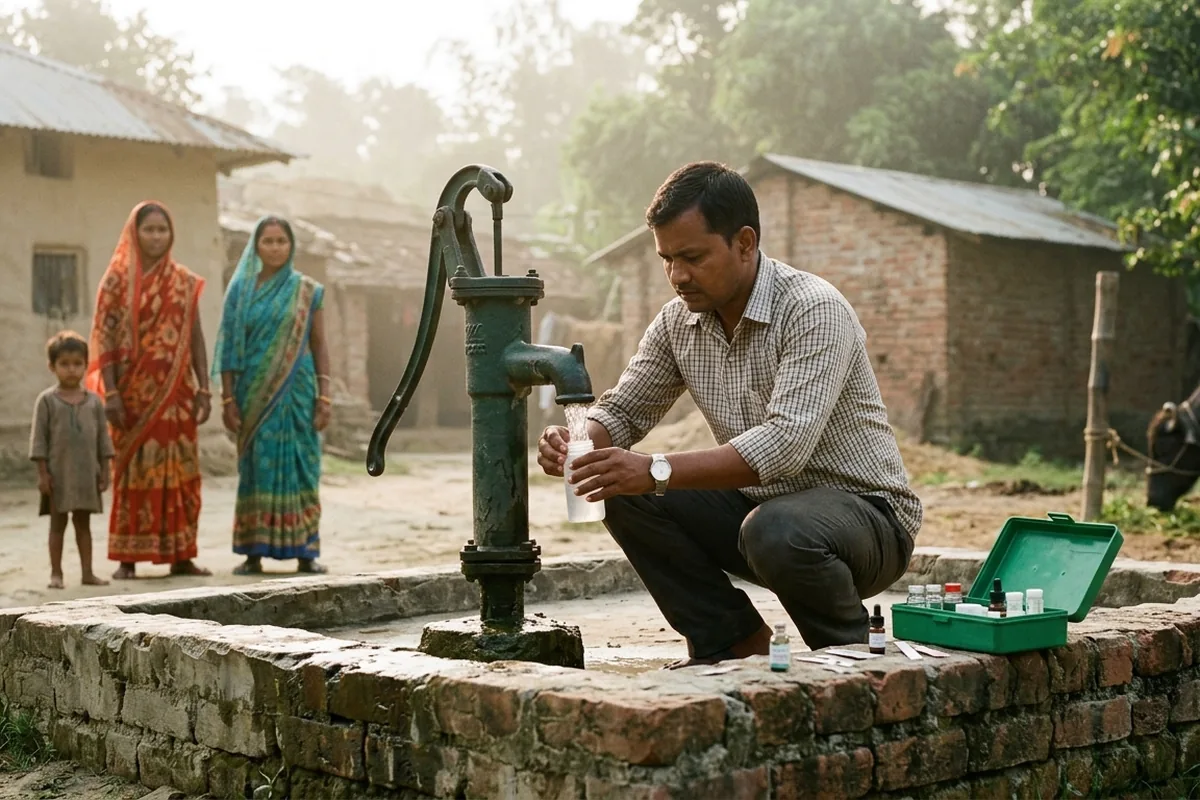
| Rs 2–5 lakh | A cohort or a round: one women's skill-training batch, a tube-well water-quality testing round across a ward, a scholarship cohort for one school year | Named participant list, lab results per well, school-verified fee receipts |
| Rs 5–10 lakh | Multi-ward or multi-month: a specialist screening camp with follow-up and referral tracking, a livelihood package with post-training follow-up visits | Screening register, follow-up outcomes, a three-month check on whether trainees are earning |
Two honest warnings on sizing. First, the cheapest part of a camp is the camp; the follow-up referral is where the money and the value sit, and a budget that funds only the day is a budget that funds a photograph. Second, the 50 percent affected-area rule means an industry in Bara cannot simply route its whole allocation to Dhanusha because we are easy to work with. Check your own obligation first.
The documents to demand before you transfer anything
Your internal audit will want these regardless of which NGO you choose, so ask for them in writing at first contact:
- Registration certificate from the District Administration Office, plus the current year's renewal — the renewal matters more than the original
- PAN certificate and a bank account in the organisation's name, never an individual's
- Latest audit report signed by an ICAN-registered auditor, and the annual general assembly minute that adopted it
- Social Welfare Council affiliation, where the organisation's work requires it
- A written agreement or MoU naming the activity, the ward, the timeline, the ceiling and the reporting dates
- A board resolution on your side approving the allocation against a named head
We set out how to run those checks on any Nepali organisation, including ours, in how to check if an NGO in Nepal is registered. Run them on us.
On tax, ask your auditor, not us
The Industrial Enterprises Act treats the CSR amount set aside under Section 54 as deductible expenditure. That is a different route from an ordinary charitable gift, which under Section 12 of the Income Tax Act 2058 is capped at Rs 100,000 or five percent of adjusted taxable income, whichever is lower, and only to a body the Department has approved as tax-exempt. Which route applies to your transfer is a question for your auditor and the Inland Revenue Office, and we will not pretend otherwise.
What reporting comes back
Every rupee that comes in under an agreement leaves with paper attached: a signed receipt on transfer, an itemised statement of spending against the agreed line items, an activity report with dates, ward numbers and counted participants, photographs, and a completion letter. Where the activity ran with a ward office or a school, their attestation goes with it. All of it has to reconcile to the organisation's annual audit and be readable out loud at the public social audit — the process is described here in Nepali. That reconciliation is the point. A report that cannot be traced back to an audited line is not a report.
What we will not do with a CSR budget
- Branding-led spend. NRB prohibits it for banks, and it produces nothing. A banner is not a programme.
- Inflated numbers. If 60 women attend, the report says 60. We would rather lose the partnership than sign a count we cannot show a register for.
- A receipt ahead of the work. Money received in Ashad for a camp held in Kartik is reported as money received in Ashad and spent in Kartik.
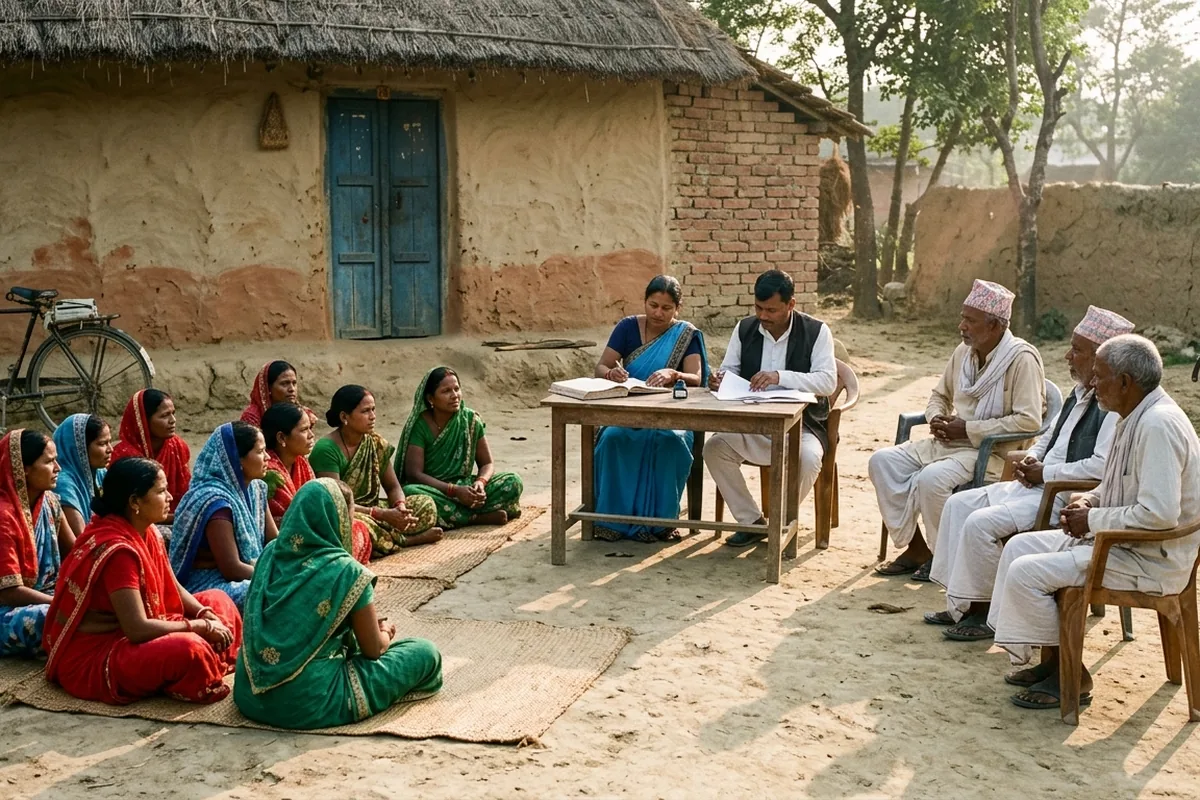
- Work that routes around the ward office. The rules expect coordination with the local level, and in practice the ward is what makes a camp fill up.
- Foreign-origin funds on a short timeline. If the allocation comes from a foreign parent or a foreign account, the foreign-assistance approval route applies and it is slow. See what to check before giving to a charity in Nepal.
One thing worth watching before you commit to a multi-year structure: the government has floated pooling CSR money into a central state fund as part of its governance roadmap, a plan the private sector has opposed. Nothing has passed. It is a reason to place this year's allocation in a defined local project now rather than to wait.
Questions companies ask us
Can a company give its CSR money directly to an NGO?
Yes. The obligation is on the company to spend the allocation in prescribed areas and report it; implementing through a registered NGO under a written agreement is a normal way to do that, provided the documentation trail exists. The compliance risk sits with your records, not with ours.
Can a bank spend its whole CSR fund in one district?
Not comfortably. NRB expects spending spread across geographies and directed at poor and disadvantaged groups rather than confined to one area, and plans go to the central bank in advance. A Madhesh project should be part of your plan, not the whole of it.
What happens if we do not spend the allocation at all?
For industry, Section 43(7) allows a fine of 1.5 percent of yearly net profit, rising by 0.5 percent per additional year. For BFIs the fund stays on the books and the unspent balance becomes a recurring supervisory question.
Is CSR in Nepal mostly a box-ticking exercise?
Often. Commentators point to fragmented rules, philanthropy that substitutes for responsible operations, and weak collaboration between companies, government and NGOs, as Nepal Economic Forum argues. The cure is unglamorous: one defined activity, one ward, counted results, an auditable trail.
Starting a conversation
If you have an allocation to place in Dhanusha or elsewhere in Madhesh this fiscal year, write to us with three things: the amount, the head it must sit under, and your reporting deadline. We will come back with a written proposal naming the ward, the activity, the timeline and a ceiling, or we will tell you it does not fit our programmes and say so plainly. You can read about our non-profit organization in Nepal first, and reach the office through the contact page. Visitors are welcome at the office in Ganeshman Charnath before any money moves, and we would prefer that you came.
Leave a comment
Your email address will not be published. Required fields are marked *