
How to Check if an NGO in Nepal Is Registered
Three documents and one phone call are enough to tell a working organisation from a dormant one. Here are the checks a donor, volunteer or ward secretary can run on any Nepali NGO, and the same checks run on us.
In this article (7)
- Check 1: the District Administration Office registration certificate
- Check 2: the annual renewal, which is the check most people skip
- Check 3: PAN, and the receipt you should get
- Social Welfare Council affiliation: when it matters, and when its absence means nothing
- Where to check if an NGO in Nepal is registered, in person
- Checking us: what this non-profit organization in Nepal will show you
- Frequently asked questions
To check if an NGO in Nepal is registered, you need three things: its registration certificate from the District Administration Office, the date of its most recent annual renewal on that certificate, and its PAN. Any genuinely registered non-profit organization in Nepal keeps all three in one file and will show them to you without being pushed. What nobody says plainly is that there is no single national website where you type in a name and get an answer, so this takes a phone call and a look at paper rather than a search.
Almost everything that ranks for this question was written for people who want to start an organisation, by law firms selling registration services. This is written from the other side of the counter, by an organisation in Ganeshman Charnath, Dhanusha that gets asked these questions by ward secretaries, donors and volunteers, and that publishes the answers so readers can run the same checks on us.
Check 1: the District Administration Office registration certificate
Nepali NGOs are not registered with a ministry in Kathmandu. They are registered district by district, under the Associations Registration Act, 2034, whose Section 3 states that "No person shall establish or cause to be established any Association without having it registered pursuant to this Act". Section 4(2) makes the local authority, in practice the Chief District Officer, the body that registers the association and issues the certificate.
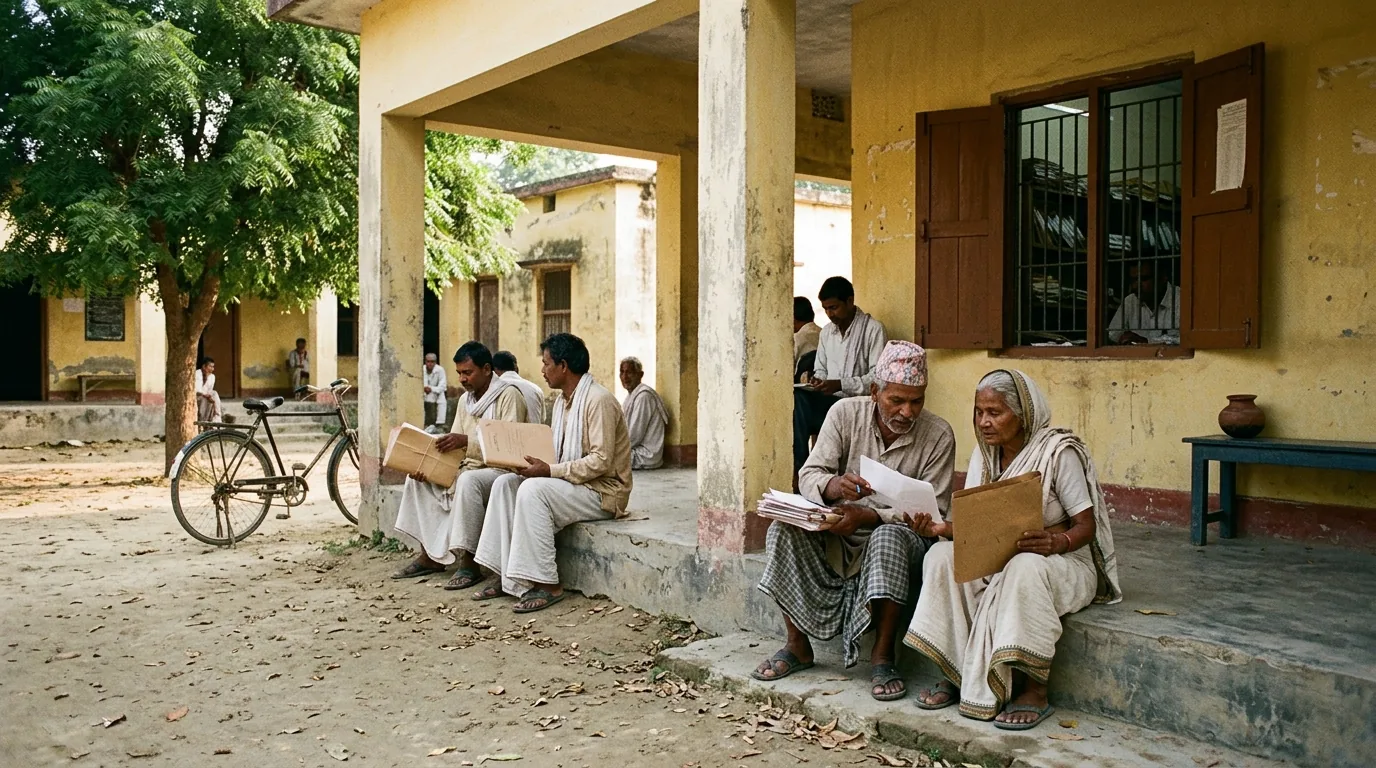
Ask to see the original. On it, check four things:
- The exact name. It should match the name on the signboard, the receipt book and the bank account, letter for letter. Similar names are common and are how confusion starts.
- The district. The certificate names the district office that issued it. If an organisation registered in one district is running programmes in yours, ask which local office it coordinates with here.
- The registration number and date. Write both down. That is what the district office will ask you for.
- The objectives or sector. Registration is granted for stated objectives. Several district offices now insist that an organisation register for one sector only, as the notice from DAO Darchula sets out.
Registration itself is not expensive or exotic. A district citizen charter such as DAO Rautahat's lists a registration fee of Rs 1,000, against a statute in three copies, citizenship copies of the committee members, a recommendation from the local level and a police report, issued the same day the file is complete.
Check 2: the annual renewal, which is the check most people skip
A registration certificate proves something happened once. The renewal proves the organisation is still alive. Renewal is annual, and to get it an organisation has to produce, as the published renewal checklist shows, the decision of its general assembly, an audit report signed by an auditor with a valid licence, an annual progress statement, a recommendation from the local level and a tax clearance from the Inland Revenue Office. The fee is Rs 500, and district offices state that a further fine applies if renewal is late.
So one date on a certificate tells you a great deal. It means the organisation held a general assembly, closed its books, had them audited, paid its tax and got its ward or municipality to vouch for it, all within the last year.
This is also where most organisations fail. Ratopati, reporting from Banke, counted 1,621 registered organisations in that district and only 185 renewals, 11.41 per cent, in the year covered. District offices do eventually act: DAO Darchula gave organisations that had not renewed for three years or more fifteen days to renew before cancellation of registration.
Practical rule: the last renewal should be for the fiscal year that just ended or the current one. A certificate last renewed three or four years ago is not proof of fraud, but it is proof that nobody has held a general assembly or an audit in that time, and you should ask why before you hand over money or a year of your labour.
Check 3: PAN, and the receipt you should get
Every registered organisation that handles money has a Permanent Account Number. Ask for the PAN certificate and check the number on the Inland Revenue Department's PAN search page, which is free and open to anyone holding the number. The name that comes back should be the organisation's name, not an individual's.
Then ask what receipt you will get for a donation. A tax-registered organisation issues a numbered receipt in its own name, and the same accounts that produce that receipt are what the auditor signs and the district office reads at renewal. Under Section 9 of the Associations Registration Act, the management committee must submit the statement of accounts with the auditor's report to the local authority every year. An organisation that will only take cash and will not put its own name on a receipt has failed the test at the first step.
Social Welfare Council affiliation: when it matters, and when its absence means nothing
Many people believe an NGO is only real if it appears on the Social Welfare Council list. That belief fails a lot of legitimate village organisations. As the register description at org-id.guide puts it, "Local NGOs do not need to be associated with the SWC, but may register with their local District Administration Office," and the SWC list "is thus not a complete list of all NGOs working in Nepal."
What the Social Welfare Act, 2049 does control is outside money. Section 16 requires an organisation seeking material, technical or financial assistance from foreign countries, international organisations or individuals to submit a project proposal to the Council, with a lighter route for yearly assistance up to Rs 200,000 for a project to be finished immediately, which may be taken on prior notice to the Council. Section 23(2) requires affiliated organisations to file their audit report with the Council within six months of the fiscal year ending.
So the useful version of this check is conditional. If an organisation tells you it is funded by a foreign donor or an INGO, ask to see the Council's approval for that project. If it is a small local body running health camps and scholarships on domestic support, its absence from the SWC list is normal. Law firm pages often describe affiliation as compulsory for everyone; the Act's own trigger is assistance. If you are the organisation rather than the donor, put that question to the Council or a lawyer before you assume either way.
Where to check if an NGO in Nepal is registered, in person
The district office holds the register, and a short visit or call settles it. For this district, the District Administration Office, Dhanusha is in Janakpur, on 041-4205110 and 041-4200075, open 09:00 to 17:00. Go with the registration number and the exact name.
Your ward is the faster route for most people. Because renewal needs a recommendation from the local level, the municipality or ward office generally knows which organisations are active in its area and which have gone quiet. A ward secretary can usually tell you in a minute what a website cannot.
| Ask for | What it proves | Verify with |
|---|---|---|
| Registration certificate (दर्ता प्रमाणपत्र) | The organisation legally exists, and for what objectives | The DAO named on it |
| Latest renewal (नवीकरण) | General assembly held, accounts audited, tax cleared this year | The DAO; your ward office |
| PAN certificate | Tax-registered, able to issue a receipt in its own name | IRD PAN search |
| Audit report | A licensed auditor examined the accounts | Auditor's licence number on the report |
| SWC approval letter | Foreign or international funding was approved | Social Welfare Council, Lalitpur |
Checking us: what this non-profit organization in Nepal will show you
We ask readers to run these checks on us rather than take our word. Our office is at Ganeshman Charnath–7, Dhanusha, in Madhesh Province, and the registration certificate, the current renewal and the PAN are kept there. Ask through our contact page or by phone and we will show the file, at the office or at your ward office, to any resident, ward secretary, volunteer or donor who wants to see it before working with us.
Two other things are worth checking on any organisation, including this one. First, whether the work is visible where it claims to happen: what we do ward by ward in Dhanusha is written so that a neighbour can confirm or contradict it. Second, whether public bodies have actually worked with it. Our free cervical cancer screening camp at Dhanki Pokhari was run with support from the Ministry of Health and Population, Madhesh Province, which is the kind of claim a reader can take to the ministry and test.
You can read more about our non-profit organization in Nepal, and see the causes this charity in Nepal runs in education, drinking water, community health, women's skill training, agriculture and tree plantation.
Frequently asked questions
Can I check an NGO's registration in Nepal online?
Not the registration itself. There is no public national database of DAO-registered associations. The one thing you can check online is the PAN, through the Inland Revenue Department's PAN search, and the SWC list for organisations affiliated with the Council. Everything else is a phone call to the district office.
Is an NGO fake if it is not on the Social Welfare Council list?
No. Local NGOs are not required to be associated with the Council, and the Council's list is not a complete list of organisations working in Nepal. Council approval becomes the relevant document when an organisation receives foreign or international assistance.
How often does an NGO in Nepal have to renew its registration?
Every year, at the district administration office, with an audit report, a general assembly decision, a local level recommendation and a tax clearance. District offices charge Rs 500 and add a fine for late renewal, and organisations that stop renewing for years can have their registration cancelled.
What if an organisation refuses to show its certificate?
Treat that as the answer. These are ordinary administrative documents, not private papers, and a working organisation produces them at every renewal anyway. Under Section 12(1) of the Associations Registration Act the local authority may fine each member of the management committee of an unregistered association up to Rs 2,000, so an organisation operating without registration has more to lose than you do by asking.
Does a genuine NGO ever ask volunteers or beneficiaries for money?
Joining a registered local organisation as a volunteer should not cost a fee, and services announced as free, such as a health camp, should be free at the point of use. If a payment is requested, ask what it is for and ask for a receipt in the organisation's name.
If you have run these checks and want to see the work up close, the most useful next step is not a donation. Come to a camp or a training in Ganeshman Charnath, or apply through become a volunteer, and check the files at our office on the same visit.
Leave a comment
Your email address will not be published. Required fields are marked *