NGO in Dhanusha: What We Do, Ward by Ward
A plain account of what a locally registered NGO in Dhanusha actually does: health camps, safe drinking water, scholarships, women's skill training, and how residents, ward offices and donors can check us before working with us.
In this article (7)
If you are searching for an NGO in Dhanusha, this page explains what a locally based organisation here actually does week to week: free health camps and screening, safe drinking water, school scholarships, women's skill training, and environment and youth work, carried out in named wards rather than described in general terms. Shrijanshil Nepal works out of Ganeshman Charnath Municipality in Dhanusha, Madhesh Province. Everything below is either work we have already run or public information you can check yourself, and our contact details are at the end so you can do exactly that.
Dhanusha in numbers, and why local organisations matter here
Dhanusha is one of the largest districts in Madhesh Province by population, and most of it is rural farmland rather than town.
| Item | Figure |
|---|---|
| Population (2021 census) | 867,747 |
| Area | 1,180.7 km² |
| District headquarters | Janakpurdham, Madhesh Province |
| Local levels | 1 sub-metropolitan city, 11 municipalities, 6 rural municipalities |
| Literacy rate | 65.22% |
| Main language | Maithili (80.4%) |
Those figures come from the district profile on Wikipedia's Dhanusha District page, which also records that agriculture, mainly rice and wheat, is the livelihood of the large majority of households. That combination of a big rural population, a literacy rate around two-thirds, and farming incomes that depend on one or two harvests is the reason so many small organisations here concentrate on the same handful of gaps: a doctor within reach, water that does not make children sick, school costs that a family can absorb, and a second income for women.
What an NGO in Dhanusha actually does
Directory listings tell you an organisation exists. They rarely tell you what it delivers. Here is the practical shape of our work, with the specific activities behind each heading. Our projects page carries the fuller record.
Health camps and specialist screening
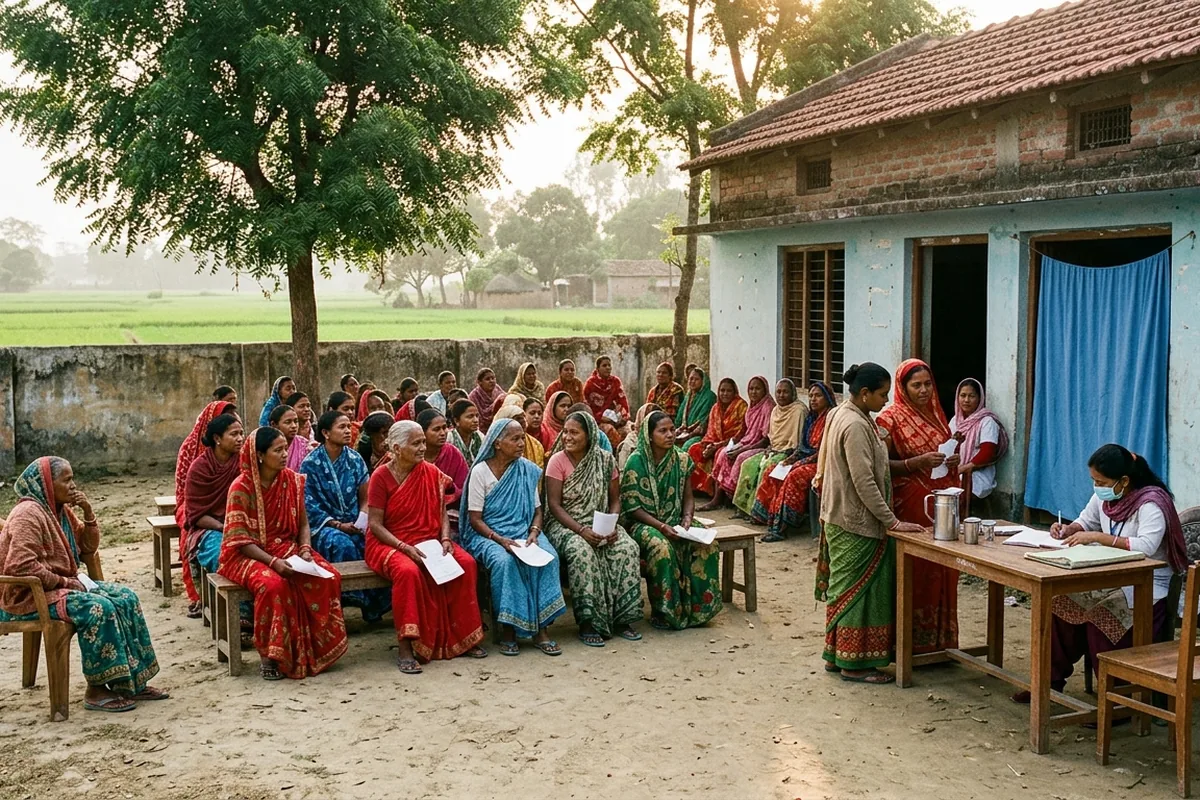
Free camps bring check-ups to people who would otherwise travel to Janakpur and lose a day's wage doing it. We have run a free health camp in Ganeshman Charnath offering check-ups and health awareness, and a free cervical cancer screening camp at Dhanki Pokhari, Ganeshman Charnath ward 1, led by specialist gynaecologists with support from the Ministry of Health & Population, Madhesh Province. A camp is a screening and referral service, not a substitute for a hospital. Anyone flagged at a camp still needs follow-up care at a health post or hospital, and anyone with symptoms between camps should go to their nearest health facility rather than wait.
Safe drinking water
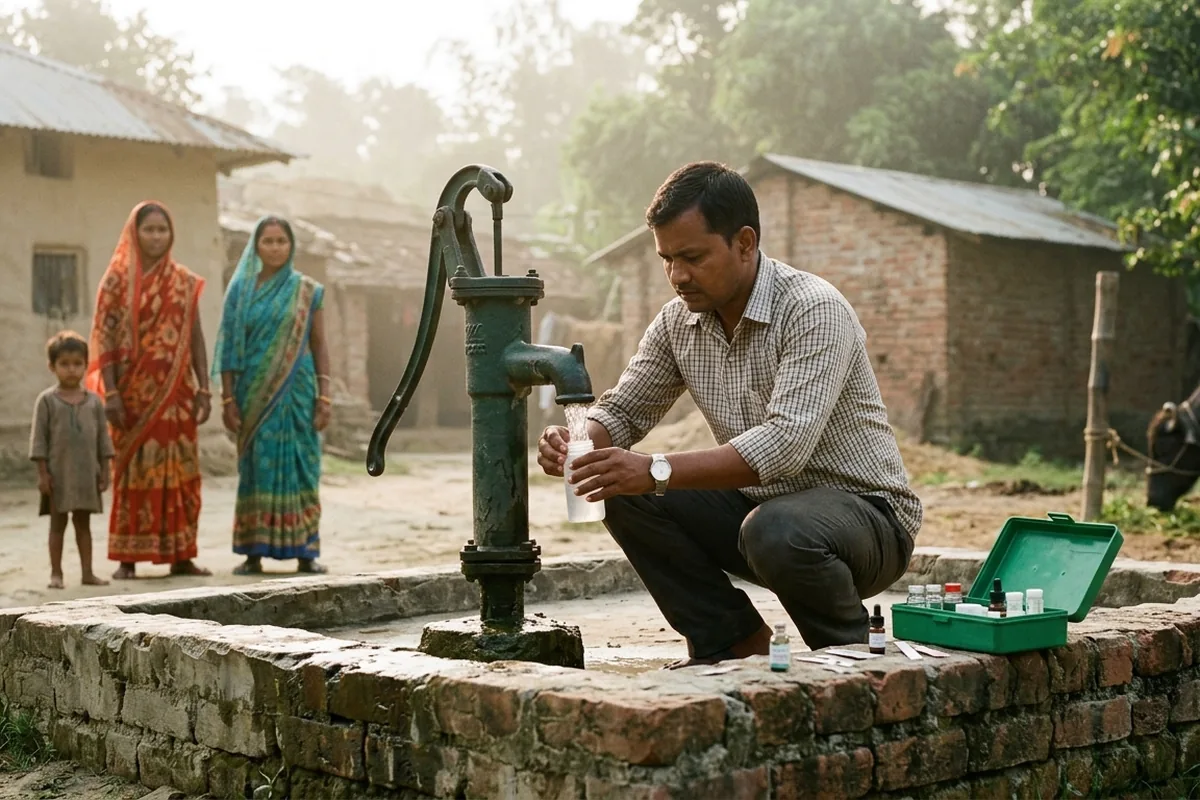
Water work in rural Dhanusha means tube-wells, household filters and water-quality testing, in that order of visibility and reverse order of attention. Testing is the part that gets skipped and the part that matters, because a well that looks fine can still be unsafe. Our water programme has installed tube-wells and filters and carried out quality testing for families in rural parts of the district.
Scholarships and education support
School is free in name; uniforms, copies, exam fees and transport are not. We award scholarships to students from low-income families so they can stay enrolled through the years when households are most tempted to pull a child out.
Women's skill training and livelihoods
Training only counts if it ends in income. Our skill-training programme for women is built around trades that can be practised at home and sold locally, so that the skill turns into earnings rather than a certificate.
Environment, agriculture and youth
Tree plantation drives with students and volunteers, agriculture and livestock support, and youth sports events promoting a drug-free community round out the year. The sports events matter more than they sound: they are one of the few settings where a large number of young people in a ward will sit and listen to a health message. Our causes page lists the areas we currently raise support for.
Where we work: Ganeshman Charnath Municipality
Ganeshman Charnath is one of Dhanusha's municipalities, formed in 2016 from eleven former VDCs and still divided into eleven wards. The 2021 census recorded 44,082 residents, with a literacy rate of about 64.85%, close to the district average.
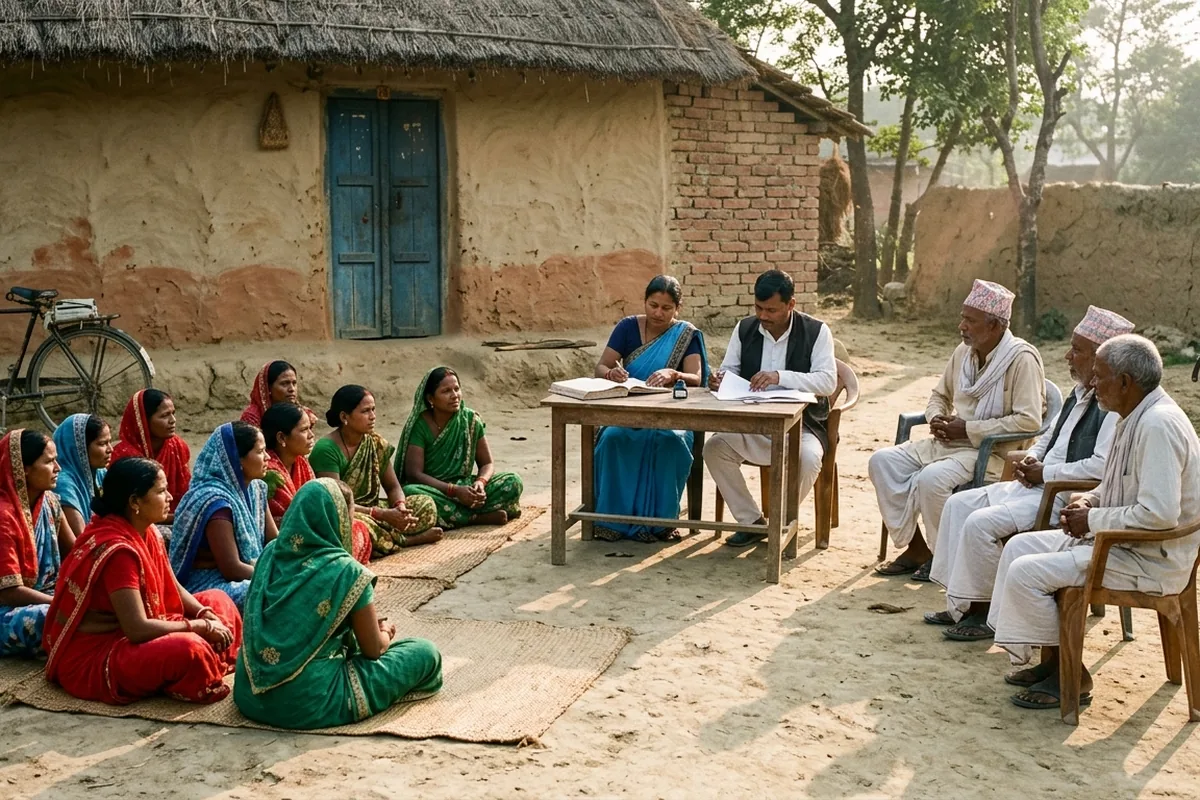
Eleven wards is a workable size for one organisation, and it is why we do not claim national coverage. Camps and installations are placed ward by ward in coordination with the ward office, which is also how we avoid duplicating something the municipality or another organisation has already delivered on the same tole. If your ward has not yet had an activity and you think it should, the ward chairperson is the right first call, and we will take the request from there.
How to check that an NGO in Dhanusha is genuine
Ask. A real organisation will not be offended, and this is the sequence a ward secretary or a donor should use.
- Ask for the registration certificate. Local NGOs in Nepal register with the District Administration Office under the Association Registration Act, 2034 (1977), which requires at least seven Nepali citizens as founding members. For Dhanusha, that office is the DAO in Janakpur.
- Check the renewal, not just the certificate. Registration is renewed every year at the DAO with a progress report, audited accounts and a tax clearance certificate, usually alongside a recommendation letter from the ward office. A certificate from three years ago with no current renewal tells you something.
- Check Social Welfare Council affiliation if foreign funding is involved. SWC affiliation under the Social Welfare Act, 2049 becomes relevant once an organisation takes foreign aid or runs funded social-welfare projects. The Council publishes its list of affiliated NGOs.
- Look for federation membership. The NGO Federation of Nepal, established in 1991, is a membership body with district committees and a public member database.
- Ask the ward office. The fastest check of all. Ward staff know which organisations have actually turned up in their ward and which only appear in lists.
Applying that test to us: ask us for our documents through the contact page or by phone on +977 9844038280, and ask the Ganeshman Charnath ward offices whether they have worked with us.
Working with local government and provincial partners
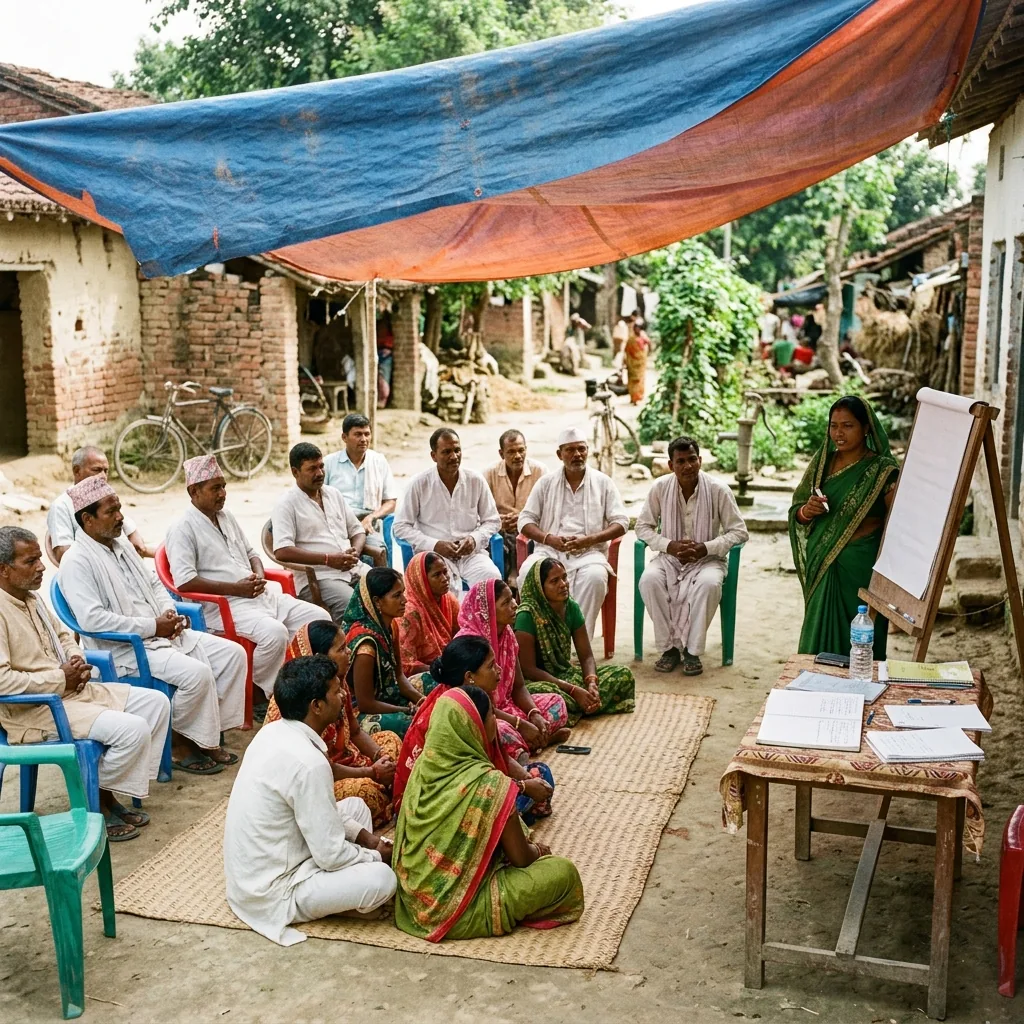
Almost nothing useful here is done by an NGO alone. Our cervical cancer screening camp ran with support from the Ministry of Health & Population, Madhesh Province, because specialist gynaecologists and screening supplies come through the health system, not through a small local organisation. The workable division is straightforward: government brings the mandate, the clinicians and the referral pathway; the local organisation brings the venue, the volunteers, the announcement in Maithili that actually reaches households, and the follow-up. More about how we are set up.
Frequently asked questions
How many NGOs work in Dhanusha district?
There is no single accurate public count. Local NGOs register at the District Administration Office in Janakpur, a subset affiliate with the Social Welfare Council, and another subset joins the NGO Federation of Nepal. The widely circulated Dhanusha lists online are old SWC downloads, so treat any number you find as a floor and check the current status of any individual organisation directly.
How do I check if an NGO in Dhanusha is registered?
Ask the organisation for its DAO registration certificate and its current-year renewal, then confirm with the District Administration Office, Dhanusha. For anything involving foreign funding, also check the Social Welfare Council list.
Which NGO works in Ganeshman Charnath Municipality?
Shrijanshil Nepal is based in and works across Ganeshman Charnath. Documented activity includes a health camp in the municipality and a specialist screening camp at Dhanki Pokhari in ward 1. Other district-wide and national organisations also operate in parts of Dhanusha.
Can an NGO in Dhanusha pay my medical bills?
We do not provide cash for medical treatment. What we provide is free camps, screening and referral. For treatment costs, the right offices are your ward office, the municipality health section and the Ministry of Health & Population, Madhesh Province, which administer government health schemes. Speak to a doctor about your condition and to those offices about the money.
How can a donor or partner verify our past work?
Each activity is written up with its location and partners as it happens. Read the record, then ask us for whatever it does not cover.
If you want to work with us
The most useful thing a resident of Ganeshman Charnath can do is tell us which ward needs the next camp or the next tube-well, and the most useful thing a ward office or provincial programme can do is bring us a service it wants delivered locally. Both start the same way: call +977 9844038280 or write to us through the contact page, and say which ward you are in.