
Request a Free Health Camp From an NGO in Dhanusha
A camp looks simple from the outside: doctors arrive, a school fills up, medicines are handed out. Here is what has to line up behind that, what your ward or school has to supply, and how to send the request.
In this article (8)
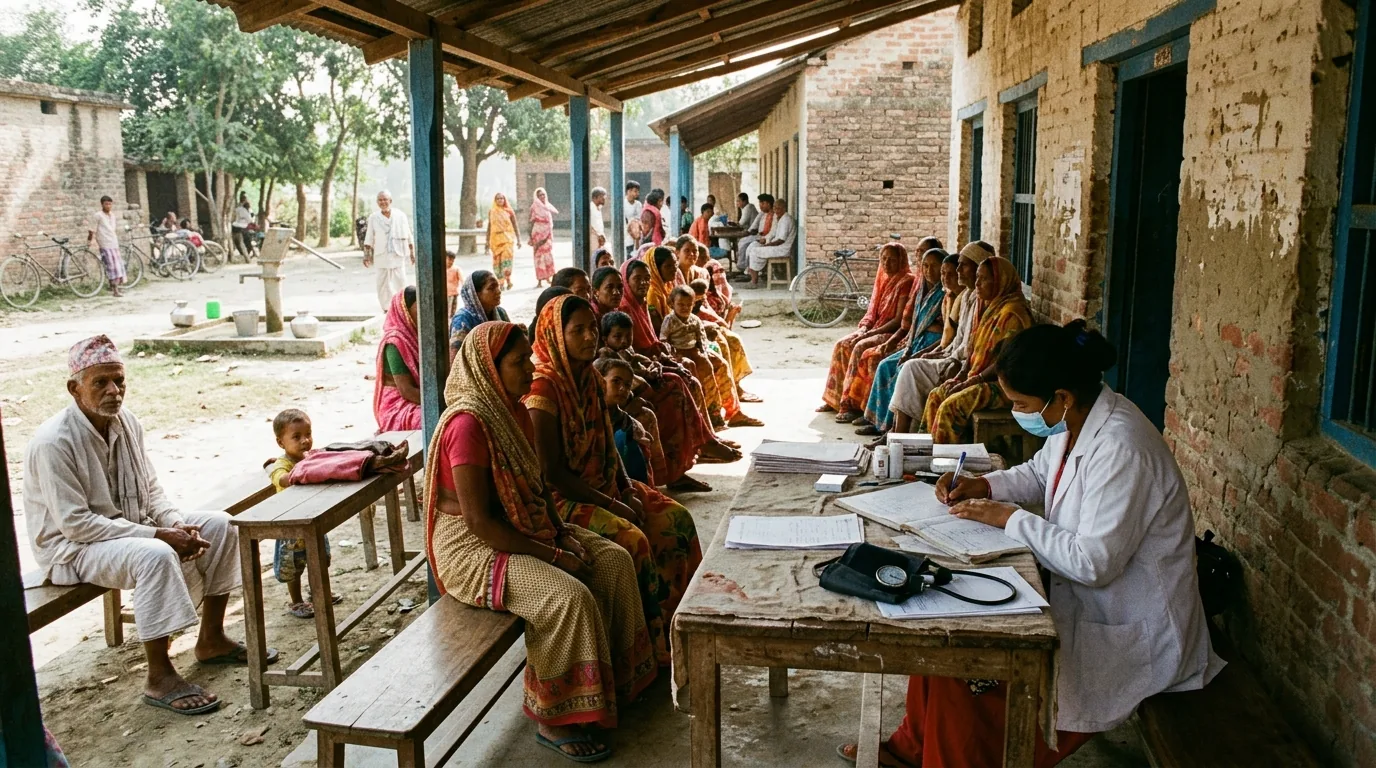
To request a free health camp from an NGO in Dhanusha, you need one written request, addressed to your ward office and copied to the organisation, stating three things: where the camp would be held, roughly how many people will come, and which two local people will open the building at seven in the morning and stay until it closes. Everything after that is the organisation's problem. Shrijanshil Nepal is a registered non-profit organization in Nepal based in Ganeshman Charnath Municipality, Dhanusha, and what follows is how the arranging side works, described from our own camps.
Almost everything published about health camps in Nepal is written after the event: photographs, a headcount, a line of thanks. Nothing tells a ward secretary, a head teacher or a tole committee what to actually ask for. This page is that side of it.
Who supplies the doctors
No small NGO in Madhesh Province keeps doctors on its payroll for camp work. Clinicians come from three places, and which one you get decides what the camp can do:
- Volunteering specialists. At our free cervical cancer screening camp at Dhanki Pokhari Primary School, Ganeshman Charnath–01, on 5 July 2026, the screening, examinations and one-to-one counselling were done by specialist gynaecologists and obstetricians who gave the day. Our volunteers ran registration, guided women through the queue and assisted the medical team. That division is typical: the organisation supplies logistics, transport, volunteers and announcements, and the medical side is borrowed.
- Government health workers released for the day, usually from the local health post or the municipal health section, which is why the health post has to be in the conversation from the first week and not told afterwards.
- Hospital or medical college teams, which arrive with their own protocols and usually set the ceiling on numbers.
This pattern is not peculiar to us. The Real Medicine Foundation, which has run camps across Nepal for years, describes camps that begin when communities invite them, with legal consent obtained from local authorities, set up in schools and other village buildings and staffed by Nepali physicians, paramedics and nurses. The request comes from the community; the clinicians are assembled around it.
What the province and the local level contribute
Provincial support is what turns a general check-up into a specialist camp. Our cervical screening camp was organised with support from the Ministry of Health and Population, Madhesh Province in Janakpurdham, and that support is the reason gynaecologists were in a village primary school for a day rather than a general practitioner with a blood pressure cuff.
The local level matters more than most people expect, because local governments can pay. Since federalism, NGOs in Nepal increasingly receive camp requests from local governments rather than the reverse, and the money is real: one rural municipality in Taplejung spent about USD 7,475 on a three-day camp out of an annual health budget of USD 224,254, and over 1,600 people were seen across 13 service types including cataract and ENT surgery. A camp your ward has budgeted for can be several times the size of one an organisation funds on its own.
What your ward, school or tole has to provide
| What is needed | Why it decides the camp |
|---|---|
| A building with rooms plus shaded space outside | A school on a holiday is the standard venue. Registration and waiting happen outside; examinations need a door that closes. |
| At least one lockable private room | Women's health, counselling and any screening cannot be done in a corridor. No private room means no women's services. |
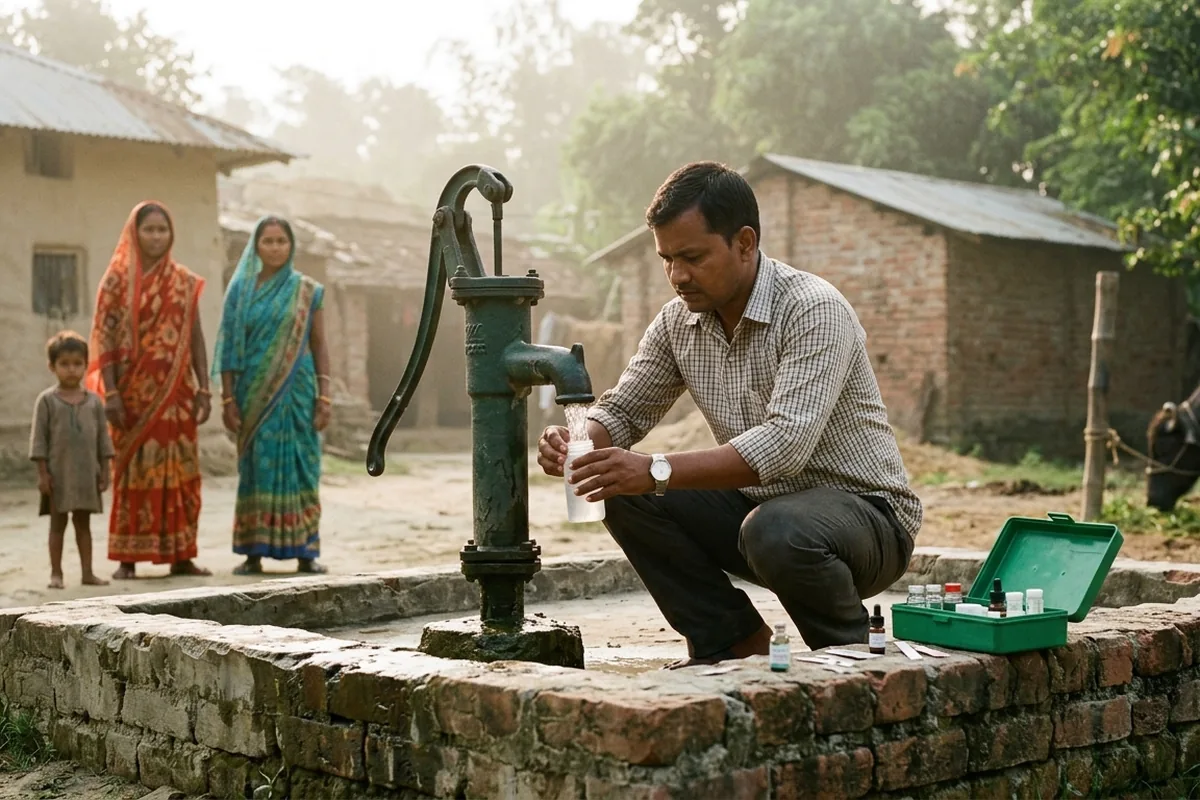
| Drinking water and a usable toilet | For patients and the medical team, through a six-hour day. |
| Tables, chairs and benches | Registration desk, consultation tables, dispensing point, waiting rows. |
| An expected headcount, broken down | Elderly, pregnant women, children under five, people with diabetes or high blood pressure. Medicine quantities and staffing are ordered off this number, so a guess of 400 when 900 arrive means people are turned away at noon. |
| Two named local contacts with phone numbers | One to open the building and handle the venue, one to manage the queue. Without names in the letter, the request stalls. |
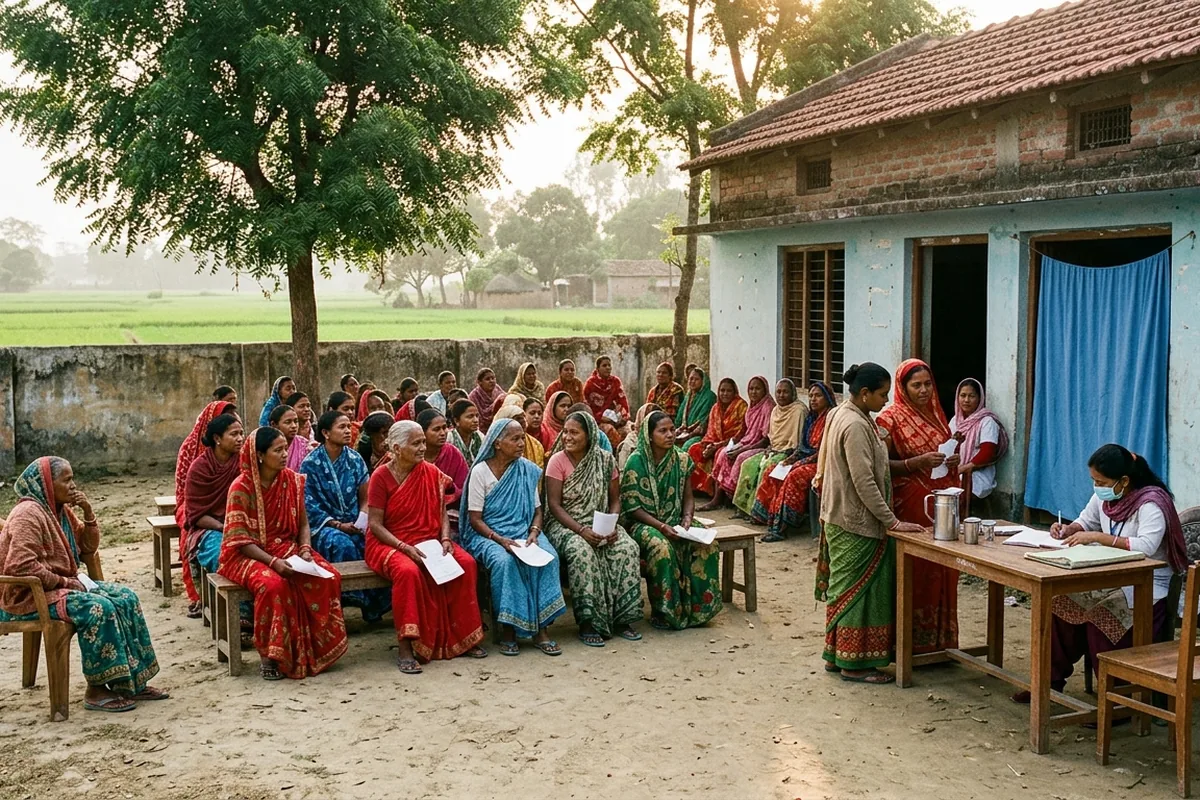
| Announcement locally | Ward notice, school notice, temple and mosque announcements, tole groups. Attendance is decided in the four days before the camp, not on the day. |
How long it takes to arrange
Allow a month at minimum for a general camp, and longer if you want specialists, because a specialist camp waits on the calendar of people who are not free to choose it. The sequence is roughly: the request is received and the venue confirmed; the health post and ward are brought in; clinicians are asked and a date is fixed around their availability; medicines and consumables are ordered against the expected headcount; the camp is announced locally in the final week. The step that slips is almost always the clinicians, which is why a request naming two possible dates moves faster than one naming a single fixed date.
What a camp can and cannot do
| Reasonable to expect | Do not expect |
|---|---|
| Doctor consultation for common complaints | X-ray, ultrasound or surgery, unless a hospital team is explicitly part of the camp |
| Blood pressure and blood sugar checks | Ongoing treatment of a chronic condition |
| Women's health services and counselling, where a private room exists | Specialist care for a condition the camp was not set up to address |
| A short course of free medicines for what is diagnosed | A year's supply of anything |
| A referral slip for hospital-level care | The hospital visit itself being free or arranged for you |
Be clear-eyed about the limit. Health camps in Nepal are largely unregulated, and follow-up after a camp is the weakest link: diagnosing hypertension and handing over a month of tablets helps nobody if the health post has no supply in the second month. A camp is a way of finding people who need care. The care itself is the health post's year-round job, and free basic and emergency health services are a right under the Public Health Service Act 2075. If you want a camp that matters, ask the health post to sit in on it and take the referral list afterwards. More detail on what a camp day itself involves is in our account of a free health camp in Ganeshman Charnath, and in Nepali in निःशुल्क स्वास्थ्य शिविरमा कसरी सहभागी हुने.
How to request a free health camp from an NGO in Dhanusha
- Write one page. Ward number and settlement, proposed venue, two possible dates, expected attendance with the breakdown above, and the two local contact names and numbers.
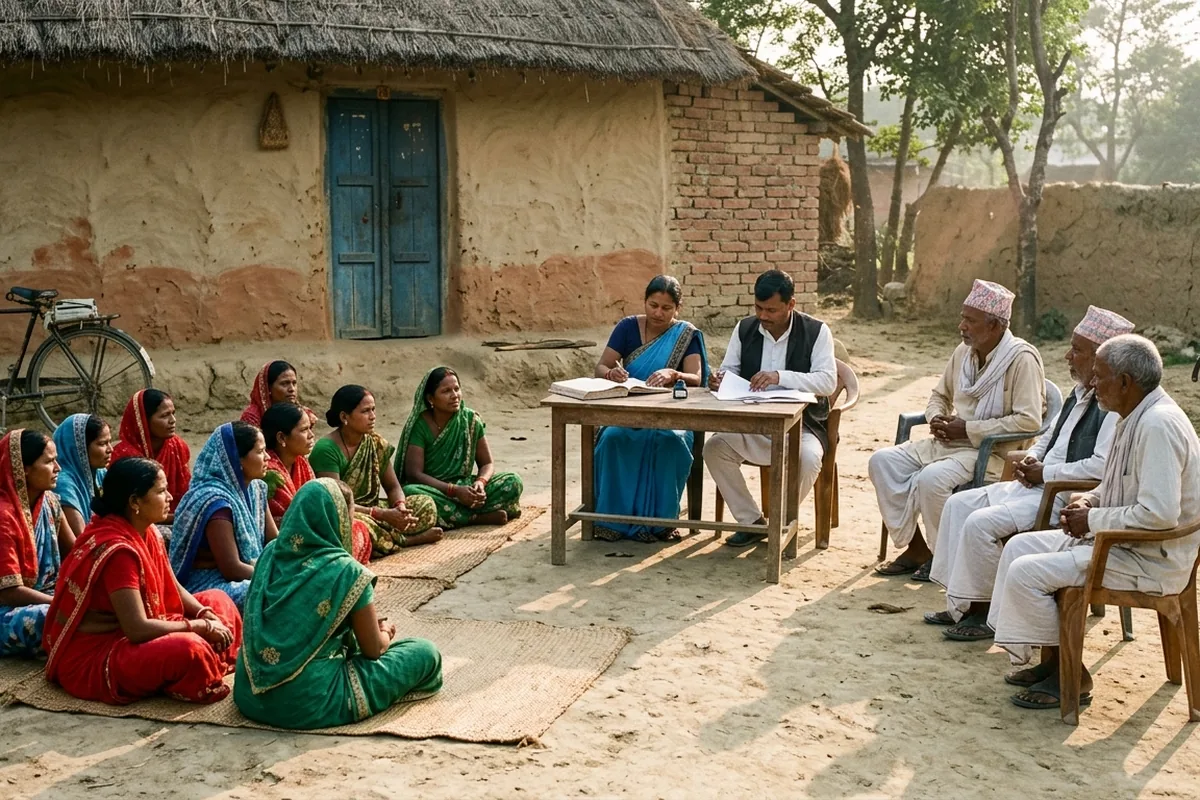
- Register it at the ward office and keep the received copy. A request the ward has seen carries weight; a request the ward has not seen tends to collapse at the venue stage.
- Tell the local health post at the same time, not later.
- Send a copy to us. Phone or message +977 9847688749, or use the contact page. Our office is at Ganeshman Charnath 7, Janakpur, Dhanusha, and you are welcome to come in person.
- Expect a site visit before anything is confirmed. Someone will look at the venue, the water, the room you are calling private, and the road an ambulance would use.
Camps are one part of our community health and ambulance programme; the rest of what this charity in Dhanusha runs is on the causes page, and you can read who we are on the page about our non-profit organization in Nepal.
If the answer is "not this year"
Any single organisation can only staff so many camp days. The other route is your ward's own budget. Local plans are selected at settlement and tole level and prioritised by the ward committee in Baisakh and early Jestha, before the executive approves the budget by Asar 10 and the assembly passes it by the end of Asar. A health camp entered as a tole demand during that window can be funded by the municipality and delivered with an NGO as implementing partner. A demand raised in Mangsir has nowhere to go until the next cycle.
Questions people ask
Who organises free health camps in Nepal?
NGOs, hospitals and medical colleges, local governments, and private bodies running corporate social responsibility programmes. There is no single authority, and no register you can search. Ask any organiser where their clinicians are coming from; the answer tells you what the camp will actually be.
Is a health camp really free, or are there hidden charges?
Consultation, the tests the camp carries and the medicines it dispenses are free at a genuine camp, ours included. What is not free is anything that follows a referral: hospital tests, admission, surgery. If anyone asks you for a registration fee at a camp gate, that is not a free camp.
Can a school request a camp, or only a ward office?
A school, a tole committee, a mothers' group or a cooperative can all request one. The ward office still has to be informed, because the venue, the announcement and often the health post staffing run through it.
Will an ambulance be there?
Not as a matter of course. Where our community ambulance can be on standby or on call, it is for referral to hospital, not for transport to the camp.
How many people can one camp handle?
It depends entirely on how many clinicians turn up, and it is the number you should ask about first. Plan the announcement around the answer rather than the other way round; a queue of 900 for a two-doctor camp ends badly at two in the afternoon.
If you are a ward secretary, head teacher or tole leader in Dhanusha with a venue and a headcount, send the letter. If your settlement already has both and you would rather help run the day, our camps are staffed by volunteers from the wards they serve, and registration, queue management and crowd control are where we are always short.
Leave a comment
Your email address will not be published. Required fields are marked *