Inside an NGO Cervical Cancer Screening Camp in Nepal
From the road a screening camp is just a queue of women outside a school. Behind it are a provincial approval, a borrowed specialist team, two weeks of ward-by-ward mobilising, and a referral route for the women whose result comes back positive.
In this article (9)
- What is actually being tested
- Who approves a camp, and in what order
- How the gynaecologists get there
- Mobilising ward by ward
- What a VIA result means on the day
- When the result is positive: what referral looks like in Madhesh
- What a camp run by an NGO in Nepal cannot do
- Questions women and ward offices ask us
- If you want the next one in your ward
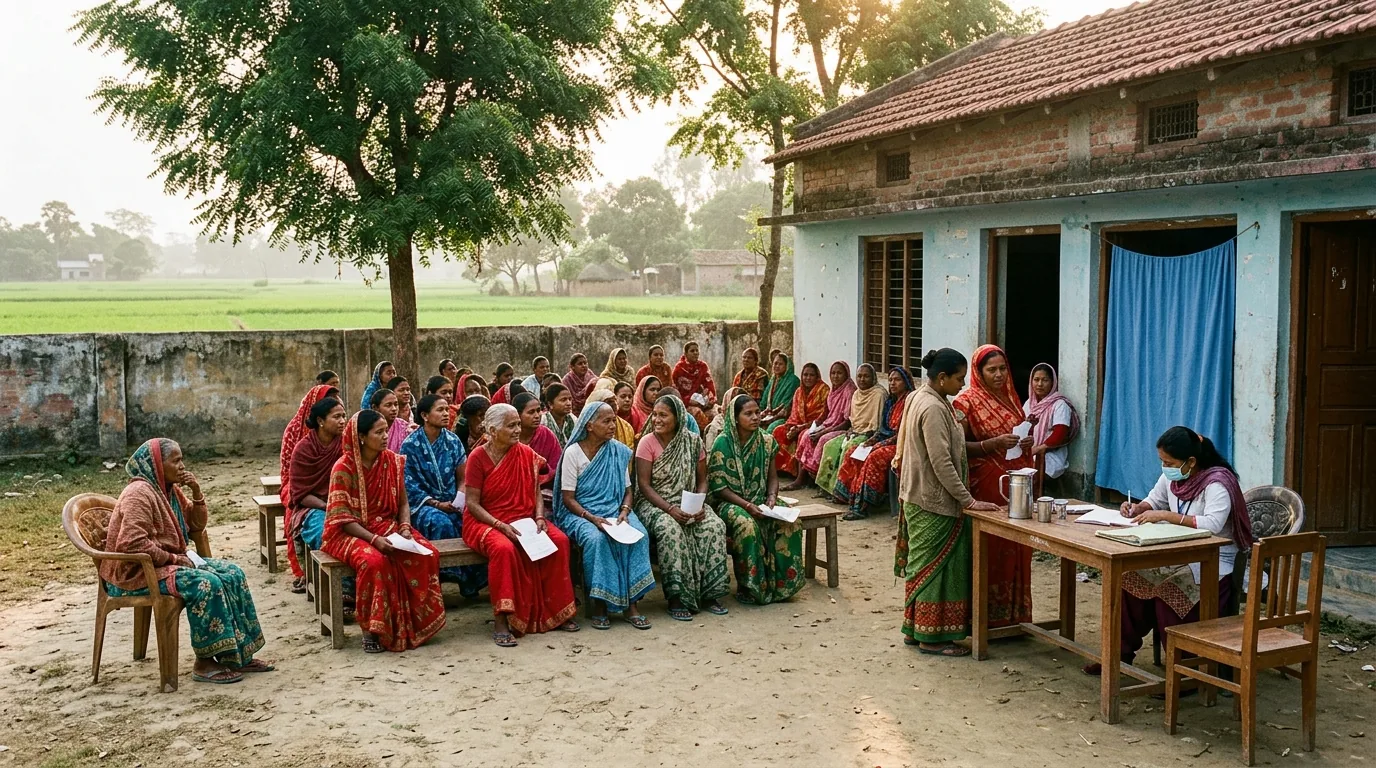
An NGO cervical cancer screening camp in Nepal looks, from the road, like a school courtyard with a queue of women outside it. Behind that queue are three things that had to line up weeks earlier: a provincial health office willing to put specialist gynaecologists in a vehicle, a ward that will vouch for the venue and the crowd, and somewhere to send a woman whose result comes back positive. This is how Shrijanshil Nepal, a non-profit organization in Nepal, put those three together at Dhanki Pokhari.
The camp ran on Sunday 21 Ashadh 2083 (5 July 2026) at Dhanki Pokhari Primary School in Ganeshman Charnath Municipality–01, Dhanusha, from 8am to 2pm, with support from the Ministry of Health & Population, Madhesh Province in Janakpurdham. Specialist gynaecologists and obstetricians did the clinical work. Our volunteers ran everything that was not clinical. The short report of the camp itself is already on this site; this is the part that report leaves out.
What is actually being tested
The test used in Nepal's public programme is VIA — visual inspection with acetic acid. Dilute acetic acid is applied to the cervix, and after about a minute the examiner looks for the whitened patches that can mark precancerous change. There is no laboratory, no slide, no waiting. That immediacy is the reason VIA, rather than a pap smear, is what a one-day camp in the Terai can honestly offer.
Nepal's Cervical and Breast Cancer Screening Program Implementation Guideline 2077 sets the eligible group at women aged 30 to 60, screened once every five years, with the test delivered free at government health institutions by trained nurses or doctors. The WHO position is broadly the same: screening with a high-performance test every 5–10 years from age 30. The problem in Nepal is not the policy. By 2019 only 8.2 percent of women aged 30–49 had ever been screened, against a national target of 70 percent coverage set years earlier, according to a review in the South Asian Journal of Cancer. If you want the patient-facing version of all this — who qualifies, where to go, what it costs — we wrote that separately in free cervical cancer screening in Nepal.
Who approves a camp, and in what order
A registered local organisation cannot simply announce a gynaecological screening day. The sequence that actually has to happen, in order:
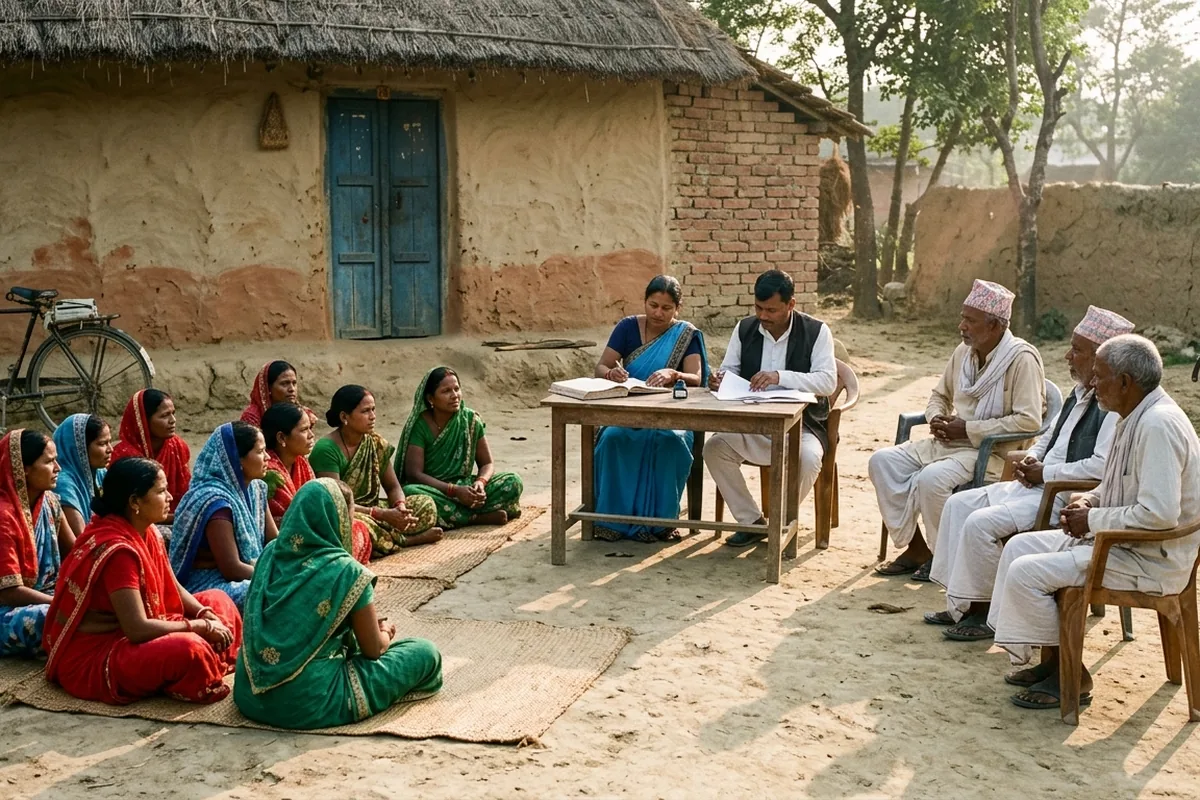
- Ward recommendation and venue. The ward office confirms the school or building can be used on that date, and the ward secretary's signature is what turns a plan into something the municipality will acknowledge. We described this chain in detail in how an NGO in Nepal works with a ward office.
- The municipality's health section is informed. Screening is already a budgeted municipal programme line. A camp that nobody at the palika knows about competes with the health post instead of feeding it.
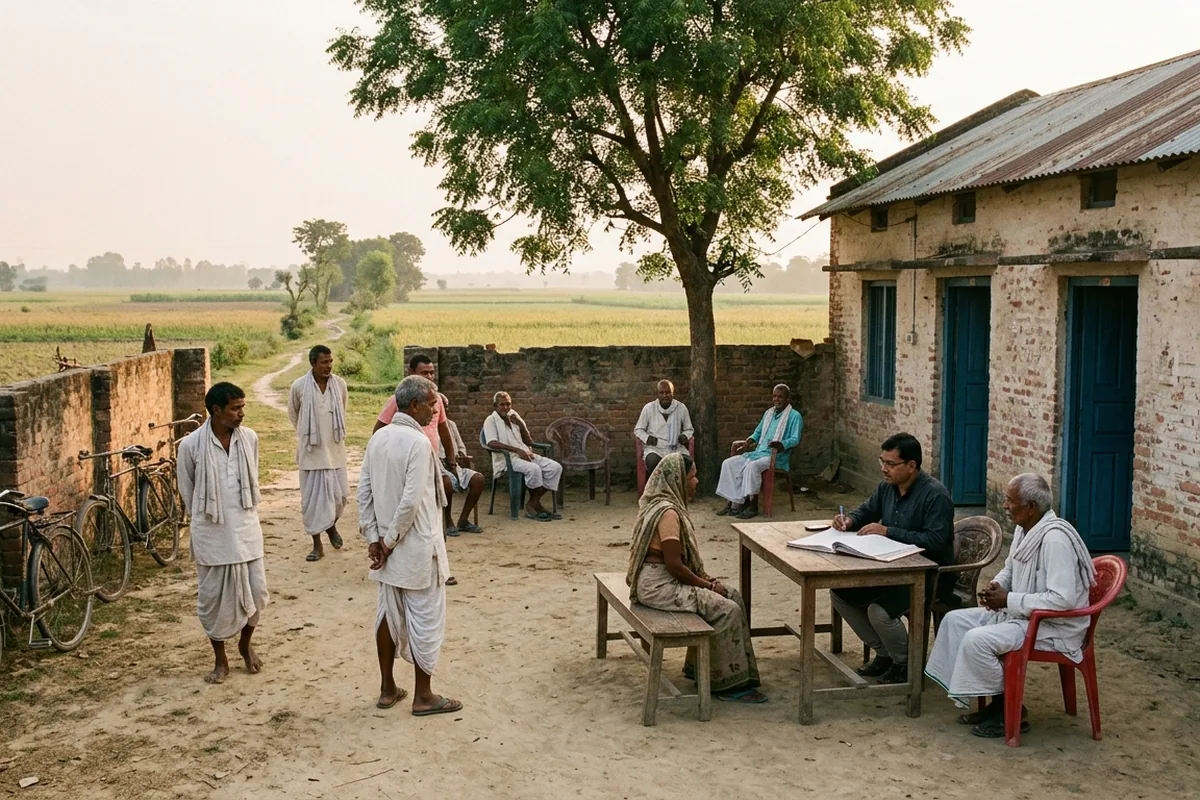
- A written request to the province. The specialists are the scarce input, and they are provincial. The request goes to the Ministry of Health & Population, Madhesh Province, naming the date, the venue, the expected number of women and what the organisers will supply.
- The date is fixed against the farming and festival calendar, not against our convenience. A camp set during paddy transplanting will be empty by 10am.
The honest summary: the clinical authority is the government's, not ours. We are the logistics, the crowd and the follow-up.
How the gynaecologists get there
Most people assume the hard part is money. It is not — it is specialist time. A rural ward in Dhanusha has a health post; it does not have a gynaecologist. The only realistic way to get one into a village school for six hours is through the provincial health ministry, which is why the request letter matters more than the budget.
What the organising NGO has to put on the ground before the team arrives: a room with a door that closes, curtains or screens, an examination table, a reliable light source, clean water, waste disposal, a registration desk, numbered tokens so the queue does not become a crush, drinking water and shade for women waiting, and female volunteers at every point a woman has to speak to someone. That last one is not decoration. Embarrassment at a gynaecological examination is named repeatedly in the Nepali literature as a primary barrier to screening, alongside low awareness, cost and distance.
Mobilising ward by ward
Announcing a camp does not fill it. Nepal has around 52,000 Female Community Health Volunteers, working since 1988, and in a Madhesh ward they are the single most effective channel there is. A mother's group meeting two weeks out does more than a banner.
The mobilisation that works, in our experience:
- FCHVs and mothers' groups first, house to house, in the two evenings before the camp.
- A woman who has already been screened explaining it to her neighbours in her own words. One such woman is worth any amount of printed material.
- Telling husbands and mothers-in-law as well. In a joint household, permission to spend half a day away is a household decision, not an individual one.
- Saying the word free plainly, with no conditions attached. Any ambiguity about cost halves attendance.
- An early start. Women come before the heat and before the field work, which is why 8am to 2pm and not 10am to 4pm.
What a VIA result means on the day
A woman walks out of the room with an answer, which is unusual in rural health care. What that answer means:
| Result | What it means | What happens next |
|---|---|---|
| VIA negative | No acetowhite change seen | Repeat in five years; return sooner for bleeding after intercourse, bleeding between periods, or persistent discharge |
| VIA positive | Acetowhite change suggesting precancer — not cancer | Referral for confirmation and treatment of the precancerous area |
| Suspicious of cancer | Appearance that needs specialist assessment urgently | Immediate referral, accompanied if possible |
| Unsatisfactory | The transformation zone could not be seen fully | Re-examination at a facility; common after menopause |
Two things are worth saying out loud to every woman in the queue. First, a positive result is not a cancer diagnosis; in one large Nepali screening series of more than 50,000 women, roughly 4 percent screened positive, and only a small fraction of those turned out to be invasive cancer on biopsy. Second, a negative result is reassurance rather than a guarantee — VIA's sensitivity for high-grade lesions runs about 73 to 85 percent, with specificity of 81 to 89 percent. That is why the five-year repeat is part of the advice and not an afterthought.
When the result is positive: what referral looks like in Madhesh
Precancer is treatable, and treating it is what prevents the cancer — WHO lists thermal ablation, cryotherapy and LEEP as the standard options. The clinical problem is solved. The operational problem is that the woman has to physically get to a place that offers them, and the single biggest failure point in any camp is the referred woman who never goes.
From Ganeshman Charnath, the realistic destinations are both in Janakpur: the government Province Hospital Janakpur, a 200-bed provincial facility with a gynaecology OPD, and the Binaytara Foundation Cancer Center, a non-profit 25-bed cancer hospital in Janakpurdham with a preventive oncology department — the only cancer hospital in the province.
What we can do about the gap is unglamorous: the referral goes on paper into her hand, not only into a register; a volunteer records a working phone number that belongs to her or to a household member who will pass on a message; someone calls. Transport is the other half of it, which is where our community health and ambulance service fits into what is otherwise a screening programme.
What a camp run by an NGO in Nepal cannot do
A camp is an entry point, not a health system. It cannot replace the health post, which offers the same VIA test free, year-round, to women aged 30 to 60. It cannot diagnose cancer — it flags cervixes that need a closer look. It cannot treat on the day unless the government clinical team brings the equipment for it. And it reaches only the women who walk in, which is why the mobilising fortnight matters more than the camp day. Anyone with symptoms should see a doctor or go to the nearest health post now rather than wait for the next camp.
Questions women and ward offices ask us
Who can attend a free cervical cancer screening camp?
The national programme's eligible group is women aged 30 to 60 who are not pregnant. Women outside that range with symptoms should still speak to the clinical team or their health post rather than assume nothing can be done.
Does the VIA test hurt, and how long does it take?
The examination itself takes a few minutes and most women describe discomfort rather than pain, similar to a routine pelvic examination. The acetic acid is left for about a minute before the cervix is read.
Is cervical cancer screening free in Nepal outside camps?
Yes. Under the national guideline, VIA is provided free at government health institutions for the eligible age group. A camp exists to bring a specialist team and a crowd together in one place, not to provide something the state charges for.
Can our ward, school or mothers' group ask for a camp?
Yes, and that is how most of them start. The request has to come with a venue, a rough headcount and a ward contact. We set out what a request needs to contain in requesting a free health camp in Dhanusha.
What should I bring on the day?
Any citizenship or identity document you have, and any previous screening or hospital paper. Nothing else, and no fee.
If you want the next one in your ward
Write to us through the contact page with your ward number, a venue and the name of someone at the ward office we can call — that is genuinely the whole first step. If you are a woman in or near Ganeshman Charnath who can give two days to registration and queue management at the next camp, female volunteers are the constraint on how many women we can see in six hours; the causes this charity in Nepal runs and the record of our non-profit organization in Nepal are both public, and the screening camp event page carries announcements when a date is fixed.