
How an NGO in Nepal Works With a Ward Office
A charity that cannot get a ward secretary's signature cannot run anything. The real chain, in order: ward recommendation, registration and renewal at the DAO, inclusion in the local-level annual plan, and the two signatures behind a specialist health camp.
In this article (7)
- How an NGO in Nepal works with the ward office: the chain in order
- The recommendation that comes before registration
- Renewal, and the documents nobody can skip
- Getting a programme into the local-level annual plan
- What a joint approval actually looks like
- Where a non-profit organization in Nepal runs out of authority
- Questions ward offices and new organisations ask us
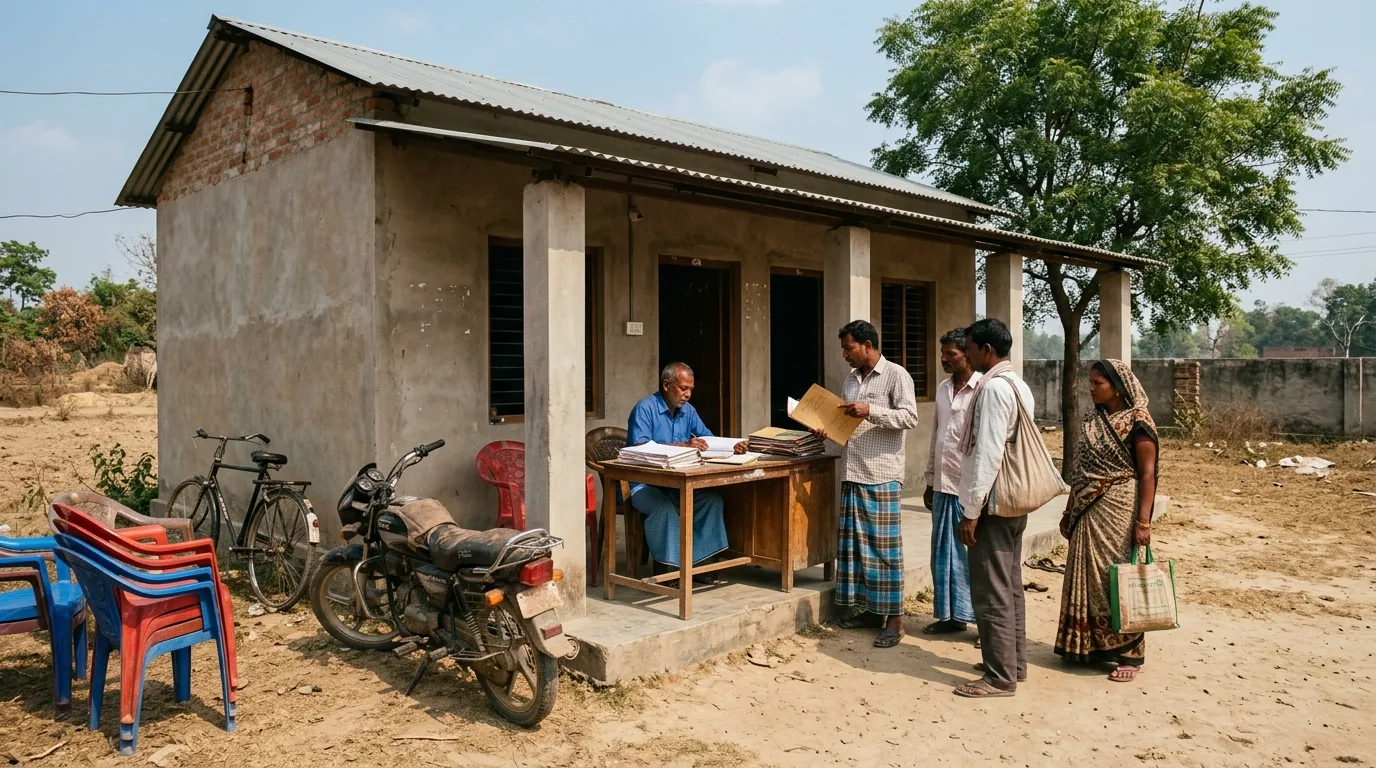
If you want to know how an NGO in Nepal works with the ward office, the short answer is that the ward touches an organisation at four separate points and three of them can stop it. The ward recommends the organisation before it is ever registered. It verifies the office again at renewal time. It decides whether a proposed activity gets into the local-level annual plan. And for most things that actually happen in a village, the ward chairperson or ward secretary is the person who signs the letter that lets the work begin. Shrijanshil Nepal is a registered non-profit organization in Nepal based in Ganeshman Charnath Municipality, Dhanusha, and the sequence below is the one we have worked through ourselves.
How an NGO in Nepal works with the ward office: the chain in order
A ward office delivers five kinds of service — planning, implementation and monitoring; recordkeeping and data updates; development programmes; regulation; and recommendation and certification — according to the ward office service delivery resource book UNDP published in March 2024. An organisation meets the last of those on its first day and the first of those every year afterwards. The rest of the chain sits above and beside the ward, and it helps to know who holds what before you walk in.
| Office | What it decides for an NGO | What it cannot do |
|---|---|---|
| Ward office (chairperson and secretary) | Recommendation for registration and renewal; verification of the office address and members; site and household selection; forwarding settlement projects into the ward priority list | Cannot register, renew or cancel an organisation; cannot approve foreign funding |
| Rural municipality / municipality executive and assembly | The agreement with the organisation; inclusion in the annual plan, programme and budget; the joint monitoring and reporting arrangement | Cannot certify that an organisation is legally registered |
| District Administration Office (CDO) | Registration under the Association Registration Act 2034, and annual renewal | Does not plan or approve ward-level activity |
| Social Welfare Council | Affiliation and project approval where foreign funds are involved | Does not substitute for a local agreement |
| Provincial ministry responsible for health | Permission for specialist services delivered through mobile camps | Does not mobilise the community |
The recommendation that comes before registration
An association is registered at the District Administration Office of the district where its office will sit, under the Association Registration Act 2034 (1977), which requires at least seven founding members holding Nepali citizenship. But the DAO file does not start at the DAO. It starts at the ward.
What the ward office is being asked to certify is deliberately narrow: that this office exists, at this address, in this ward, with these people behind it. In practice a ward secretary will want an application signed by the proposed chairperson, the ad hoc committee's minute approving registration, the draft constitution, notarised citizenship copies of the members, and the rent agreement or landownership certificate with a current land tax receipt. Some secretaries walk over and look at the room before signing. Fees are set by each local level in its own annual financial ordinance, so ask the ward rather than trusting a figure from a website.
From there, in many districts, a recommendation from the District Coordination Committee follows, and only then does the full application go to the DAO with police character reports for the members. One law firm's step-by-step account of NGO registration sets out the same order: ward recommendation, DCC recommendation, DAO registration, PAN, then Social Welfare Council affiliation.
Renewal, and the documents nobody can skip
Registration is not permanent. An association renews at the DAO each year by submitting its progress report, audited accounts, general assembly minute and implementation plan, with a fee of Rs 500; an organisation that lets five years pass has its registration cancelled and must pay accumulated penalties plus Rs 5,000 to resume, according to ICNL's monitor of Nepal's civic freedom law. The Act itself puts the obligation on the management committee to submit the year's statement of accounts with the auditor's report, and provides a fine for committee members who do not.
Add a tax clearance certificate from the Inland Revenue Office to that pile. Exact deadlines and the document list shift between districts and fiscal years, so confirm with your own DAO rather than copying another district's checklist.
Where foreign money is involved the Social Welfare Council sits on top of all of this: a project proposal, approval case by case under section 16(1) of the Social Welfare Act 2049, processed in coordination with the concerned ministry, and a bank that will not release the funds until the SWC's letter arrives. The Council's coordination section at Hariharbhawan handles affiliation and renewal. If you want to run these checks on us or on any other organisation, we have written out the method in how to check if an NGO in Nepal is registered.
Getting a programme into the local-level annual plan
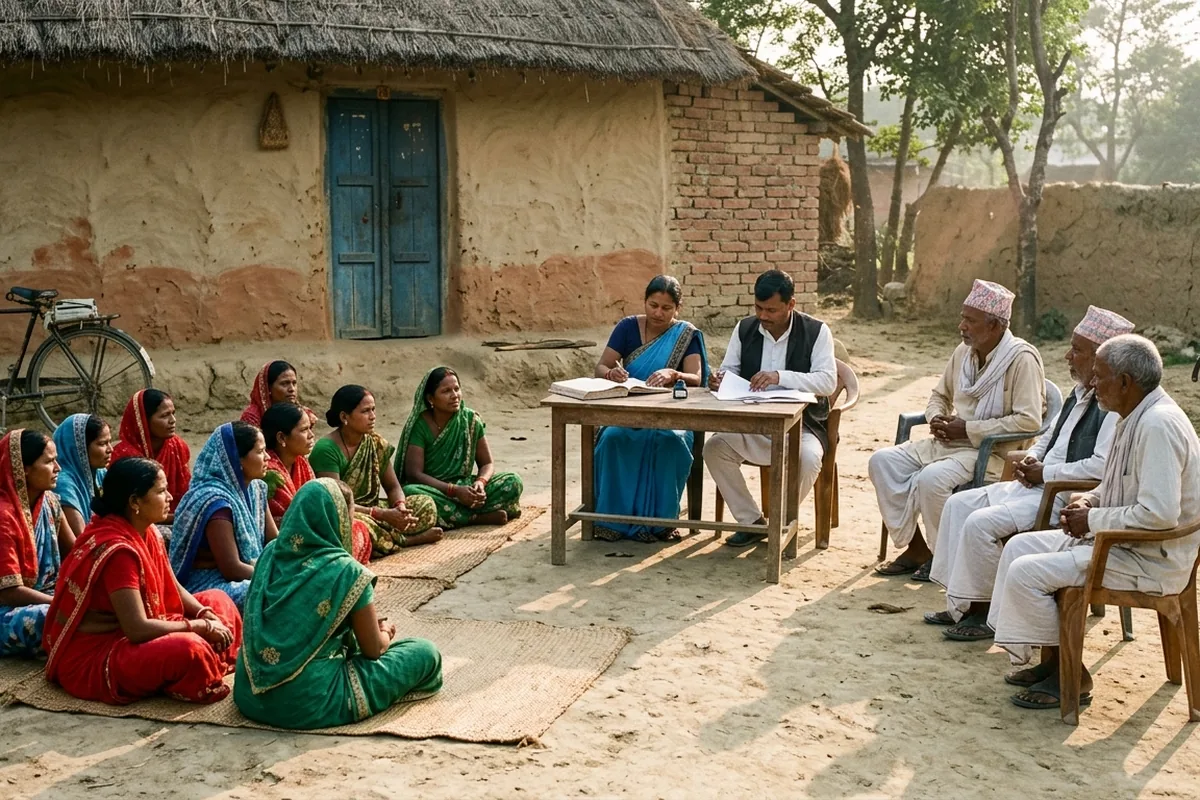
This is the part most small organisations miss, and it is the part the law is clearest about. Under the Local Government Operation Act 2017, an organisation working at the local level must carry out any study, survey or programme on the basis of an agreement with the local level, include its own annual plan, programme and budget inside the local level's annual plan, programme and budget, and accept the joint monitoring and progress reporting system the local level designates. Work around that and the local level can halt the activity.
Which means the calendar belongs to the municipality, not to the NGO. The local-level planning process runs in seven steps on roughly these dates:
- Preparation (Poush to Chaitra) — profiles updated, needs identified
- Resource estimation and budget ceiling (around Baishakh 15)
- Settlement and tole level project selection (by the end of Baishakh)
- Ward level prioritisation (around Jestha 15) — the ward sorts and ranks what the settlements sent up
- Integrated budget and programme drafting (around Ashadh 5) — this is where partner organisations' plans get folded in
- Executive approval (around Ashadh 10)
- Assembly approval (Ashadh 10 to the end of Ashadh)
Those dates come from a published summary of the seven-step local planning process, and the endpoint is statutory: section 71 of the Act requires the assembly to endorse the executive's budget for the coming fiscal year by mid-July, a deadline dozens of local levels still miss. A proposal that reaches a ward in Shrawan is not refused. It is simply eleven months early for the next cycle. The two doors are settlement selection at the end of Baishakh and ward prioritisation in mid-Jestha.
What a joint approval actually looks like
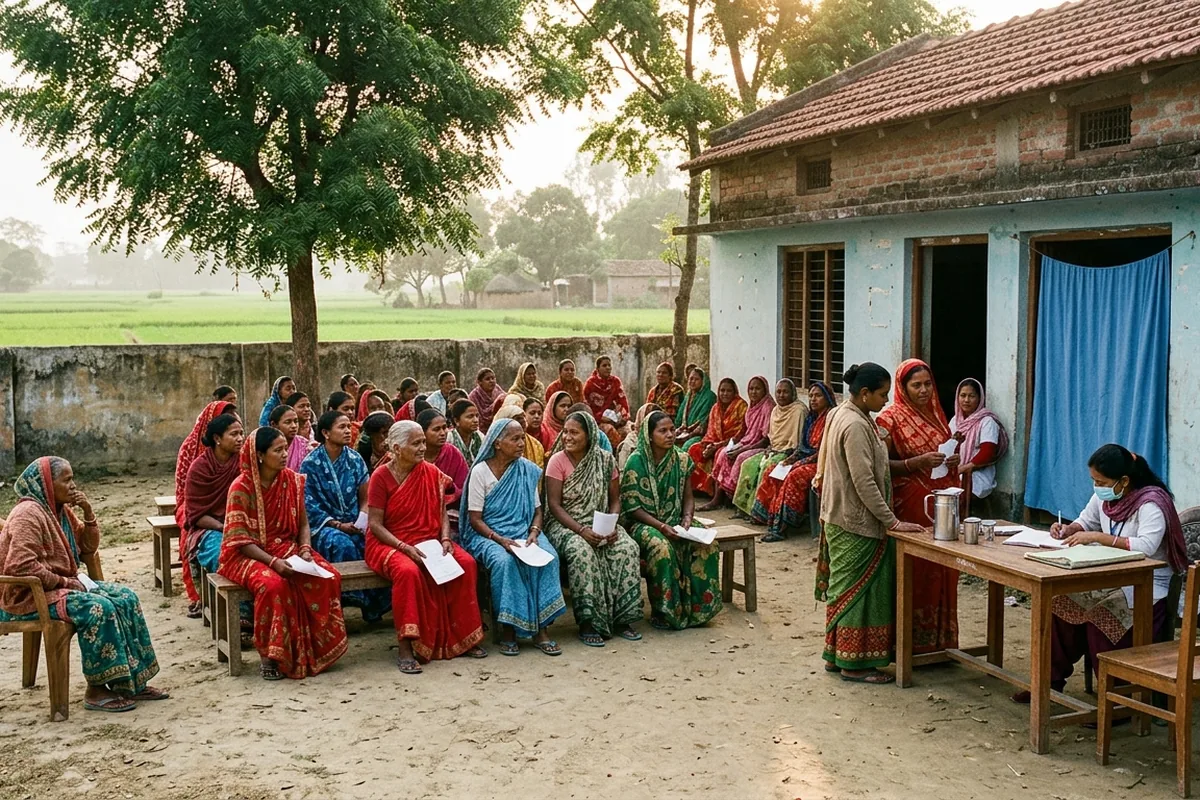
Our free cervical cancer screening camp at Dhanki Pokhari, in Ganeshman Charnath ward 1, ran with support from the Ministry of Health and Population, Madhesh Province. The province appears in that sentence for a legal reason, not a ceremonial one: under the Public Health Service Regulation 2077 (2020), a health institution that wants to provide specialist services through a mobile camp must do so in collaboration with the local level, after obtaining permission from the ministry responsible for health in that province. A specialist camp therefore carries two approvals before the first patient is registered, and an NGO holds neither of them on its own.
What the ward supplies cannot be bought or substituted. It picks the site. It tells us which households and which tole. It gets word to women who will not come because of a notice on a wall but will come because the ward member knocked. It opens the building and finds a room with a door that closes. Specialists without that produce an empty hall and an expensive day.
Where a non-profit organization in Nepal runs out of authority
- We cannot allocate public budget. Money moves through the approved local-level programme, not through a handshake at a ward office.
- We cannot instruct a health post, a school or a ward employee. We can only ask, and plan around the answer.
- We cannot issue, override or speed up any recommendation, certificate or government quota. Where a government scholarship or service exists, the family's claim on it comes first and ours is on top of it.
- We cannot survey households on our own authority. That needs the agreement the Act describes.
- We cannot promise permanence. A camp is a day; a health post is the state's.
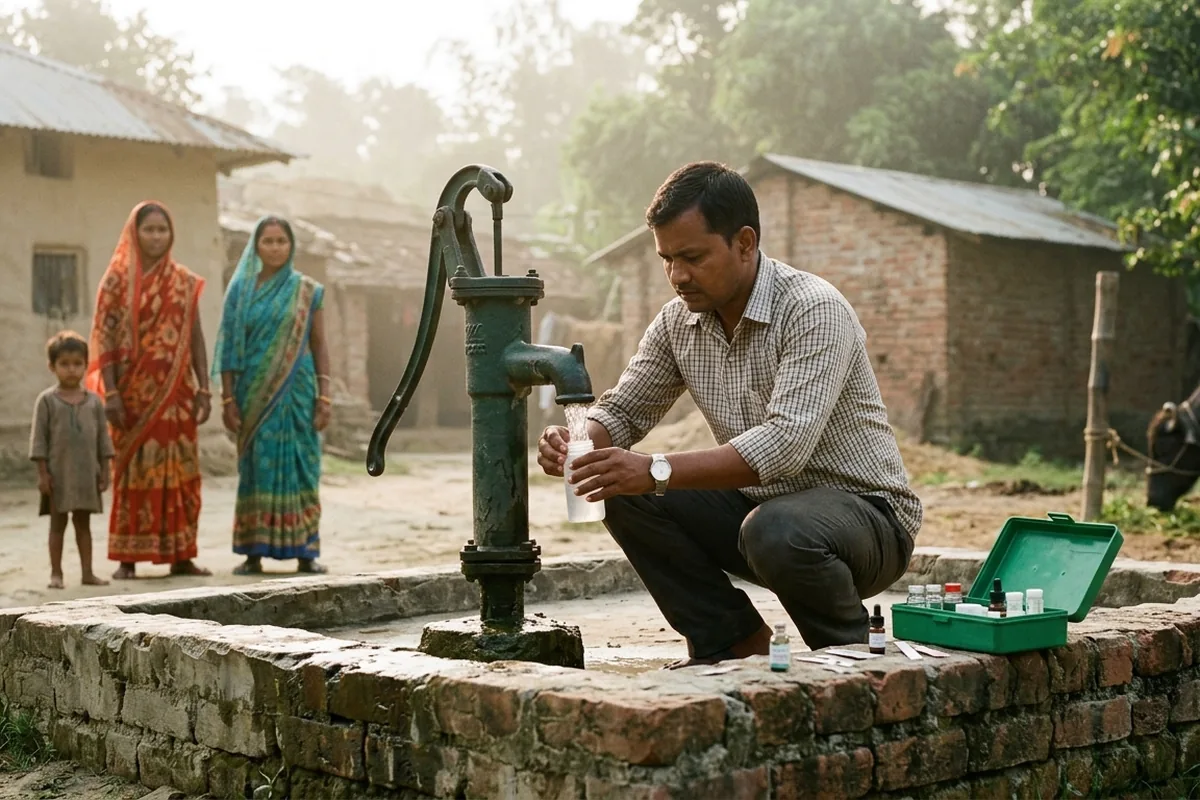
What we can carry into a ward is narrower and more useful: specialists and consumables for a day, water-quality testing, training, scholarships paid to the school, a written record handed back to the ward afterwards, and volunteers who live in the same wards. That list is what the causes this charity in Nepal runs amounts to, and you can read the registration and governance details on the page about our non-profit organization in Nepal.
How a ward secretary or school actually sends a request
A letter on ward or school letterhead, signed and sealed, saying four things: what is being asked for, the ward and settlement, the expected number of people, and the building available. Add one focal person with a working phone number and a date window rather than a fixed date. We have set out what has to line up behind a camp, and what the requesting side must supply, in requesting a free health camp from an NGO in Dhanusha.
Questions ward offices and new organisations ask us
Do you need a ward office recommendation to register an NGO in Nepal?
Yes. The ward office recommendation letter verifying the proposed office and its members is normally the first document in the file, before the District Coordination Committee recommendation and the DAO application. Registration itself is done by the Chief District Officer, not the ward.
Can a ward office stop an NGO from working in its ward?
The ward can refuse to recommend, refuse a venue and refuse to mobilise people, which ends most activities in practice. Formally, the power to halt an activity carried out without an agreement sits with the local level, meaning the rural municipality or municipality, under the Local Government Operation Act.
When should an organisation submit its programme for the local-level annual plan?
Before the end of Baishakh if it is to be picked up at settlement level, and before mid-Jestha to be ranked in the ward's priority list. Partner programmes are folded into the integrated draft in early Ashadh, and the assembly closes the budget by the end of Ashadh.
Does a free health camp need government permission?
A specialist camp does. The Public Health Service Regulation requires mobile specialist camps to run in collaboration with the local level and with permission from the provincial health ministry. For a basic screening or awareness activity, coordination with the ward and the local health section is the minimum, and the health post should know before the day, not on it.
Can a ward office give an organisation money?
Not as a discretionary grant from the ward. Any public money that reaches an organisation has to appear in the local level's approved annual plan and budget and rest on a written agreement. We do not ask wards for funds. We ask for a letter, a building and a focal person.
If you are a ward secretary, a school head teacher or a tole committee in Ganeshman Charnath or nearby in Dhanusha and you have something you want planned into the coming fiscal year, write to us before Baishakh ends rather than after the budget closes. Our address, phone number and the names behind the organisation are on the contact page, and you are welcome to verify the registration at the Dhanusha DAO first.
Leave a comment
Your email address will not be published. Required fields are marked *