What a Women's Empowerment NGO in Nepal Does
The brochure version of women's empowerment ends at the certificate. The operational version starts with whether a household will release her for the course, and ends with who is still earning three months later.
In this article (6)
A women empowerment NGO in Nepal, if it is doing the work rather than photographing it, spends most of its time on four unglamorous problems: getting a household to release a woman for the weeks a course runs, picking a trade that has buyers within walking distance, answering the equipment question after the last class, and going back three months later to find out who is still earning. The banner, the group photo and the certificate handover are the easy parts. Shrijanshil Nepal, a non-profit organization in Nepal based in Ganeshman Charnath Municipality, Dhanusha, runs women's skill and livelihood training in these wards, so what follows is the operational version rather than the brochure one.
Search that phrase and page one is Kathmandu and Pokhara. WSDO is a fair-trade producer organisation working out of Pokhara since 1975; the volunteer-placement sites around it are selling a programme to someone flying in. That is not dishonest, just a different district with a different set of constraints. Almost nothing written in English describes how this work behaves in Madhesh Province, where the gap is widest.
What a women empowerment NGO in Nepal actually spends its time on
Strip out fundraising and reporting and the field work divides into five things:
- Recruitment — not advertising a course, but sitting with households until a woman is genuinely free to attend.
- Trade selection — deciding what to teach from who in that ward will pay for it.
- Running the course — a venue inside the ward, an instructor who speaks the local language, hours that fit around cooking and fields.
- The handover — what she takes home on the last day.
- Follow-up — one visit at three months that tells you whether the previous four were worth anything.
Recruitment is a household negotiation, not a sign-up sheet
The constraint is rarely a woman's willingness. Nepal's female labour force participation rate was 26.3 percent in the Nepal Labour Force Survey 2017-18, and that number is produced far more by what households permit and the unpaid work already assigned than by ambition. In Madhesh the picture is tighter: the Multiple Indicator Cluster Survey 2024-25 found about one in three Nepali women aged 18 to 49 were married before 18, and nearly half of all women in Madhesh Province. A twenty-two-year-old trainee here is often already running a household and minding small children.
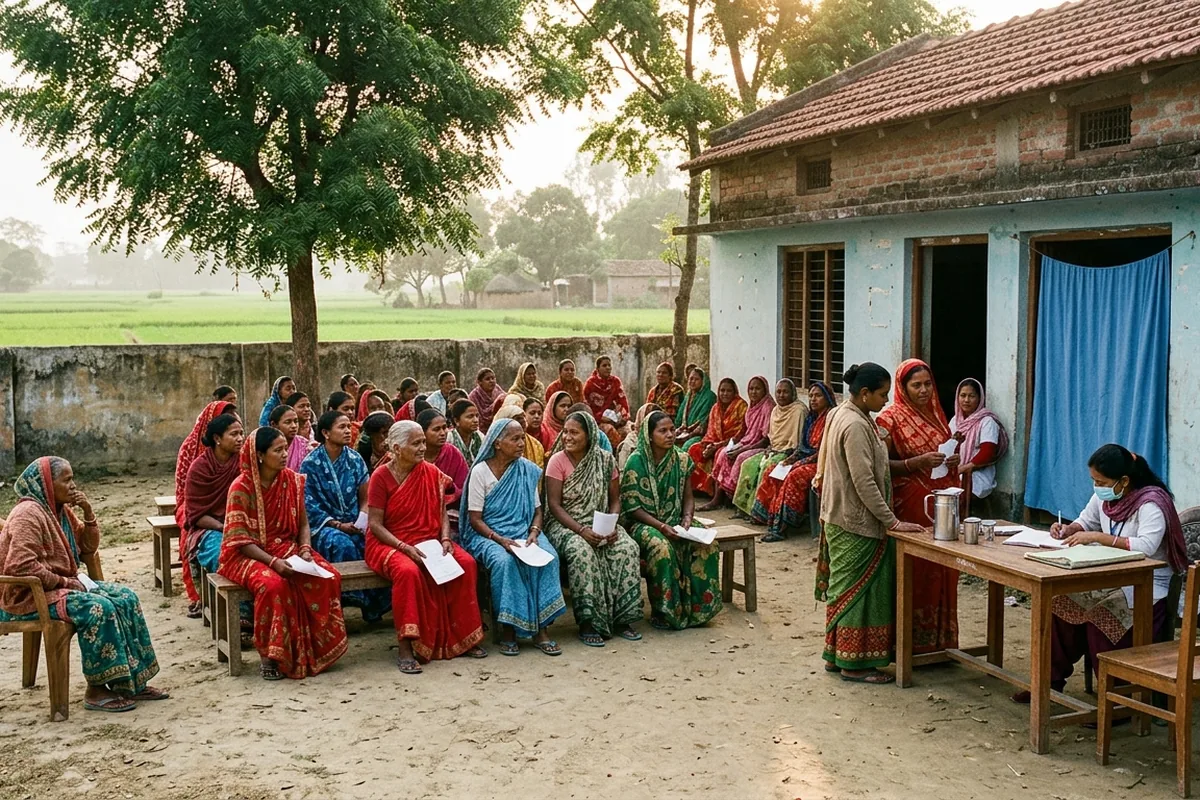
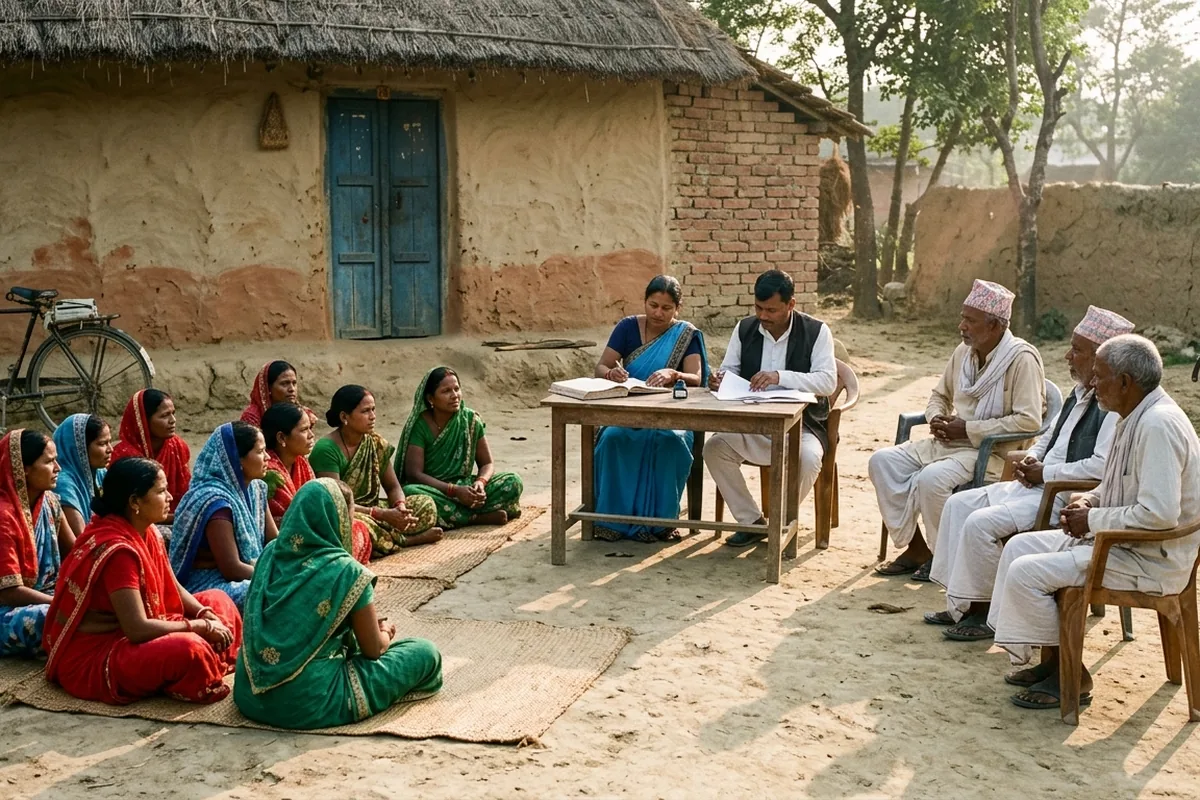
So the course is lost or won on logistics. A venue in the ward rather than in Janakpur. Late-morning hours, after the cooking and before the animals. A batch scheduled outside paddy transplanting and harvest. Permission sought from whoever in that house actually grants it, which may be a mother-in-law rather than a husband. When a batch has heavy dropout, the cause is almost always one of those four and not the teaching.
Trades are chosen by who the buyer is
A trade with a good curriculum and no local buyer produces a certificate and nothing else. Before opening a batch the question is who in or near that ward pays cash for this, and how often.
| Trade | Who the buyer is | What kills it |
|---|---|---|
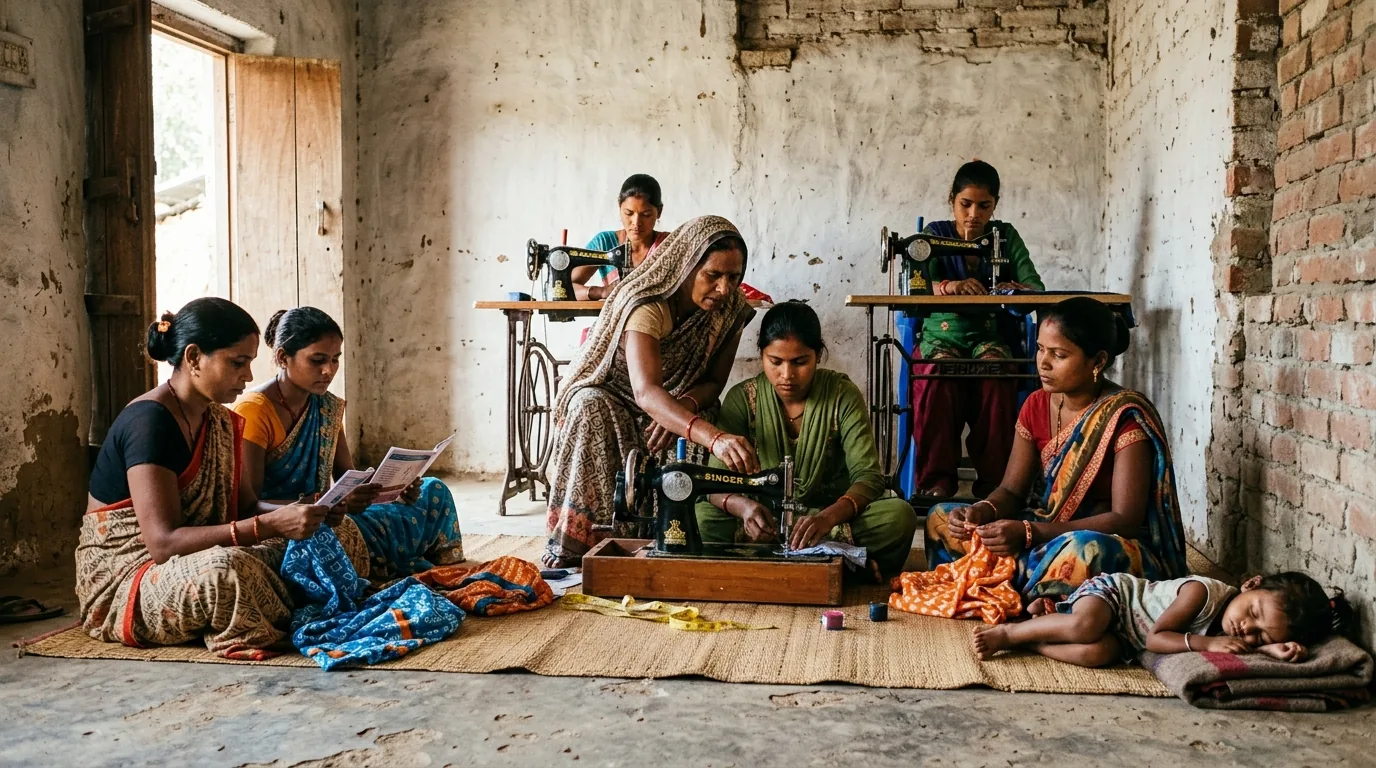
| Tailoring and alteration | Households in the same and neighbouring wards; school-uniform season | No machine of her own; three tailors already at that chowk |
| Beauty and grooming | Wedding and festival demand in a bazaar ward | Income only in season; needs a room customers can enter |
| Goat keeping and poultry | Local butchers, neighbours, festival demand | No shed, disease loss, feed cost, distance to a vet |
| Handicraft for export or tourists | A buyer in Kathmandu or abroad | No link from a Dhanusha ward to that buyer; it proposes beautifully and fails most often |
The livestock options are not improvised. CTEVT publishes standard short-term curricula of 390 hours for Goat Keeper and Poultry Farm Worker alongside the familiar tailoring courses, so a local organisation can teach to a national standard instead of inventing one. The women empowerment and skill training programme we run pairs tailoring with small-business basics and household savings, because the first without the other two produces a sewer rather than an earner.
The equipment question, which brochures skip
A certificate is not a machine. The sewing machine in a training hall goes back into the store cupboard on the last day, and a woman who cannot buy one at home has learned a skill she can only use somewhere she is not. Three answers exist, in descending order of how well they hold:
- She takes a machine or kit home. Expensive per participant, and the only version that still looks like income a year later.
- A group of five shares one machine kept at one member's house on a roster. Holds while the group holds; order volume decides that.
- The municipality or a cooperative is asked to fund kits later. Honest to attempt, slow, often does not arrive.
Our women's skill and livelihood training sends participants home with a starter kit and keeps volunteer support running afterwards. Any organisation that cannot tell you plainly what a participant takes home on the last day has not solved this, and the gap shows up at month three.
What the three-month follow-up reveals
One visit, three months after the final class, sorts a batch into four groups:
- Earning regularly — has equipment, repeat customers in her own ward, and has priced her work.
- Earning occasionally — festival and wedding seasons only, which is real income but not a livelihood.
- Skilled but not earning — the skill is intact, the machine or the customer is missing. This group is recoverable, and is where follow-up pays for itself.
- Stopped — migration, health, or a household that was never going to release her for paid work once the course ended.
We do not publish a conversion percentage, because we have not counted one to a standard we would defend in front of the ward. Treat a tidy figure quoted without a method the same way. The trade-by-trade detail sits in our longer piece on what turns tailoring into a livelihood in Dhanusha.
What a certificate is worth
Formal recognition comes from the National Skill Testing Board, whose Level 1 criteria accept a candidate who is literate with one year of relevant work experience, or who has completed one month of vocational training in the trade, or training plus six months of experience. Two things follow: a short course can be enough to sit the test, and literacy sits on one of the routes, which is not a neutral requirement in a province where girls' schooling was interrupted earliest. For a woman selling to her neighbours the certificate changes little; for one approaching a garment workshop or a government scheme it changes a good deal.
Empowerment that is not a training course
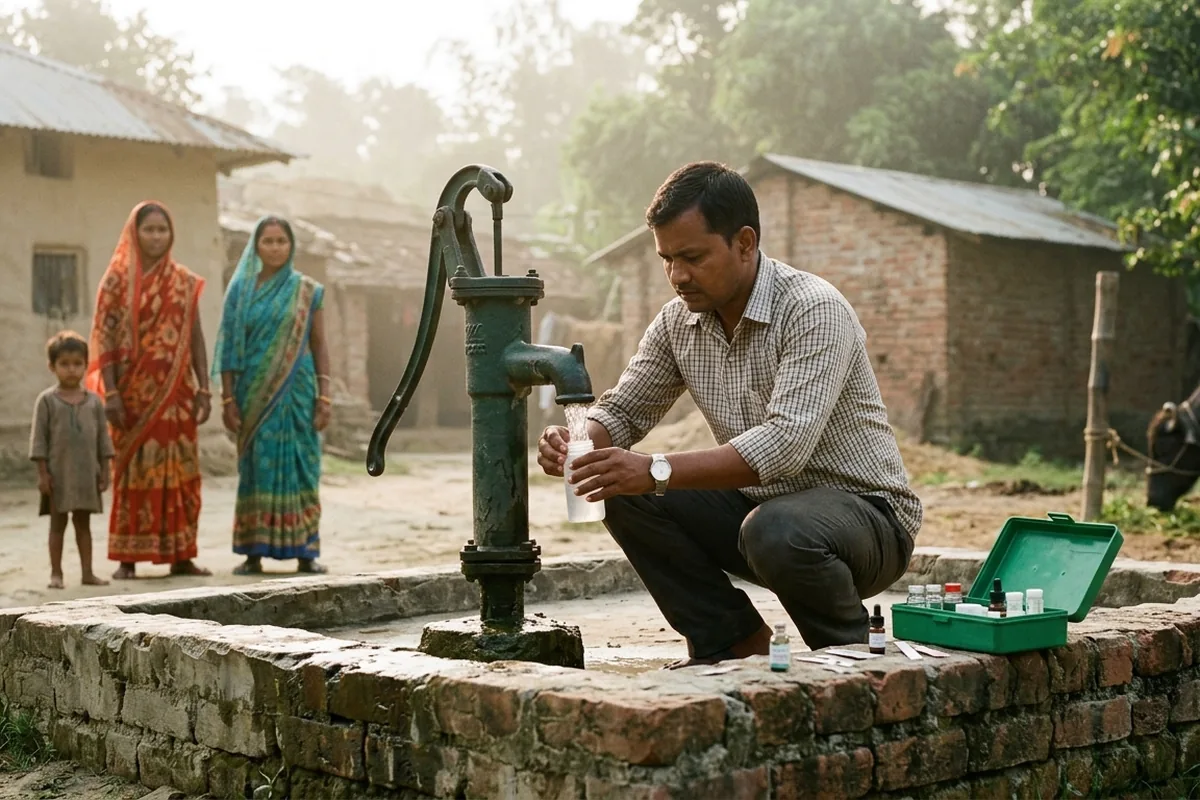
The same women who fill a batch are the ones a registered charity in Dhanusha reaches through its other causes: a free cervical cancer screening camp run with the Ministry of Health and Population, Madhesh Province at Dhanki Pokhari, water testing on the hand pump in the yard, scholarships that keep a daughter in school past the year families usually stop paying. None are women's programmes on an organisation chart, and all of them decide whether a woman is in a position to earn at all. Read about our non-profit organization in Nepal, where it is registered and based, before taking any of this on trust.
Frequently asked questions
What does a women's empowerment NGO actually provide?
It varies. At the useful end: a course in your own ward, equipment or a starter kit at the end, help with pricing and savings, and a follow-up visit. At the thin end: a few days of demonstration and a certificate. Ask which you are being offered before you give up six weeks.
Is the training free, and what do I take home?
Ask in writing before you register, from us or anyone else. A genuine organisation can state the fee if there is one, what the batch includes, and what you keep on the last day.
Do I need to have passed a school grade to join?
Not for community skill training. It matters only if you later sit a National Skill Testing Board assessment, where literacy forms part of one eligibility route.
How do I get a batch run in my ward?
Have the ward office or a women's group write to us with the ward number, how many women would commit, and a venue. A request routed through the ward gets scheduled far more often than individual applications.
Can an NGO find me a job after training?
No honest one promises that. A local organisation can teach a trade, supply equipment, connect you to a cooperative and keep visiting. In rural Dhanusha most of the demand is self-employment selling to neighbours, not wage work.
If you want to join a batch
Women in Ganeshman Charnath Municipality and the wards around it can put their name down through our course registration page or come to the office and ask what is running. Ward secretaries, schools and women's groups wanting a batch of their own should write through the contact page with numbers and a venue. If you would rather check us first, that is the right instinct: the registration checks anyone can run on a Nepali NGO work on us too.