
Education NGOs in Madhesh: An Honest Short List
Most directory pages for education NGOs in Madhesh are stale dumps with dead links. Here is a shorter list that can be checked organisation by organisation — what each is registered as, what part of schooling it really touches, and how to pull the full district register yourself.
In this article (7)
If you are looking for education NGOs in Madhesh Province that can actually be reached and checked, five names cover most of what is verifiable today: Aasaman Nepal and LIFE Nepal in Janakpur, Janakpur Foundation, the Rural Community Development Centre (RUCC), and Room to Read, which works through provincial and local government rather than its own district offices. Shrijanshil Nepal, a non-profit organization in Nepal registered in Ganeshman Charnath Municipality, is the sixth — and the smallest on the list, which is where it belongs.
This list is short on purpose. The directory pages that rank for this search are old aggregator dumps: names scraped years ago, numbers that ring nowhere, organisations that stopped renewing in the 2070s. A list of 200 names where 40 are dead is worse than a list of six you can verify in an afternoon. Every entry below says what the organisation is registered as, where it works, which part of education it genuinely touches, and how to confirm it at the District Administration Office.
Why education is the hard sector here
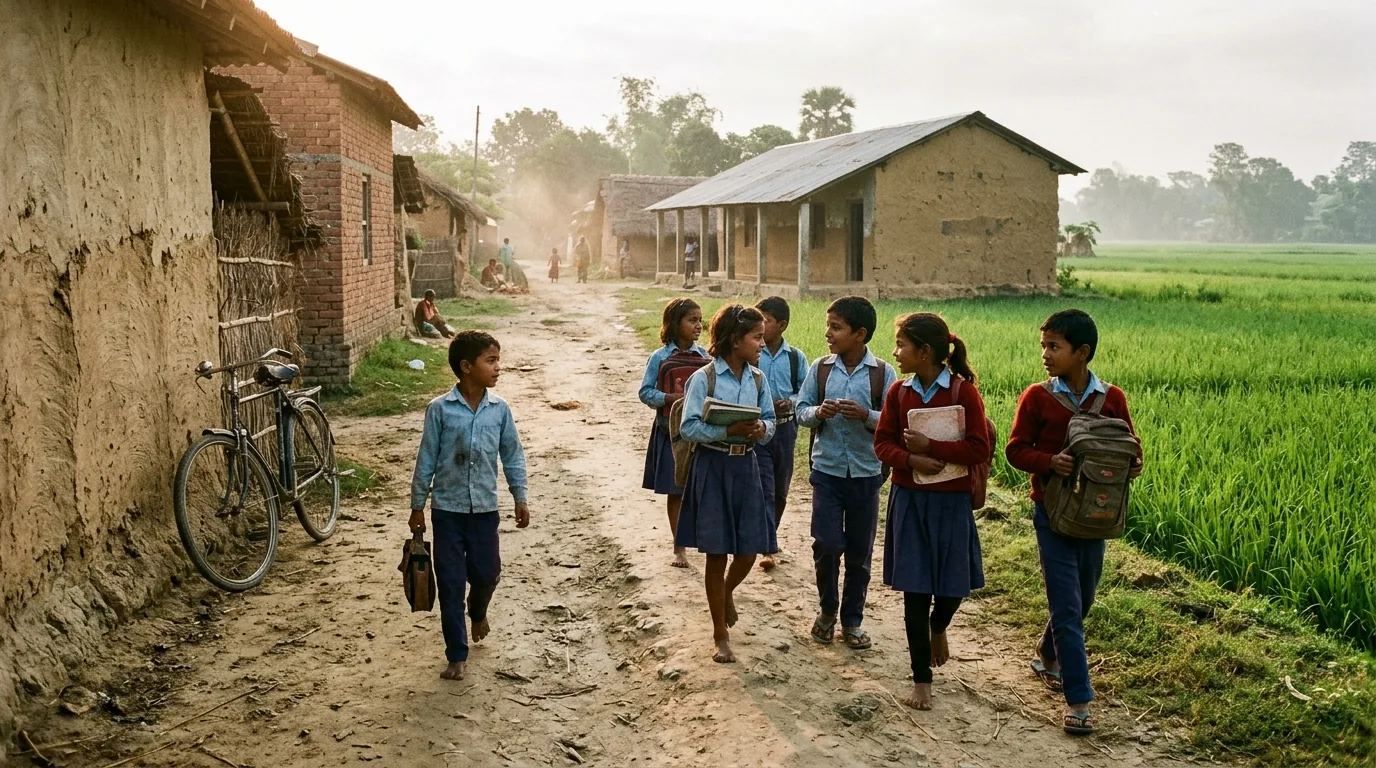
Madhesh is the province where school problems concentrate. The 2021 census put provincial literacy at 63.5 percent — 72.5 percent for men, 54.7 percent for women — against a national rate of 76.3 percent. The gap does not close at the school gate: reviewing the Education Ministry's indicators this year, the Kathmandu Post reported that of the 1,053,824 children who enrolled in grade one in 2016, only 430,667 finished secondary school a decade later, and that Madhesh carries the highest concentration of out-of-school children in the country.
So the useful question is not "who runs education programmes in Madhesh" but "who does which piece". Teacher training, early-grade reading, keeping adolescent girls enrolled, and paying for a uniform so one child does not drop out in Magh are four different jobs, done by four different sizes of organisation.
| Organisation | Based / registered | Education work | How to check |
|---|---|---|---|
| Aasaman Nepal | Janakpur-9, Dhanusha; DAO Dhanusha 1999 | Children's learning, school infrastructure, nutrition; province-wide | Registration and SWC numbers published on its own site |
| LIFE Nepal | Pidari Chowk, Janakpur; DAO Dhanusha 2012 | Girls' access to education, child-marriage prevention, life skills | SWC affiliation stated; ask for the renewal page |
| Janakpur Foundation | Janakpur, Dhanusha | Legal advocacy on child marriage and domestic violence — education-adjacent | Ask for the registration certificate; the site does not publish one |
| RUCC | Janakpur-1, Dhanusha; registered 1996 | Listed under WASH, livelihoods and infrastructure, not schooling | NGO Federation district profile |
| Room to Read | INGO, country office Kathmandu | Literacy and girls' education, delivered with government | Works through local governments, not direct requests |
| Shrijanshil Nepal | Ganeshman Charnath, Dhanusha | Scholarships, uniforms and stationery at ward level | DAO Dhanusha; ward office recommendation |
Education NGOs in Madhesh Province, one by one
Aasaman Nepal
The largest education-first organisation based in Dhanusha, and the one most likely to be the right answer if your question involves a whole school rather than one child. Aasaman Nepal was established in 1999, is registered at the District Administration Office, Dhanusha under registration number 693/055/056, affiliated with the Social Welfare Council under number 10365, and runs its head office from Janakpur ward 9. Its own site says it works across all 136 local governments of Madhesh Province, with children's learning, protection and nutrition as its core themes, including school construction and repair.
What that means in practice: it is a project-funded organisation. Its work in a given ward depends on whether a project is live there this year. Ask which project covers your palika and when it ends, rather than assuming provincial coverage means permanent presence.
LIFE Nepal
LIFE Nepal — For Women, Children and Youth — was established in 2012, registered at the Dhanusha DAO that year and affiliated with the Social Welfare Council, working from Pidari Chowk in Janakpur. Its education work sits on the demand side rather than the supply side: a girls' access to education programme, school-based work on gender-based violence, and child-marriage prevention campaigning built around the line "first education, then marriage". If the problem you are trying to solve is a fourteen-year-old who is about to be withdrawn from grade eight, this is the closer fit.
Janakpur Foundation
Listed here because it keeps appearing on education searches, with the caveat it deserves. Janakpur Foundation describes itself as fighting child marriage and domestic violence through legal advocacy and community empowerment. That is education-adjacent work — a girl who is not married at fifteen usually stays in school — but it is not a school programme and not a scholarship fund. Its public pages do not carry a registration number or SWC affiliation, so if you plan to give money or work with it, ask for the certificate and the latest renewal before you do.
Rural Community Development Centre (RUCC)
RUCC is a Janakpur-1 organisation registered at the Dhanusha DAO in 1996, and it turns up on several third-party "education NGO" directories. Its own NGO Federation profile lists its working sectors as WASH, livelihoods, microfinance and rural infrastructure across Dhanusha, Sarlahi and Siraha — not schooling. That mismatch is the single most common defect in these directories: a sector tag someone added once, never corrected. Treat the directory's label as a guess and the organisation's own description as the fact.
Room to Read
An international organisation rather than a local one, and included because its literacy and girls' education programmes do reach Madhesh Province. The practical point for a reader in Dhanusha: INGOs of this kind work through agreements with the Social Welfare Council and local governments, and select districts and schools through those channels. A family or a single school cannot usefully write to them. Your municipal education section will know whether a programme is running in your palika.
Where a small charity in Dhanusha fits — including ours
Shrijanshil Nepal belongs at the bottom of this list by size, and it is worth being plain about what that means. We do not train teachers across a province, we do not build classrooms, and we do not run a grade-level reading curriculum. What a ward-level organisation can do is the cost that actually ends a child's schooling in the Terai: fees the state does not cover, a uniform, shoes, a bag, exam-time stationery. That is the whole of our Education for Every Child programme, and the Back to School support drive is how it reaches children at the start of a session.
We also apply the same test to ourselves that this article applies to everyone else. Government quota scholarships are claimed first, the school and the ward office verify the household, and support goes to the school rather than as cash — the full selection logic is set out in who gets a scholarship from an NGO in Nepal, and an account of past support is in scholarships awarded to deserving students. You can read the rest of the causes this charity in Dhanusha runs, or check about our non-profit organization in Nepal before you contact us.
What this list leaves out, and why
- Organisations with no public contact. If nothing on the open internet gives an address or a phone number, a reader cannot verify it and the entry would be decoration.
- Newer Janakpur foundations. Several have appeared in the last two years with large student and school numbers on their homepages and no registration detail anywhere on the site. They may be entirely genuine; the numbers simply cannot be checked today. Ask for the certificate.
- Government programmes. The provincial Beti Padhau, Beti Bachau package — education insurance for girls, bicycles for grade eight, laptops for grade twelve — is a Madhesh Province government scheme, not an NGO one. Claim it through your school, not through a charity.
- The other seven districts. This list is Dhanusha-heavy because that is where we can verify things in person. Our broader list of NGOs working in Madhesh Province covers Mahottari, Sarlahi and Parsa as well.
How to extend this list for your own district
- Ask the ward secretary. Fastest check available. Ward offices know which organisations actually turned up in the last fiscal year, which is a different set from those registered.
- Go to the District Administration Office. Registration and renewal records sit there. Take the organisation's name; staff can confirm whether it is current.
- Use the NGO Federation district chapter. The federation's Dhanusha chapter page lists 174 member organisations with a chapter chairperson. Membership is not an endorsement, but it is a current roster with names you can then check at the DAO.
- Ask the municipal education section. For school-level programmes, the palika knows which INGO or NGO project is running in which school this year.
If you want the checks written out as a procedure, we published them as how to check if an NGO in Nepal is registered.
Frequently asked questions
Which NGOs work on education in Dhanusha?
Aasaman Nepal and LIFE Nepal are the two Janakpur-based organisations with education as a stated core theme and published registration details. Janakpur Foundation works on child marriage, which keeps girls in school without being a school programme. Smaller ward-level organisations, including ours, handle fees, uniforms and stationery.
How do I check that an education NGO in Madhesh is registered?
Ask for four documents: the DAO registration certificate, the current renewal, the PAN certificate and the last audit report. Then confirm the registration at the District Administration Office of the district named on the certificate. A genuine organisation will hand these over without argument.
Are there scholarship NGOs in Janakpur that pay school fees?
Some organisations support fees, but almost none pay cash to families, and most pay the school directly against a verified list. Before approaching any charity, claim the government scholarships your child is entitled to through the school — those come first, and a serious organisation will ask whether you have.
Can an NGO guarantee support for my child every year?
Honestly, no small organisation can. Support is annual and depends on what has been raised that year, which is why any promise of multi-year funding from a ward-level charity should be treated with suspicion.
Where can I get the full list of NGOs in Dhanusha district?
There is no single clean public file. The closest usable sources are the NGO Federation district chapter roster, the DAO register itself, and increasingly the municipality's own published list of organisations working in its wards.
If you are in Ganeshman Charnath
If you are a school, a ward secretary or a parent in Ganeshman Charnath or nearby, the request that works is a short written one naming the child or the school, the specific cost, and the ward recommendation behind it. Send it through our contact page or hand it in at the office. If we are not the right size for what you need, we will say so and point you at the organisation on this list that is.
Leave a comment
Your email address will not be published. Required fields are marked *