NGOs Working in Madhesh Province: An Honest List
No complete, readable directory of NGOs in Madhesh Province exists online. Here is a shorter one that can actually be verified — organisation by organisation, district by district — plus how to pull the full register for your own district.
In this article (6)
If you are searching for NGOs working in Madhesh Province, the honest answer is that no complete and readable list exists online. The NGO Federation's Madhesh province page carries no member names or descriptions at all, and the Social Welfare Council runs a searchable register rather than a directory you can read. What follows is a shorter list that can be checked today: eight organisations active in the province, what each works on, which district it is registered in, and how to contact it. Shrijanshil Nepal, a non-profit organization in Nepal registered in Ganeshman Charnath Municipality, Dhanusha, sits in it as one entry among the others. The last section tells you how to pull the full register for your own district, because this list is not it.
What registration means for a non-profit organization in Nepal
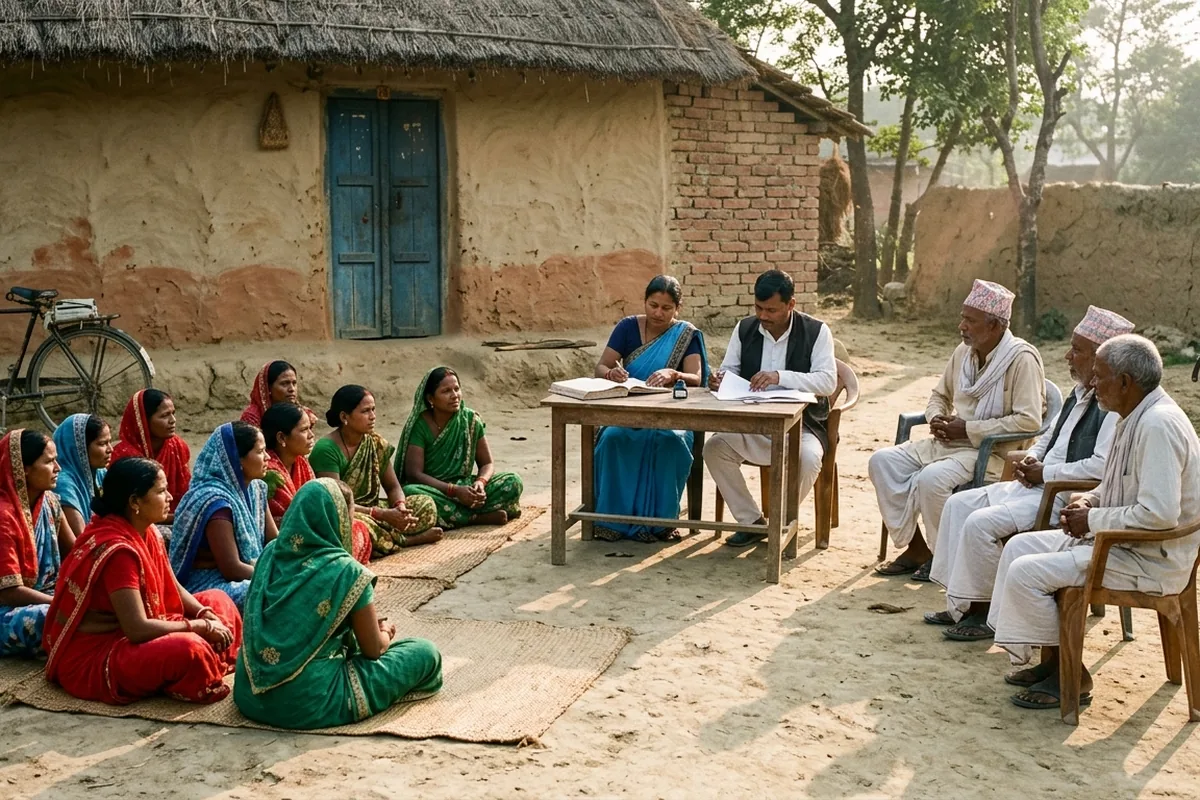
Every name below can be checked the same way, and the check matters before you donate, volunteer or sign a partnership agreement. An organisation registers at the District Administration Office of the district where its office stands and receives a registration number. To run programmes it then affiliates with the Social Welfare Council — as the Kathmandu Post reported when district offices began tightening renewals, the Social Welfare Act requires council approval before an NGO runs a programme, and offices now ask for tax clearance certificates at renewal time.
That gives a useful list entry four parts: legal name, district of registration, the sectors it genuinely works in, and a way to reach a person. Where an organisation publishes its registration and affiliation numbers itself, they appear below. We have set out the full verification process separately in how to check if an NGO in Nepal is registered.
NGOs working in Madhesh Province, district by district
Madhesh Province is eight districts — Parsa, Bara, Rautahat, Sarlahi, Mahottari, Dhanusha, Siraha and Saptari — with its capital at Janakpur and a population of 6,114,600 at the 2021 census. Entries are grouped by the district each organisation is registered in, not by size or reputation.
| Organisation | District | Works on |
|---|---|---|
| Aasaman Nepal | Dhanusha | Child protection, education, nutrition, governance |
| Janaki Women Awareness Society | Dhanusha | Women's rights, health, livelihoods, WASH |
| Janakpur Women's Development Centre | Dhanusha | Mithila art, women's income |
| Mithila Wildlife Trust | Dhanusha | Forest and wildlife conservation |
| Shrijanshil Nepal | Dhanusha | Health camps, drinking water, education, skills |
| Ratauli Yuwa Club | Mahottari | Health, WASH, education, livelihoods |
| Development Society | Sarlahi | Education, local governance, livelihoods |
| Sano Paila | Parsa | Child protection, health, education, emergencies |
Dhanusha
- Aasaman Nepal, Janakpur-9. The most openly documented registration in the province: its own site lists DAO Dhanusha registration 693/055/056 and SWC affiliation 10365, with work established in 1999 across children's learning and protection, health and nutrition, climate resilience, women's and youth leadership and accountable governance. It also runs the Bal Helpline on 1098. Phone 041-522473.
- Janaki Women Awareness Society (JWAS), Janakpurdham-4. A women-led organisation formed in 1993 (2050 BS), working on women's empowerment, education, livelihoods, sexual and reproductive health, water and sanitation, disaster risk management and disability rehabilitation. Contact: [email protected].
- Janakpur Women's Development Centre (JWDC), Kuwa village, Janakpur. A production centre rather than a service NGO: Maithil women earn from Mithila painting, papier-mâché, sewing, screen printing and ceramics. Its Fair Trade Group Nepal listing gives 39 women producers and the number 041-425080. If you want to see a livelihood programme that has outlived its funding cycles, this is the one to visit.
- Mithila Wildlife Trust, working around Dhanushadham Protected Forest. Established in 2013, it does community-led forest restoration, wildlife rescue and conservation awareness in Dhanusha. The only environmental specialist on this list.
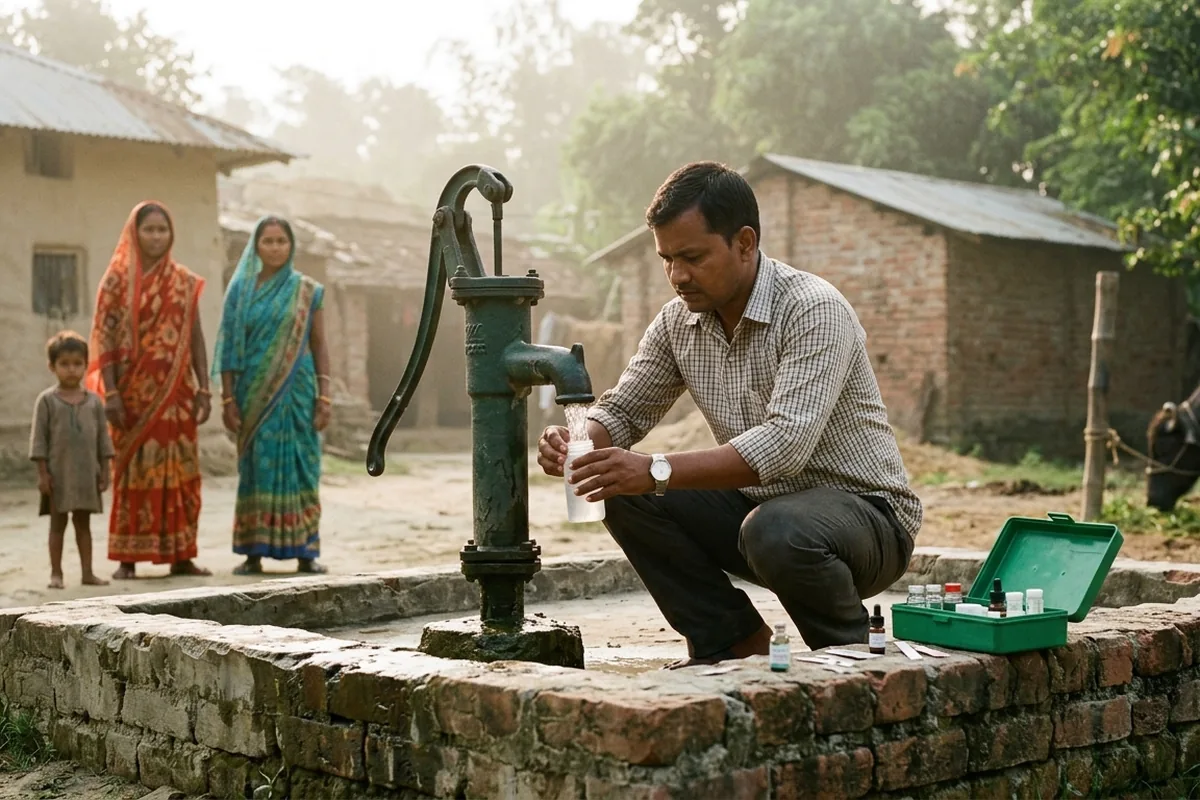
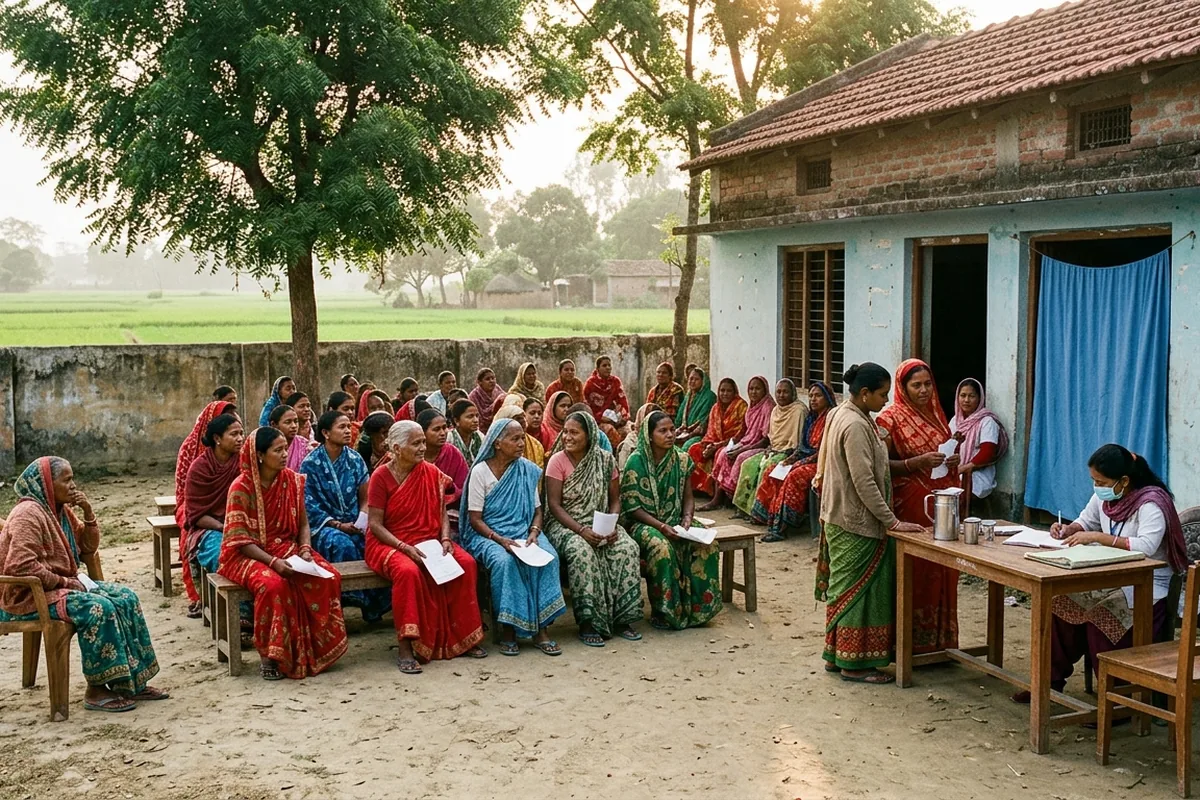
- Shrijanshil Nepal, Ganeshman Charnath Municipality. Ours. We run free health camps — including a cervical cancer screening camp at Dhanki Pokhari supported by the Ministry of Health and Population, Madhesh Province — along with safe drinking water work, school scholarships, women's skill training and tree plantation. You can read about our non-profit organization in Nepal, see the causes this charity in Nepal runs, or read the ward-by-ward account in what we do as an NGO in Dhanusha.
Mahottari
- Ratauli Yuwa Club (RYC), Ramgopalpur-05. Founded in 1991 (2047 BS) and unusually transparent about paperwork: it publishes DAO registration number 13 and SWC affiliation number 1110. Thematic areas are health and nutrition, water and sanitation, education and child protection, livelihoods, disaster response and small infrastructure. Phone 044-520843.
Sarlahi
- Development Society, Haripur. A community-based organisation working in Kabilasi, Kaudena and Dhanakaul on learning recovery and teacher support, school governance, livelihoods, health and nutrition, and social inclusion. Phone 9768705920. Registration numbers are not published on its site — ask for the certificate.
Parsa
- Sano Paila (A Little Step), Chapkaiya-2, Birgunj. Established in 2006, with programme areas covering community development, protection and empowerment, education and health, livelihood and environment, and crisis response. Phone 051-522203. It is one of the few Madhesh organisations with a national operating footprint.
What this list is missing, and why
Siraha, Saptari, Rautahat and Bara have no entry here. That is a limit of what could be verified from a public source or first-hand, not a statement that those districts are empty — they are not. Several organisations working across those four districts are registered in Dhanusha or Mahottari and appear above; others have no website at all, which in rural Madhesh is normal and is not by itself a warning sign. A single-room organisation with a renewal-stamped certificate and an active ward-office relationship is worth more than a well-designed site.
The other gap worth naming: a good number of the organisations delivering projects in Madhesh are registered in Kathmandu, and some are international NGOs working through a local partner. Neither is disqualifying. It does change who you talk to when something goes wrong.
How to get the full register for your district
- NGO Federation district member lists. The federation publishes member lists by district as spreadsheets, covering all eight Madhesh districts. These are names and addresses, not descriptions, but they are the closest thing to a province-wide roll.
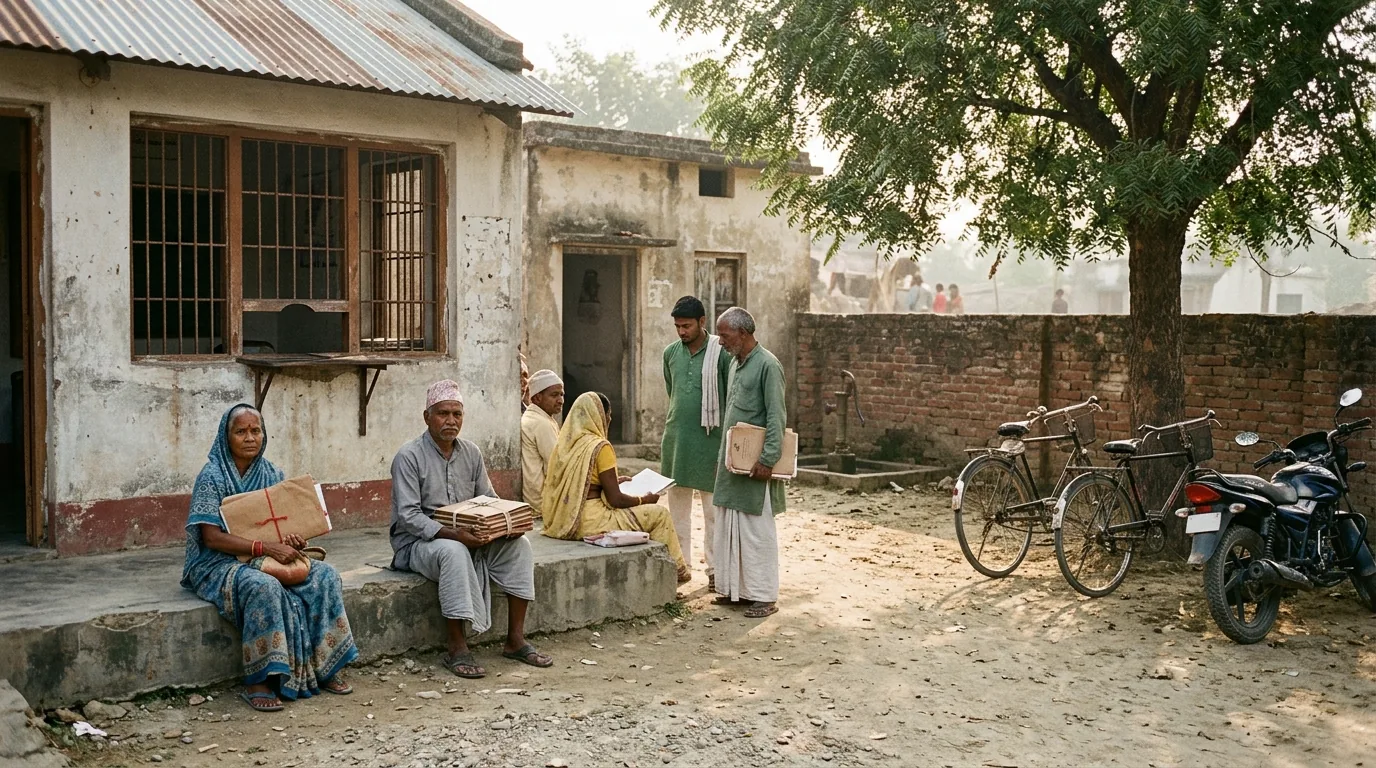
- The District Administration Office. Registration and renewal records sit at the DAO. For Dhanusha, the office publishes its contact details at daodhanusha.moha.gov.np. Go in person with the organisation's name and ask whether it is renewed for the current year.
- Your municipality. Local governments increasingly publish their own lists — Birgunj Metropolitan City, for example, released a downloadable NGO and INGO list for 2080-81 with name, address and work area. Ask your municipality's social development section whether it keeps the same.
- The ward office. The fastest check of all. Ward secretaries know which organisations actually ran something in the ward this year, as opposed to which ones are registered.
Frequently asked questions
How many NGOs are registered in Nepal?
Social Welfare Council figures reported in 2019 put the national total at 50,358, with more than half in Bagmati Province and 15,998 in Kathmandu district alone. The number has grown since. It also explains why the register is not a quality signal — registration is a form, not an endorsement.
Is there an official NGO list for Dhanusha district?
Yes, but it is held rather than published: the District Administration Office in Janakpur holds registration and renewal records, and the NGO Federation's Dhanusha district sheet lists its members. Neither describes what the organisations do, which is the gap this article tries to fill.
Does an NGO have to be registered in Madhesh to work here?
No. An organisation registered elsewhere can work in the province with the right approvals, and many do. What you should ask is where its office and staff actually are, and who answers the phone in the district when a problem arises.
How do I know an organisation on a list is still active?
Ask for three documents — the renewed registration certificate, the latest audit report, and the last annual general meeting decision — and ask the ward office whether it has worked in the ward in the past year. A dormant organisation can stay on every list for a decade.
If you are in Dhanusha
We are one small entry on a long register, and we would rather you checked us than took our word for it. Come to the office in Ganeshman Charnath, ask for the registration and audit papers, or contact us if your ward, school or tole wants a health camp or water testing, or if you know of an organisation in Siraha, Saptari, Rautahat or Bara that belongs on this list. Corrections and additions are welcome — send the name, district and a contact number and we will verify before adding it.