What a Non-Profit Organization in Nepal Really Does
Written from inside a registered organisation in Dhanusha: what a Nepali non-profit legally is, what the 54,000-plus registered bodies actually do in a ward, how a small provincial NGO differs from an INGO country office, and how to verify one before you trust it.
In this article (7)
- The legal definition, in plain terms
- What 54,000 registered organisations actually do at ward level
- A small provincial organisation is not an INGO country office
- How to check a non profit organization in Nepal is genuine
- How to ask for help, join, or fund one
- The law is being rewritten
- Frequently asked questions
A non profit organization in Nepal is, in law, an association of at least seven Nepali citizens registered at a District Administration Office under the Associations Registration Act, 2034 (1977). It renews that registration every year, gets its accounts audited every year by an auditor its general assembly appoints, and may not hand its surplus to its own members. The words people use interchangeably — NGO, charity, समाजसेवी संस्था, social organisation — nearly always describe that same legal animal. What separates one from another is not the label but whether the renewal file is current and whether anyone in the ward can tell you what the organisation has done.
This page is written from inside one. Shrijanshil Nepal is a non-profit social organisation based at Ganeshman Charnath–07, Janakpur, Dhanusha, in Madhesh Province, and the examples below are its own six programme areas rather than a generic list. If you came here to understand the category before joining, funding, checking or asking help from an organisation, the sections are in that order.
The legal definition, in plain terms
There are two realistic ways to exist as a non-profit in Nepal, and they are not the same thing.
An association is the common route, and the one almost every community organisation takes. Registration happens at the District Administration Office of the district where the organisation is based — for us, the DAO in Janakpur, Dhanusha. Section 3 of the Act requires registration before an association operates at all, and Section 4 sets the floor at seven founding members, all of whom must be Nepali citizens, according to the International Center for Not-for-Profit Law's monitor on Nepal. The application carries a constitution stating the objectives, the executive committee list, and in practice a recommendation from the ward office where the organisation will sit.
A not-for-distributing-profit company is the second route, created under Section 166 of the Companies Act, 2063 and registered at the Office of the Company Registrar rather than a district office. It is barred from paying dividends, bonuses or profit to its members and files company-style annual compliance. Professional bodies, research institutes and some social enterprises use it. Village-level welfare organisations rarely do.
Neither form makes an organisation a business or a political party. An association registers a set of objectives and is expected to work to those objectives. Nepali law does not spell out a blanket prohibition on commenting on public policy, though ICNL records a widespread perception that civil society organisations must stay non-political, which discourages many from taking positions at all. In Madhesh, where ward and municipal politics touch every programme, the practical rule most of us follow is simple: work with whoever holds the ward office, campaign for none of them.
What annual renewal actually involves
Renewal is the single most useful thing a member of the public can ask about, because it is the part that lapses when an organisation stops functioning. ICNL's summary of the requirement is precise: renewal is annual, and the file must contain a progress report, the audit, the minutes of the annual general meeting and the plan for the coming year, with a fee of NPR 500. Miss it, and arrears plus an additional NPR 5,000 penalty accumulate; go five years without renewing and the registration is cancelled automatically.
District offices have also tightened what they accept. In 2019 The Kathmandu Post reported district administrations refusing renewals without tax clearance and approvals from the relevant agencies. So an organisation with a clean renewal is telling you, at minimum, that its books were audited, its assembly met, and the tax office had no objection.
What 54,000 registered organisations actually do at ward level
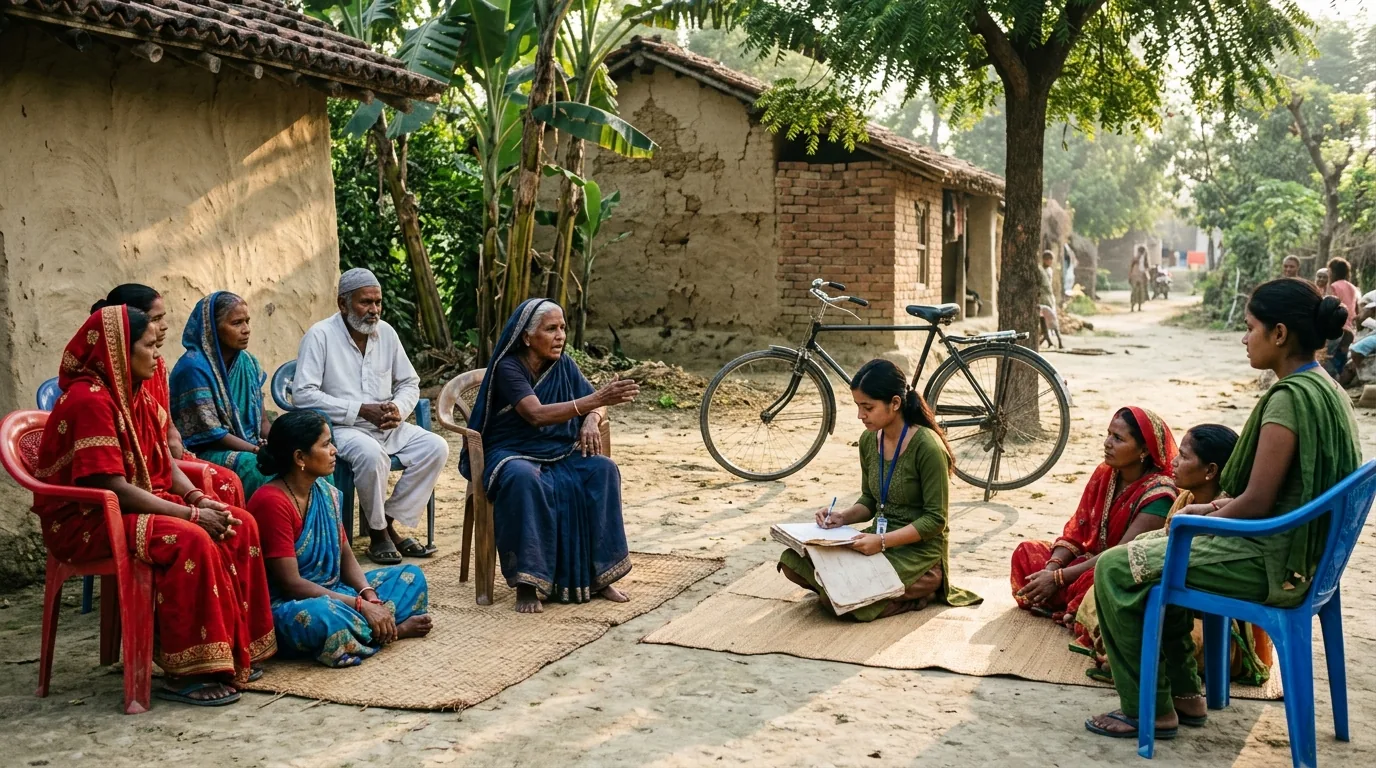
The count of NGOs registered in Nepal passed 54,000 in 2025, up from a few hundred around 1990. That number invites cynicism, and some of it is earned — a large share of those registrations are dormant, single-project or paper bodies. But the working ones are doing something narrower and less glamorous than the word "NGO" suggests. They fill the gap between what a service legally exists to provide and what actually reaches a household two kilometres off the road.
Our own six programme areas are ordinary examples of that gap-filling, and every one of them exists because a public service already exists on paper:
- Education. Government scholarships exist; fees, books and uniforms still end a child's schooling. We cover the shortfall and help families claim what they are already entitled to.
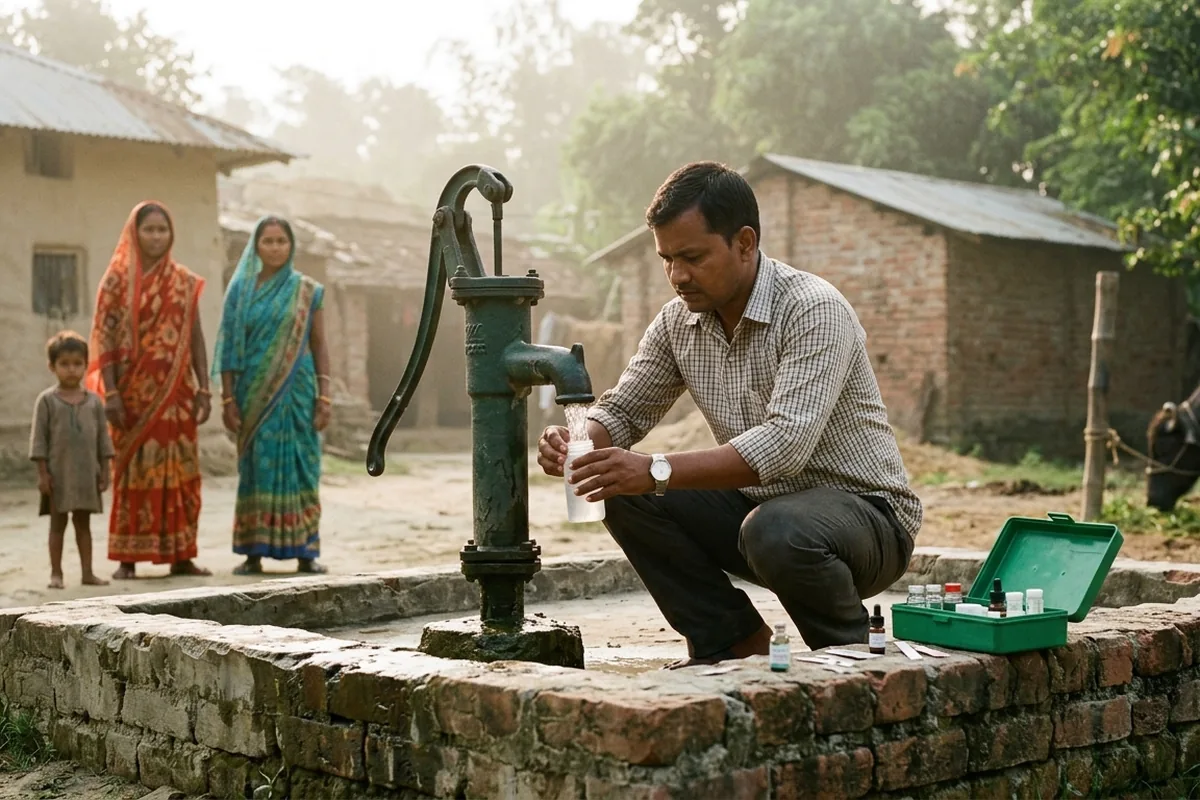
- Drinking water. Tube wells are everywhere in the Terai; arsenic and bacterial contamination are invisible. Testing and treatment are the intervention, not digging.
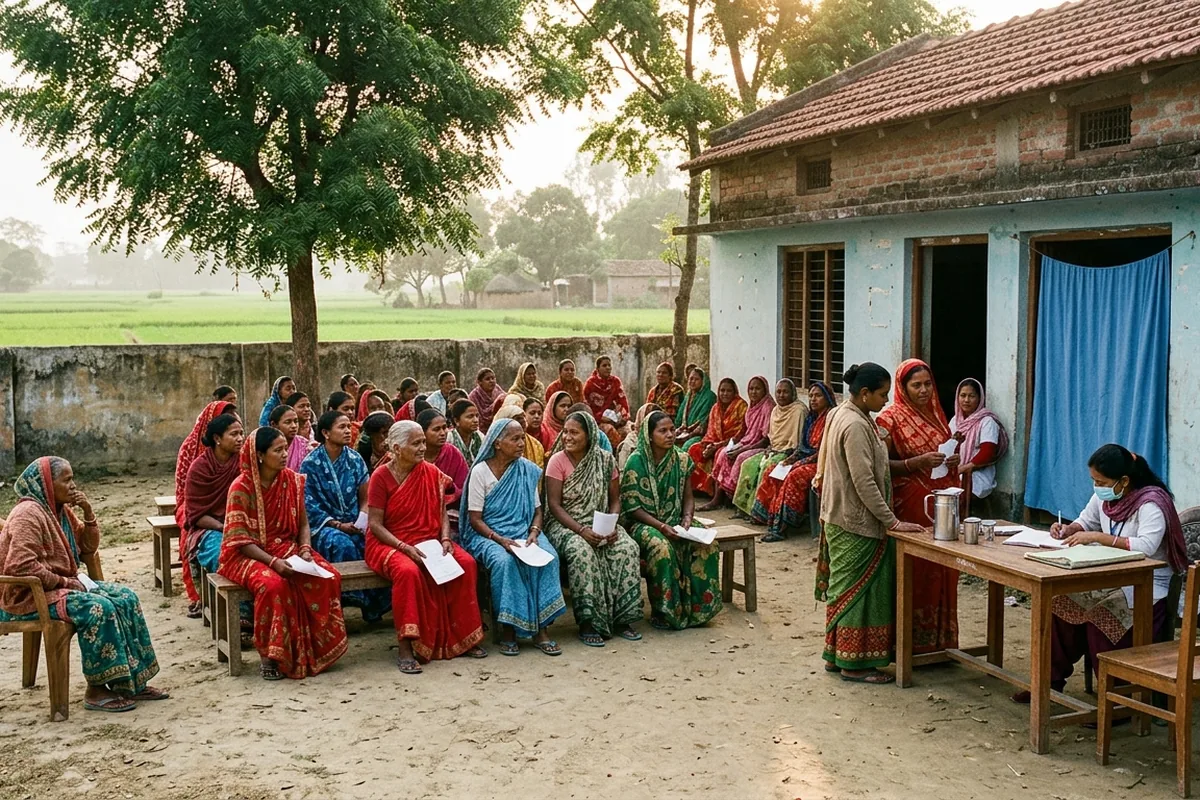
- Health. Health posts run free services; people do not reach them. Camps and ambulance support move the service to the ward instead.
- Women's skill training. Free CTEVT courses exist; knowing which trade has local buyers decides whether a trainee earns anything. See our women's empowerment and skill training programme.
- Agriculture and livelihoods. Extension services exist; smallholders in Dhanusha rarely see them.
- Environment. Saplings are distributed every monsoon; survival depends on guards and follow-up, which is what the tree plantation programme is built around.
A fuller, unvarnished account of the ward-by-ward version of this is in what an NGO in Dhanusha actually does, and the funding goals for each area are listed on the causes this charity in Nepal runs.
One more thing shapes the work: since federalism, a local organisation does not operate independently of its municipality. The Local Government Operation Act requires organisations to coordinate with the local level and align annual plans with it, and municipalities have pushed further, arguing organisations need local approval to run programmes at all. Whatever the legal argument, in practice a programme that the ward chair has not been told about does not happen twice.
A small provincial organisation is not an INGO country office
Readers searching this term often land on pages about organisations headquartered in Kathmandu, London or Boston. Those are governed by a different law and behave differently.
| District-registered NGO | INGO country office | |
|---|---|---|
| Registers with | District Administration Office, under the Associations Registration Act, 2034 | Social Welfare Council, under the Social Welfare Act, 2049 |
| Who controls it | Seven or more Nepali citizens; an executive committee answerable to a general assembly | A head office abroad, through a country director |
| Basic instrument | Registration certificate, renewed yearly | A General Agreement, typically five years, plus a Project Agreement per project |
| Implementation | Implements directly, in its own wards | Cannot implement directly; must work through local non-profit partners |
| Money | Local giving, municipal and provincial programme budgets, project grants; foreign funds need Council approval | Committed external funding, with a minimum annual threshold |
That last row matters more than people expect. Under Section 16 of the Social Welfare Act, foreign assistance needs Social Welfare Council approval case by case, and banks will not release the money without the Council's letter even after a donor agreement is signed. It is why a small organisation can accept a neighbour's Rs 2,000 the same afternoon but takes months to move on a foreign grant.
How to check a non profit organization in Nepal is genuine
Do this before you volunteer, donate or hand over a household's documents. It takes one visit and two questions.
- Ask for the registration certificate and the current renewal. Not the certificate alone — the renewal sticker or letter for the running fiscal year. An organisation that cannot produce it is either dormant or hiding something.
- Check the district, not just the name. The certificate names the District Administration Office that issued it. An organisation registered in one district running programmes in another should be able to explain why.
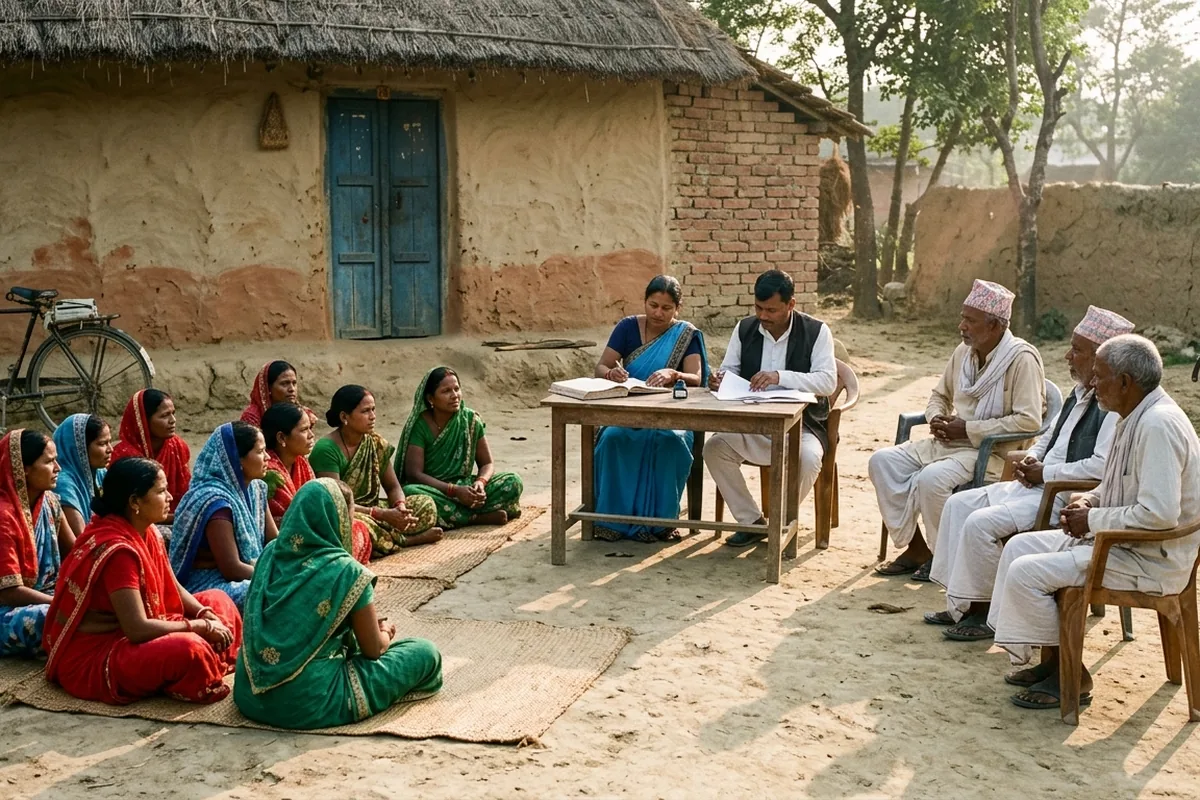
- Ask the ward office. A genuine local organisation is known at the ward it works in. This is the fastest check available and it costs nothing.
- Ask for the last audited statement. It exists, because renewal required it.
- Never send money to a personal account. No registered organisation collects donations into an individual's eSewa, Khalti or personal bank account. The account title must match the registered name exactly.
Apply all five to us as well. Our registration, office and people are at Ganeshman Charnath–07, and you can read who we are on the page about our non-profit organization in Nepal or come to the office and ask for the file. Working with a public body is a further signal but not proof: our free cervical cancer screening camp at Dhanki Pokhari was run with support from the Ministry of Health and Population, Madhesh Province, and that is the kind of claim you should be able to verify with the ministry, not just read on a website.
How to ask for help, join, or fund one
To request help, go to the organisation working in your ward, not the biggest name you can find. Bring the specifics — how many households, which school, which tube well — because that is what a programme application needs. Our contact page has the phone number and the office address; a written request through the ward office also reaches us.
To join, you do not need a degree, a fee or a placement agency. Local volunteering with a registered organisation is free, and anyone who lives here can do it — we wrote a separate piece on volunteering with an NGO in Nepal without paying a fee because the search results for that phrase are dominated by paid packages sold to foreigners.
To fund one, know that donations to an organisation approved as tax-exempt by the Inland Revenue Department are deductible under Section 12 of the Income Tax Act, 2058, but the deduction is capped at NPR 100,000 or five percent of assessable income, whichever is lower. Ask whether the organisation holds that exemption certificate before assuming a receipt will help at tax time, and confirm your own position with the tax office or an accountant.
The law is being rewritten
Anyone reading this in 2026 should know the ground is moving. In August 2025 the Ministry of Home Affairs circulated a draft bill that would merge three laws — the National Directives Act (1961), the Associations Registration Act (1977) and the Social Welfare Act (1992) — into one, and tier registration by geographic reach: single-ward organisations at the local level, district-wide ones at the district, multi-province ones federally. The Kathmandu Post reported the draft alongside the NGO Federation of Nepal's objection that it constrains civil society rather than facilitating it. Nothing above has changed yet, but if you are registering a new organisation, check the current position at your district office rather than relying on any guide, including this one.
Frequently asked questions
What is the difference between an NGO and a non-profit organization in Nepal?
In everyday Nepali usage, none. Both usually mean an association registered at a District Administration Office under the Associations Registration Act, 2034. The only real legal distinction is between that association form and a not-for-distributing-profit company registered under Section 166 of the Companies Act, 2063 at the Office of the Company Registrar.
How many non-profit organizations are registered in Nepal?
More than 54,000 as of 2025, on Social Welfare Council figures. That count includes dormant and lapsed registrations, so it is not a count of active organisations.
Does a local NGO have to be affiliated with the Social Welfare Council?
Not to exist — district registration is what creates it. Council affiliation and approval become necessary for running social-welfare programmes under the Council's remit and, critically, for receiving foreign funds, which require case-by-case approval under Section 16 of the Social Welfare Act.
Can a non-profit in Nepal pay salaries?
Yes. Paying staff is an expense, not a distribution of profit. What the law forbids is distributing surplus, dividends or bonuses to members. Any surplus must go back into the organisation's stated objectives, and the audit is where that shows up.
How do I report an organisation I think is fraudulent?
Take it to the District Administration Office that issued the registration, and to your ward office. The DAO controls renewal, which is the leverage that matters. Do not settle it by warning neighbours informally — an unreported paper organisation simply renews again.
If you live in Ganeshman Charnath or anywhere in Dhanusha and want to see how this works rather than read about it, come to a health camp or a plantation day and watch the ward register fill up. If you want to work on one, apply to volunteer with us — there is no fee, and the first thing we will ask is which ward you can reach on foot.