Social Organization in Nepal: What One Really Does
The phrase covers four separate legal animals — a tole committee, a DAO-registered sanstha, an SWC-affiliated NGO and an INGO country office. Here is what each one can and cannot legally do in a ward, written from inside the second rung.
In this article (7)
- The four rungs of a social organisation in Nepal
- What a social organization in Nepal can and cannot legally do in a ward
- Where a small Dhanusha organisation sits on this ladder
- Three things people confuse with a social organisation
- How many of these exist, and how to check one
- Questions people ask
- If you want to see rung two up close
A social organization in Nepal is, in law, one narrow thing: a non-profit body that seven or more Nepali citizens have registered at their District Administration Office under the Associations Registration Act, 2034. In ordinary speech it is four different things stacked on one phrase — the tole committee that repairs a culvert, the samaj sewa sanstha registered in a district, the organisation affiliated to the Social Welfare Council, and the INGO country office in Kathmandu. They are not interchangeable. Each rung can do things the rung below it legally cannot, and each carries paperwork the rung below it does not. This is that ladder described from inside the second rung, by Shrijanshil Nepal, a non-profit organization in Nepal working in Ganeshman Charnath Municipality, Dhanusha, Madhesh Province.
The distinction is not academic. A ward secretary deciding who may receive a project budget, a company placing its CSR allocation, a family asking who can pay a school fee, and a student looking for a field placement are all asking the same question in different words: which rung is this organisation standing on, and does that rung permit what I am asking for?
The four rungs of a social organisation in Nepal
| Rung | Registered where | What it can do | What it cannot do |
|---|---|---|---|
| Tole committee / user committee | Formed by the ward committee; not registered as an association | Hold and spend the budget of one named ward project | Exist independently of that project; take foreign money |
| Registered association (samaj sewa sanstha) | District Administration Office, under the Associations Registration Act, 2034 | Hold a PAN and bank account, sign with wards and schools, run its own programmes | Receive foreign or government assistance without Council approval |
| SWC-affiliated NGO | The same DAO registration, plus affiliation with the Social Welfare Council | Apply for government and foreign-funded projects through the Council | Spend an approved grant outside the agreed project |
| INGO country office | Permission from, and an agreement with, the Social Welfare Council | Bring in foreign funds and work through local partners | Operate at all before that agreement is signed |
Rung one: the community group that is not registered at all
Most organised effort in a Terai village never reaches a registration counter, and it does not have to. The ward committee's own duties under Section 12 of the Local Government Operation Act, 2074 include forming and mobilising tole development organisations and forming and monitoring user committees for projects carried out inside the ward. A user committee for a drain, a culvert or a school boundary wall is a real legal vehicle: it holds the project account, it answers to the ward for the bills, and when the scheme is finished it stops existing.
That is its strength and its ceiling. A user committee cannot carry a programme from one fiscal year to the next, cannot hold assets of its own, and cannot be the recipient of a donation from outside the ward. A community organisation in Nepal that wants to do any of those things has to climb.
Rung two: the DAO-registered association — where we sit
Section 3 of the Associations Registration Act, 2034 makes it unlawful to establish and run an organisation without registering it first, and Section 4 requires seven or more people to apply jointly, submitting a statute along with the organisation's name, objectives, management committee, sources of funds and office address. Section 2 is deliberately wide: an association, institution, club, circle, council or study centre set up for social, religious, literary, cultural, scientific, educational, physical, vocational or philanthropic purposes all register by the same route. A youth club and a samaj sewa sanstha are, in the register, the same kind of object.
Registration is not a one-time event. Organisations must renew annually, within three months of the end of the fiscal year, with penalties that escalate the longer the lapse runs; after five unrenewed years registration is cancelled outright and cannot simply be bought back with accumulated fines, as the International Center for Not-for-Profit Law sets out in its review of the Nepali framework. This is why a renewal sticker matters more than a framed certificate: the certificate proves an organisation once existed, the renewal proves it still does.
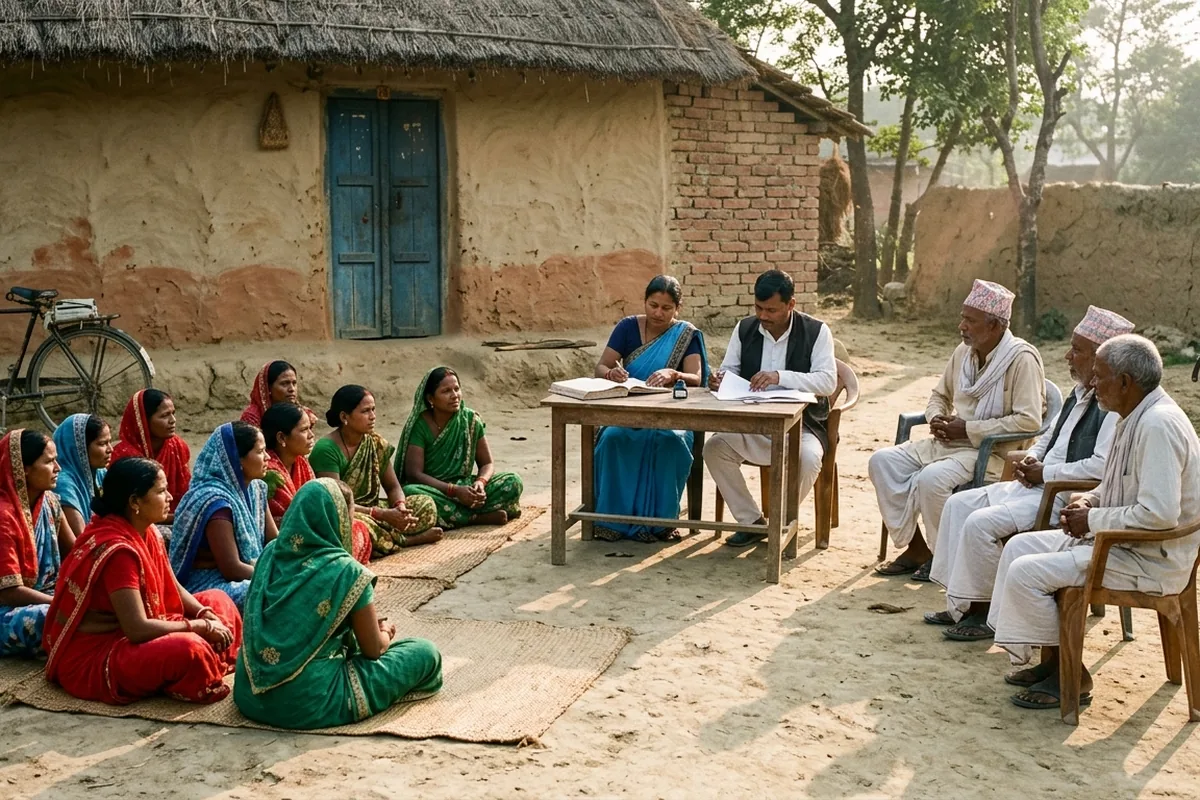
What this rung actually buys is ordinary and decisive. A registered body has a permanent account number, a bank account, a seal, an audited set of books and a general assembly that has to approve them. It can sign a cooperation letter with a ward office, accept a school's request in writing, hold equipment between programmes, and still be the same legal person next year when someone comes back to ask what happened to the money.
Rung three: affiliation with the Social Welfare Council
The Social Welfare Council was set up under the Social Welfare Act, 2049. Affiliation is a separate application: Section 13 of that Act simply says organisations wishing to keep affiliation with the Council shall apply in the prescribed form. The consequential section is Section 16, which requires any social organisation wanting material, technical or economic assistance from the Government of Nepal, from foreign countries, or from international organisations and individuals, to submit a project proposal and application to the Council.
Read that plainly and the rule most readers are hunting for falls out of it: domestic money raised from members and local well-wishers is the organisation's own business, but money arriving from outside the country needs the Council's prior approval, project by project. An organisation that tells a foreign donor it can quietly accept a transfer is either misinformed or lying.
Rung four: the INGO country office
A foreign non-governmental organisation is on an entirely different track. Section 12 of the Social Welfare Act requires it to apply to the Council for permission before starting any work in Nepal, and, once permitted, to reach an agreement with the Council before operating. In practice this becomes a general agreement that fixes the sectors, districts, duration and reporting, followed by project agreements beneath it. An INGO therefore has national reach and foreign funds, but almost never its own hands in a ward — the implementation is nearly always sub-contracted to a rung-two or rung-three Nepali organisation, which is why the names on a banner in a Dhanusha village and the name on the donor's annual report are usually different.
What a social organization in Nepal can and cannot legally do in a ward
Stripped of the brochure language, a registered organisation operating at ward level can:
- run programmes of its own and accept written requests from residents, schools and ward offices;
- be included in the local level's annual plan, and co-sign a camp or training with a ward or a provincial ministry;
- hold donations, issue a receipt, and show an audit report and general assembly minute for them.
It cannot:
- replace a government service — a camp is a supplement to the health post, never a substitute;
- take foreign assistance without the Council's project approval;
- guarantee a job, a visa, a scholarship quota or a government entitlement that belongs to another office;
- work in a ward whose ward office has not been informed. The signature chain is not optional, and we have described how an organisation actually works with a ward office in detail elsewhere.
Where a small Dhanusha organisation sits on this ladder
We are a rung-two organisation that behaves like one. Registration and renewal sit with the District Administration Office in Dhanusha; the work sits in the wards of Ganeshman Charnath Municipality and nearby. Six programmes run under that registration — education support, clean and safe drinking water, community health and an ambulance service, women's skill training, agriculture and livelihood support, and tree plantation. The full set is listed on the page for the causes this non-profit organization in Dhanusha runs.
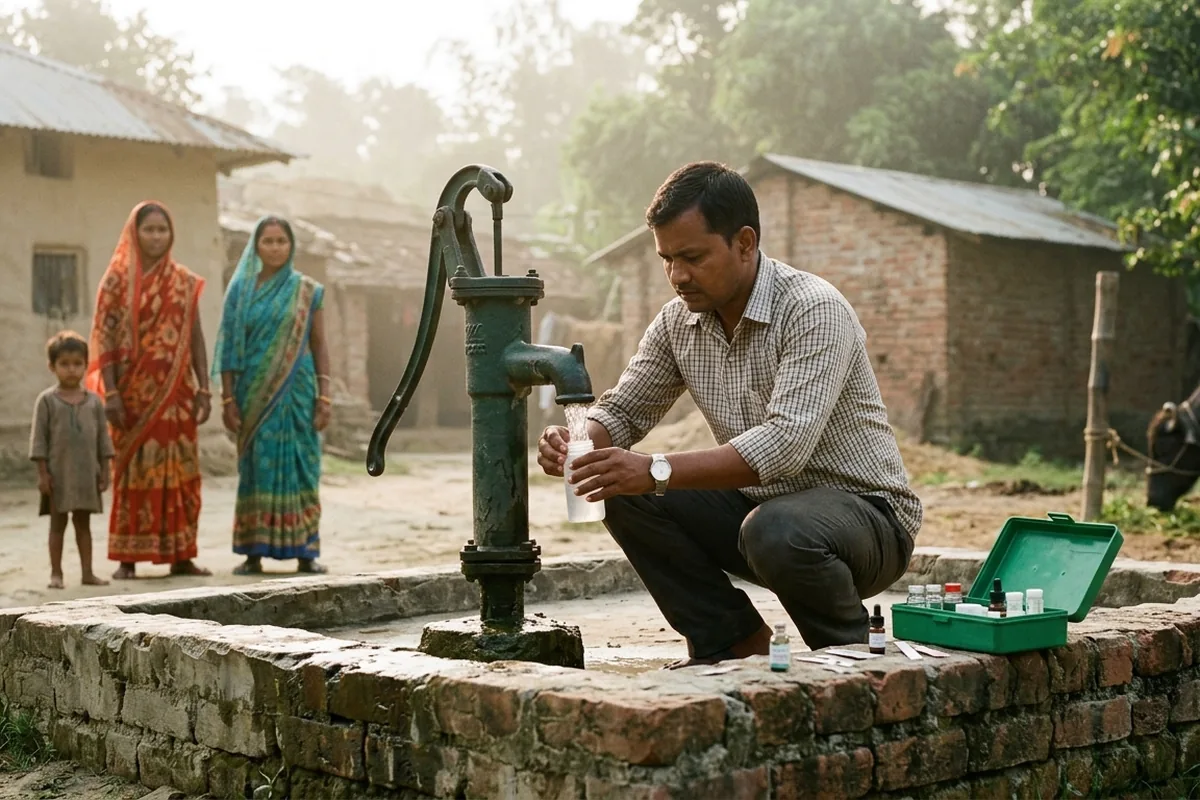
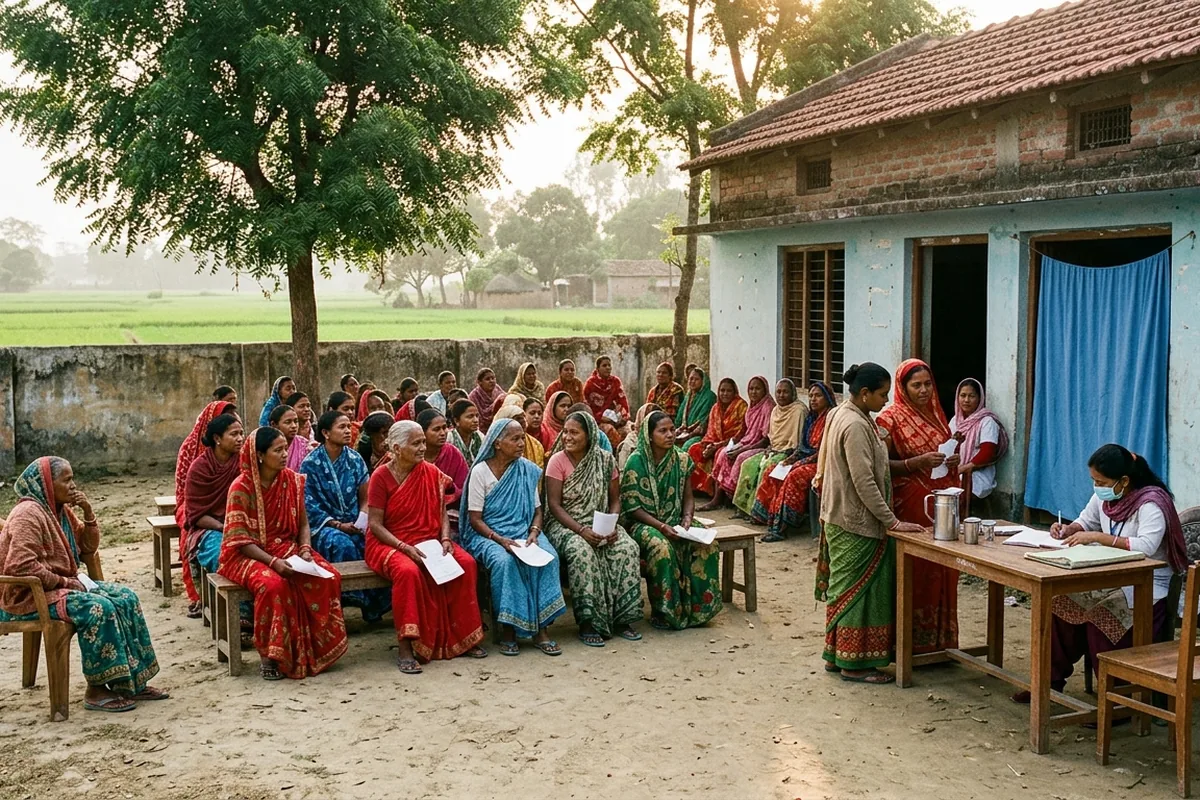
The ladder shows up in the ordinary texture of that work. A free cervical cancer screening camp at Dhanki Pokhari happened because a registered body could sign with the Ministry of Health and Population, Madhesh Province, and specialist gynaecologists could be brought to a village that has none — a user committee could not have convened it, and an INGO would not have run it directly. A tube-well testing round reaches households because a ward office can forward a request to a named, renewable organisation and expect the same organisation to come back a year later. Those are rung-two powers, and they are also rung-two limits: our reach stops at the district, and our budget stops at what local giving and approved partnerships bring in.
Three things people confuse with a social organisation
A cooperative. A cooperative is owned by its members and returns surplus to them. That is a legitimate and useful form, and it is not a non-profit social organisation; the two register under different laws, at different offices, and answer to different regulators.
A company that does not distribute profits. Section 166 of the Companies Act, 2063 allows a company to be incorporated for social, academic, charitable or public-utility objectives on condition that it never distributes dividends or any financial benefit to its members. It takes at least five promoters and registers at the Office of the Company Registrar, not the DAO, as Gandhi & Associates summarises. It is a non-profit, but it is not an association, and it does not appear in the DAO register people usually check.
A project office with a signboard. A branch of a Kathmandu or foreign organisation running a two-year project in a district is not a locally registered organisation, however permanent the board outside looks. Ask which register it sits in.
How many of these exist, and how to check one
Registration in Nepal has grown very fast. From roughly 1,210 registered organisations by 2050 B.S., the count passed 58,000 by 2082/83, according to a review of the sector published in Madani Beat — which also notes that the number regularly renewing and actually running programmes is far smaller. For comparison, the NGO Federation of Nepal, the sector's own umbrella body established in 1991, counts 6,781 member organisations. The gap between those two figures is the whole problem a reader faces when they type this phrase into a search box.
The check is short. Ask for the registration certificate, the current renewal, the PAN certificate and the last audit report, then verify the registration at the District Administration Office of the district named on it. We have written out the full procedure, run on ourselves, in how to check if an organisation in Nepal is registered, and a broader account of the sector in what a non-profit organization in Nepal really does.
Questions people ask
Is a social organisation the same as an NGO in Nepal?
Usually yes, in everyday use. The legal object is an association registered under the Associations Registration Act, 2034; "NGO" is the label the Social Welfare Act and the donor world put on the same thing. Strictly, every affiliated NGO is a registered social organisation, but not every registered social organisation has sought Council affiliation.
How many people are needed to start one?
Seven or more, applying jointly with a statute, objectives, a management committee list, declared sources of funds and an office address. There is no way around the seven.
Can a social organisation in Madhesh Province take money from abroad?
Not on its own. Section 16 of the Social Welfare Act, 2049 requires a project proposal and application to the Social Welfare Council before assistance from foreign countries, international organisations or foreign individuals is received. The rule is national; it applies in Madhesh exactly as it does in Kathmandu.
Does a tole committee need to register?
Not to run the ward project it was formed for. It does need to register as an association the moment it wants a continuing identity, its own bank account, or donations from outside the ward.
Who regulates these organisations now that Nepal is federal?
Registration and renewal remain with the District Administration Office under the Chief District Officer; affiliation and foreign-funded projects with the Social Welfare Council; and day-to-day permission to work in a settlement with the ward and the municipality. Three offices, three different signatures, and an organisation that cannot produce all three is not fully in order.
If you want to see rung two up close
Residents, ward secretaries and school teachers in Dhanusha can send a request for a camp, a training or education support directly; students and local volunteers can join the work without paying anyone a fee. The registration papers are available to read at the office, and our about page explains how this charity in Nepal is governed. To put a request in writing, or to come and check the file yourself, use the details on the contact page.