Volunteer With an NGO in Nepal Without Paying a Fee
Every placement agency on page one of Google is selling a package to a foreigner flying in. If you already live in Nepal, you can join a registered local NGO directly, for nothing. Here is how to find one, how to check it is genuine, and what the work actually involves.
In this article (6)
If you live in Nepal and want to volunteer, you do not need to pay anyone to arrange it. Almost every fee-charging placement you find online is built for a foreigner flying in, and the fee covers a homestay bed, two meals and an airport pickup you have no use for. A Nepali student or graduate who wants to volunteer with an NGO in Nepal can approach a registered organisation in their own district, sign up, and start on the next activity. No agency, no package, no fee.
This guide is written from Ganeshman Charnath in Dhanusha. It covers how to find a genuine local NGO, how to check it before you hand over your time, what the work really looks like week to week, and what to agree before your first day.
Why every search result asks you for money
Search for volunteering in Nepal and page one is placement operators. International Volunteer HQ's NGO Support programme in Nepal, to take one example, charges a USD 329 registration fee plus USD 675 for its four-week minimum, with four weeks the shortest option sold. That is comfortably over a lakh of rupees before anyone buys a flight.
This is not a scam. The money genuinely buys homestay accommodation, breakfast and dinner, airport transfer and round-the-clock support for someone landing in a country they have never visited. It is simply irrelevant to you. You already have a house. You already speak Maithili or Nepali. You do not need an orientation on how Nepal works. Take those items out of the package and what remains, the actual volunteering, carries no cost at all.
Even the pages advertising free volunteering in Nepal are written for that same foreign reader, offering a no-fee placement in exchange for paying a host family directly for food and lodging. Nobody is writing for the BBS student in Janakpur who has three free mornings a week and wants to be useful in her own ward.
How to volunteer with an NGO in Nepal as a local resident
- Shortlist organisations that already work in your municipality. Not a Kathmandu office with a Dhanusha line item in its budget, but one whose office you can reach on a cycle and whose staff your ward secretary can name.
- Check the registration before anything else. Under the Association Registration Act, 2034, an NGO must be registered with the District Administration Office and renewed each year. Ask to see the certificate and the latest renewal. An organisation that hesitates over this is telling you something.
- Read what they have actually done in the last twelve months. Photographs of one camp from four years ago is not a programme. Look at the dates. Our own record of projects in Dhanusha and the calendar of upcoming events are there for exactly this kind of checking.
- Apply in writing, not by dropping in. A short message with your name, ward, age, what you are studying, which days you are free and any skill you can offer is enough. Most local NGOs run on WhatsApp and a register book, so put your availability in writing so it survives being forgotten.
- Settle the terms before your first day. Four questions, asked plainly: is there any fee or deposit; who pays your travel to the site; will you be given a certificate at the end and signed by whom; and who is your point of contact if a task goes wrong. Any organisation worth your time answers all four in one message.
What local volunteering actually involves
Be clear-eyed about this. You will not be designing programmes in your first month. Local NGO work in the Terai is logistics, patience and paperwork, and the volunteers who become indispensable are the ones who do the unglamorous parts well.
| Task | What it needs from you | Typical commitment |
|---|---|---|
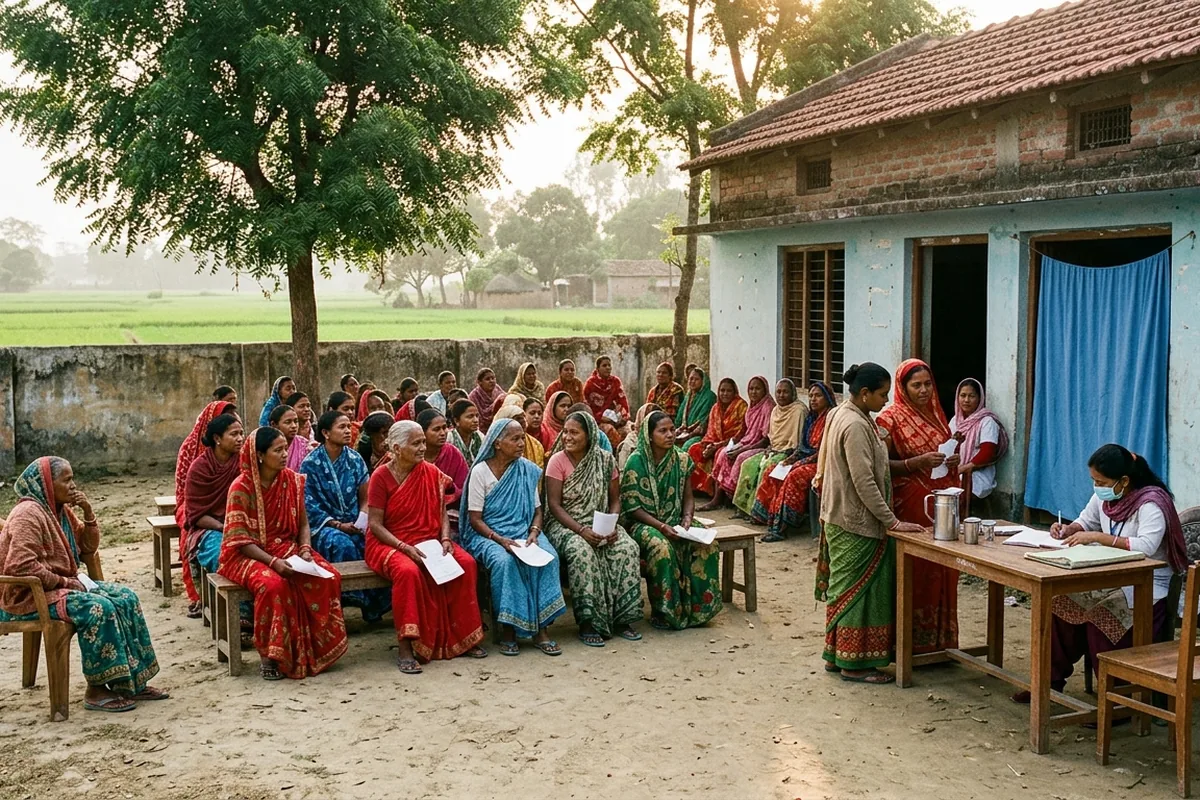
| Camp registration desk and queue management | Legible handwriting, patience with elderly patients, local language | One full day, early start |
| Translation between Maithili and Nepali | Genuine fluency in both, willingness to repeat yourself | Alongside camps and sessions |
| School awareness sessions | Confidence in front of forty students, preparation the night before | Half a day per school |
| Tree plantation and follow-up watering | Physical work, and returning in week three when nobody else does | One morning, then periodic |
| Data entry and record keeping | Basic Excel, accuracy, no shortcuts on names and ward numbers | A few hours, often from home |
| Photographs and social media posts | A phone camera and the sense to ask consent before photographing a patient | Alongside any activity |
The last point matters more than it sounds. At a health camp you are standing next to people's medical information. Do not photograph a registration form, do not post a face without permission, and do not repeat what you overheard at the screening table. Volunteers who get this wrong are not asked back.
Other places to volunteer in Dhanusha
A single NGO is not your only route, and a serious volunteer usually ends up on two or three lists.
- Nepal Red Cross Society. The largest humanitarian network in the country, with a district chapter in all 77 districts, 1,554 sub-chapters and 6,538 Junior/Youth Red Cross circles. If your campus already has a circle, joining costs you a form.
- Your ward office. Wards run sanitation drives, vaccination support and disaster response and are usually short of hands. Ask the ward secretary to put your number on the list.
- Your own campus. Blood donation drives and cleanliness campaigns organised by a student union are volunteering, and they give you something concrete to point at when you approach an NGO.
One detail worth knowing if you are applying to youth schemes: the National Youth Policy 2082 now defines youth as ages 18 to 35, revised from the earlier 16 to 40 bracket. Age criteria on government youth programmes are shifting to match, so read each notice rather than assuming.
Frequently asked questions
Do I have to pay to volunteer with an NGO in Nepal?
Not if you are joining a local organisation directly as a resident. Fees exist to cover food, lodging and international support for volunteers arriving from abroad. If a local NGO asks a Nepali resident for a registration fee or a deposit, ask what the money is for and get the answer in writing before paying anything.
What is the minimum age to volunteer?
It varies by organisation. Shrijanshil Nepal's volunteer criteria are that you be at least 16 years of age, have a commitment to community service, a willingness to support education and health programmes, basic communication skills and a passion for positive social change.
Will I get a certificate I can use on a job application?
Ask before you start, and ask who signs it and what it will say. A certificate that records specific dates, tasks and hours is worth far more to an employer or a scholarship panel than one with only your name on it.
How many hours a week do I need to give?
Local volunteering is event-driven rather than a fixed weekly shift. A health camp or plantation drive is one intense day; data entry and translation are a few hours that fit around classes. Be honest about what you can sustain, because an NGO plans around the people who turn up.
Can I volunteer if I only speak Maithili?
Yes, and in Dhanusha it is an advantage, not a limitation. Much of the work at a camp is explaining a procedure to a woman who is nervous and does not want it explained in Nepali. That is a skill an outside volunteer cannot supply.
Where to start with us
Shrijanshil Nepal works in education, health, agriculture, environment and poverty alleviation across Ganeshman Charnath and the wider Dhanusha district. If you want to be on the list for the next health camp, plantation drive or school session, fill in the volunteer sign-up form with your ward and the days you are actually free, or call the office on the number listed on our contact page and ask what is coming up this month. Tell us what you can do rather than what you want to learn, and you will be given real work.