
Inside an NGO Clean Drinking Water Project in Madhesh
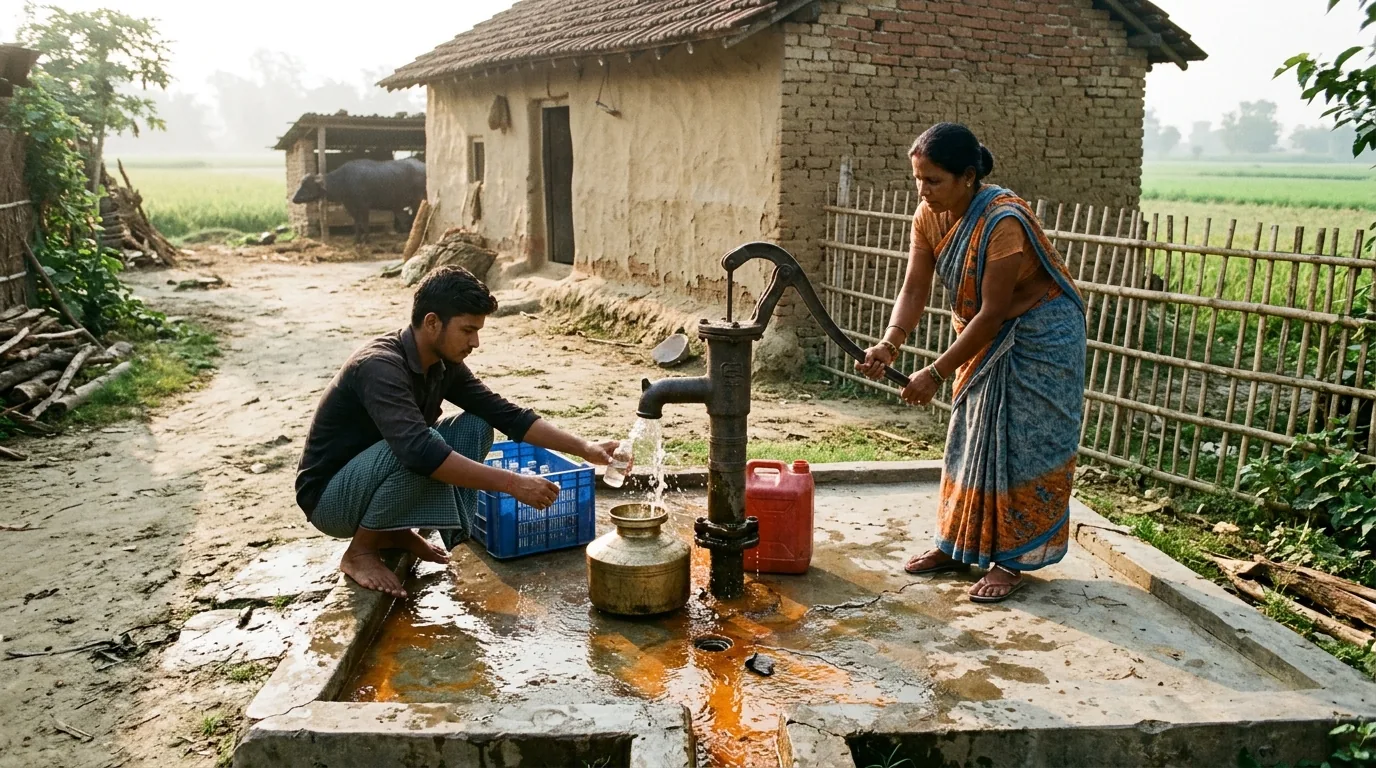
In the Terai the hand pump is already in the yard. The real work is finding out which pumps are safe, saying so plainly when one is not, and still being there for the follow-up round a year later.
In this article (8)
- "Improved source" is not the same as safe water
- How a ward gets chosen
- What a testing round covers — and what it costs
- Why arsenic and iron change the plan
- What happens to a well that fails
- What a non-profit organization in Nepal can and cannot do here
- The follow-up round, not the ribbon-cutting
- Questions we get asked
An NGO clean drinking water project in Madhesh Province is mostly not about digging. In most of the Terai the hand pump is already standing in the yard. The work is finding out which of those pumps are safe, telling the household the truth when one is not, and making sure someone is still checking a year later. Shrijanshil Nepal is a registered non-profit organization in Nepal based in Ganeshman Charnath Municipality, Dhanusha, and this is the shape the water work actually takes here — ward by ward, well by well, and cheaper in materials than in follow-up.
"Improved source" is not the same as safe water
The gap between the two is the whole reason a testing programme exists. Nepal's Multiple Indicator Cluster Survey 2024-25 found that 98.2 percent of households report using an improved drinking water source, yet E. coli or coliform bacteria turned up in more than 60 percent of the water samples tested. A covered tube well counts as improved. It can still be pulling water past a leaking latrine pit twelve metres away.
Chemistry is the harder half. Arsenic in Terai groundwater is geological, washed down from Himalayan rock and laid into the flood-plain sediment over thousands of years. Blanket testing across twenty Terai districts between 2005 and 2008 confirmed it as a serious public health risk, with Nawalparasi worst hit — close to 12 percent of tube wells there above 50 ppb. Arsenic has no colour, no smell and no taste. Nobody in a village can tell you which wells are affected, and neither can we, until the water goes to a laboratory.
How a ward gets chosen
We do not pick wards by need alone, because need is everywhere. In practice the selection runs through four filters:
- A request exists. A ward office, a school, a mothers' group or a tole committee asks. Unrequested projects do not get maintained.
- The wells are genuinely untested. Some tole clusters were covered by earlier blanket testing and have painted spouts; others have never seen a test kit. Retesting a well that already has a recent result is a poor use of a testing budget.
- The municipality is not already building there. Under Schedule 8 of the Constitution, local water supply is an exclusive power of the local government. If a piped scheme is already funded for that ward, testing is still useful, but a new well is not.
- Someone will take the well on. If no households will form a users' committee and put a small amount aside for repairs, a new installation there has a short life.
What a testing round covers — and what it costs
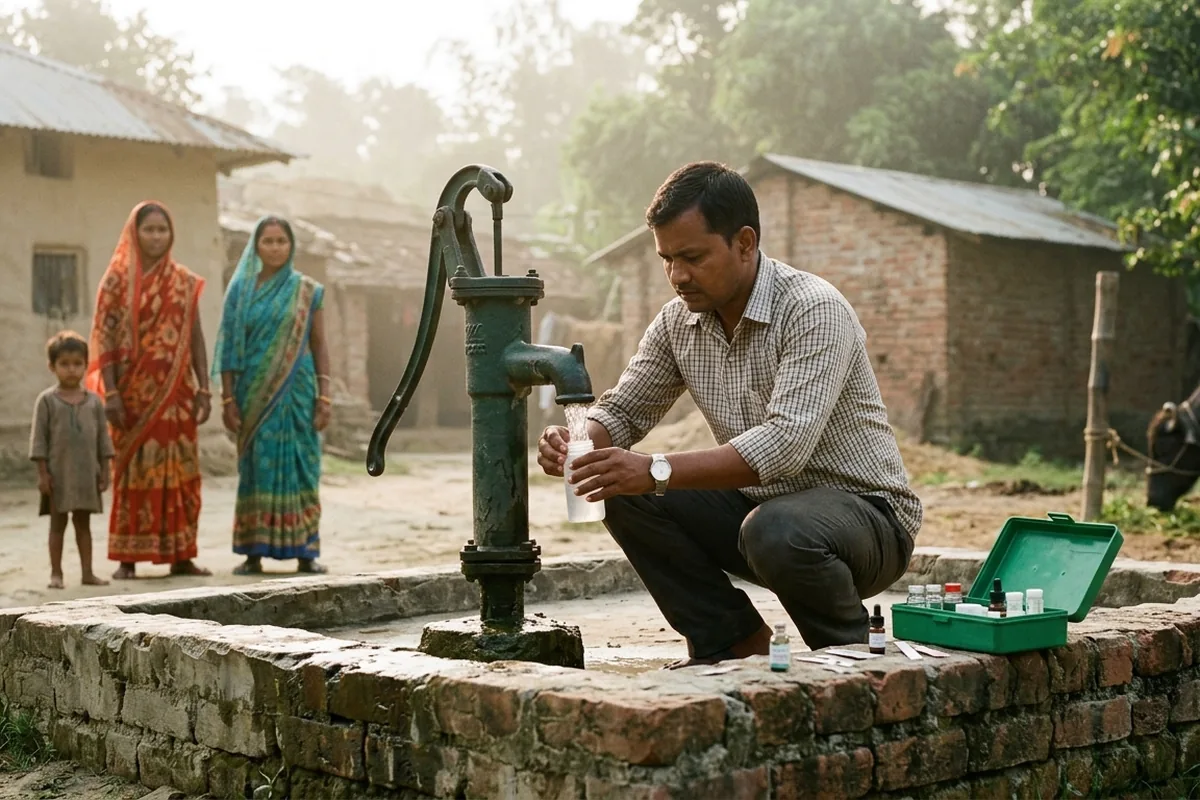
A field arsenic kit gives a colour band, not a number, and it is useful for triage across many wells in a day. A laboratory panel gives the actual figures. Nepal's national drinking water quality standard sets the numbers a result is judged against:
| Parameter | Nepal standard | Why it matters |
|---|---|---|
| Arsenic | 0.05 mg/l (50 ppb) | Invisible; long-term exposure causes skin lesions and cancers. WHO's guideline is stricter, at 0.01 mg/l |
| Iron | 0.3 mg/l | Not directly dangerous at common levels, but the taste and orange staining make families abandon a safe well |
| Manganese | 0.2 mg/l | Common in Terai groundwater; black staining, neurological concern at high doses |
| Ammonia | 1.5 mg/l | Points to organic or sewage contamination near the well |
| Turbidity | 5 NTU | Cloudy water shields bacteria from chlorination |
| E. coli | 0 per 100 ml | Direct evidence of faecal contamination |
Those values are the published National Drinking Water Quality Standards. A full-panel result has to come from an accredited laboratory — ENPHO's lab, for example, is accredited under NEPLAS criteria based on ISO 17025 by the Nepal Bureau of Standards and Metrology, and offers a package matched to the national standard.
On cost, be suspicious of any organisation — including this one — that quotes you a flat per-well price without telling you which parameters are in it. A single-parameter field screen and a nineteen-parameter accredited panel differ by more than an order of magnitude, and the real budget line in a rural round is usually transport and the second visit, not the reagents. Ask your ward office or a NEPLAS-accredited laboratory for the current rate in writing before you accept anyone's figure.
Why arsenic and iron change the plan
These two contaminants pull a project in opposite directions, and handling both is most of the skill in the work.
Arsenic is dangerous and invisible, so it must be communicated carefully. Boiling does not remove it; boiling reduces the volume of water and concentrates what is left, which is why a household told only "boil your water" can end up worse off. We have written up the detail of that separately in our guide to arsenic in tube well water and how testing works in Dhanusha.
Iron is the opposite: usually harmless at the levels commonly found, but visible, metallic-tasting and staining. Families judge water by what they can see. A well that passes on arsenic and bacteria but runs rust-coloured will be abandoned for a prettier well nobody has tested. So an iron result is not a footnote — it decides whether the safe well actually gets used.
What happens to a well that fails
A failed result is not an announcement. It is a sequence:
- Confirm it. A field kit result above the limit is re-run through a laboratory sample before anyone is told their well is unsafe.
- Mark it, and say what it can still be used for. Water unfit for drinking and cooking is often still fine for washing and irrigation. Painting a spout red without explaining that pushes families to a distant, untested source.
- Name the nearest tested alternative. "Stop drinking this" is only useful with "start drinking that" attached, and the alternative has to have its own result on paper.
- Refer it up. Bacterial failures often trace to a cracked platform or a latrine too close, and are repairable. Arsenic is not repairable at the household level; that is a case for the ward and the Water Supply and Sanitation Division Office, and for a household health referral to the local health post if anyone shows skin changes.
- Re-test after the monsoon. Bacterial counts in shallow wells move with the water table. One dry-season pass is not a verdict.
What a non-profit organization in Nepal can and cannot do here
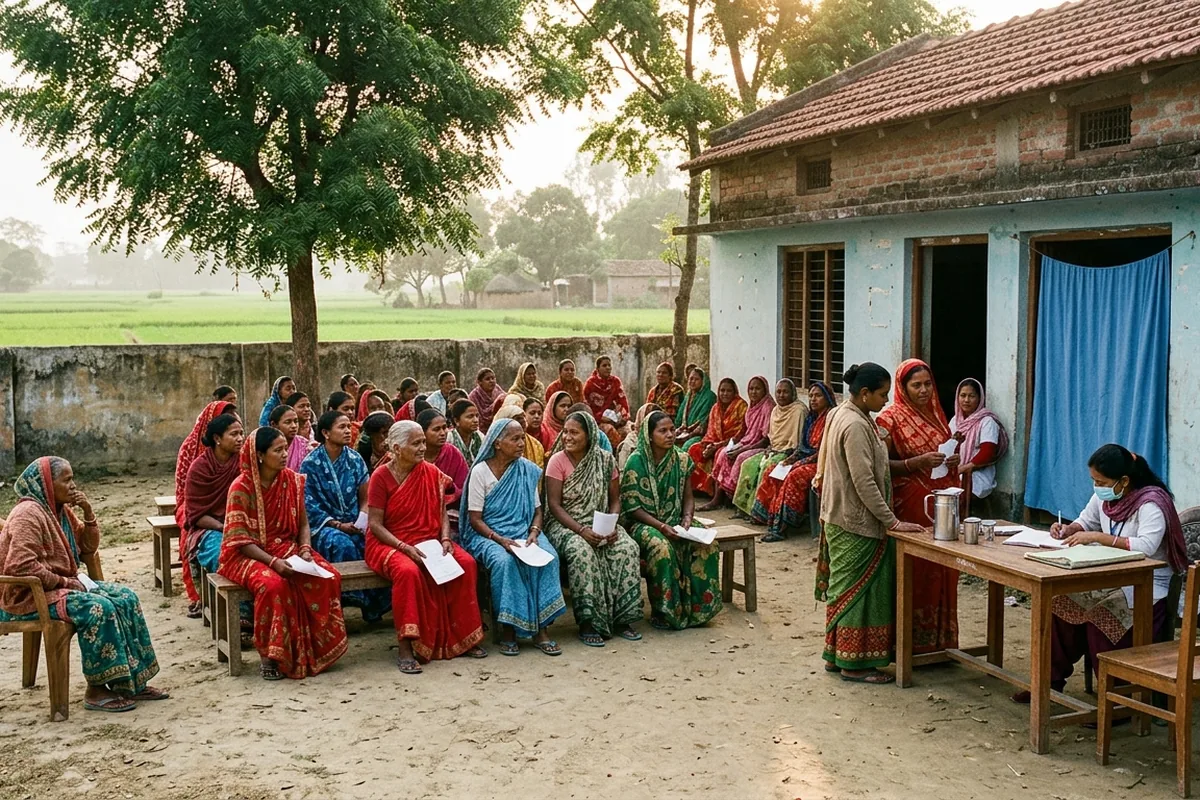
A local organisation can test, explain results in Maithili and Nepali, help form and train a users' committee, cover a platform repair, and put results in front of the ward office. It cannot build a municipal piped scheme, cannot certify water safe without a laboratory, and cannot treat arsenicosis — that belongs to the health system. Saying so plainly is part of the job. The broader set of work we do sits on our clean and safe drinking water programme page, alongside the other causes this charity in Nepal runs.
The follow-up round, not the ribbon-cutting
Here is the number that should decide who you trust with a water project: roughly 75 percent of Nepal's water supply infrastructure needs major or minor repairs. The failure is almost never the drilling. It is that users' committees struggle to collect enough in tariffs, have no technical capacity for repairs, and end up with no accountability to anyone.
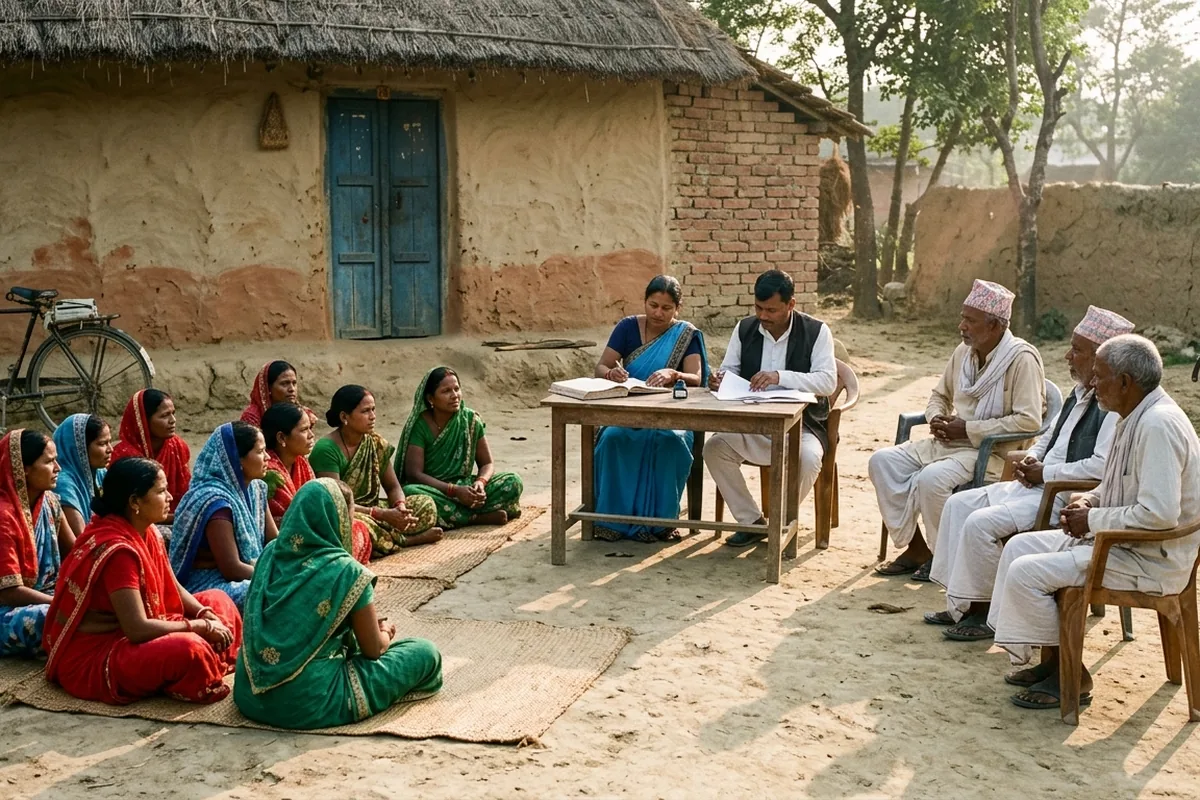
So the handover has to be real. That means a committee with women genuinely in decision-making roles and not just on the attendance sheet — research on WASH in Nepal is blunt that physical presence in meetings often masks exclusion. It means one named caretaker in the tole who has actually been shown how to change a washer and re-seat a platform. It means a repair fund, however small, collected before the first breakdown rather than after. And it means a re-test date agreed in writing while everyone is still standing at the well.
An organisation that publishes the second-year result alongside the first-year photograph is telling you something. One that only ever publishes the photograph is telling you something too. Our own earlier account of this work, clean drinking water reaching rural Dhanusha, is written to be checked against.
Questions we get asked
Is hand pump water in Dhanusha safe to drink?
Some of it is and some of it is not, and there is no way to tell by looking. Clear, cold, good-tasting water can carry arsenic; cloudy water may be only turbid. The only answer is a test result for that specific well.
Does boiling make arsenic water safe?
No. Boiling kills bacteria but concentrates arsenic as water evaporates. For arsenic the answer is a different source or proper treatment, not heat.
Who pays to repair the tube well after the NGO leaves?
The users' committee, from the fund it collects, with the ward office for anything larger. Under the Constitution local water supply is the local government's responsibility, so the ward is the right door to knock on — not the organisation that installed it three years earlier.
Can my ward or school ask for a testing round?
Yes. A written request from the ward office, school management committee or a tole committee, naming roughly how many wells and households are involved, is enough to start the conversation.
How do I check the organisation is genuine before working with it?
Ask for the registration certificate from the District Administration Office, the latest renewal, and the most recent audit report. Any registered organisation should hand those over without hesitation.
If your ward, school or tole in Dhanusha wants its tube wells tested, or you want to see a testing round before you support one, write to us or visit the office in Ganeshman Charnath. You can also read more about our non-profit organization in Nepal and how we are registered before you get in touch.
Leave a comment
Your email address will not be published. Required fields are marked *