Arsenic in Tube Well Water: Testing Wells in Dhanusha
You cannot see, smell or taste arsenic, and boiling makes it worse. Here is Nepal's legal limit, what blanket testing found across the Terai, how a household in Dhanusha gets its tube well tested, and what to do if the number comes back high.
In this article (7)
- What testing across the Terai has actually found
- Why one hand pump can be contaminated and the next one clean
- What long-term exposure does to the body
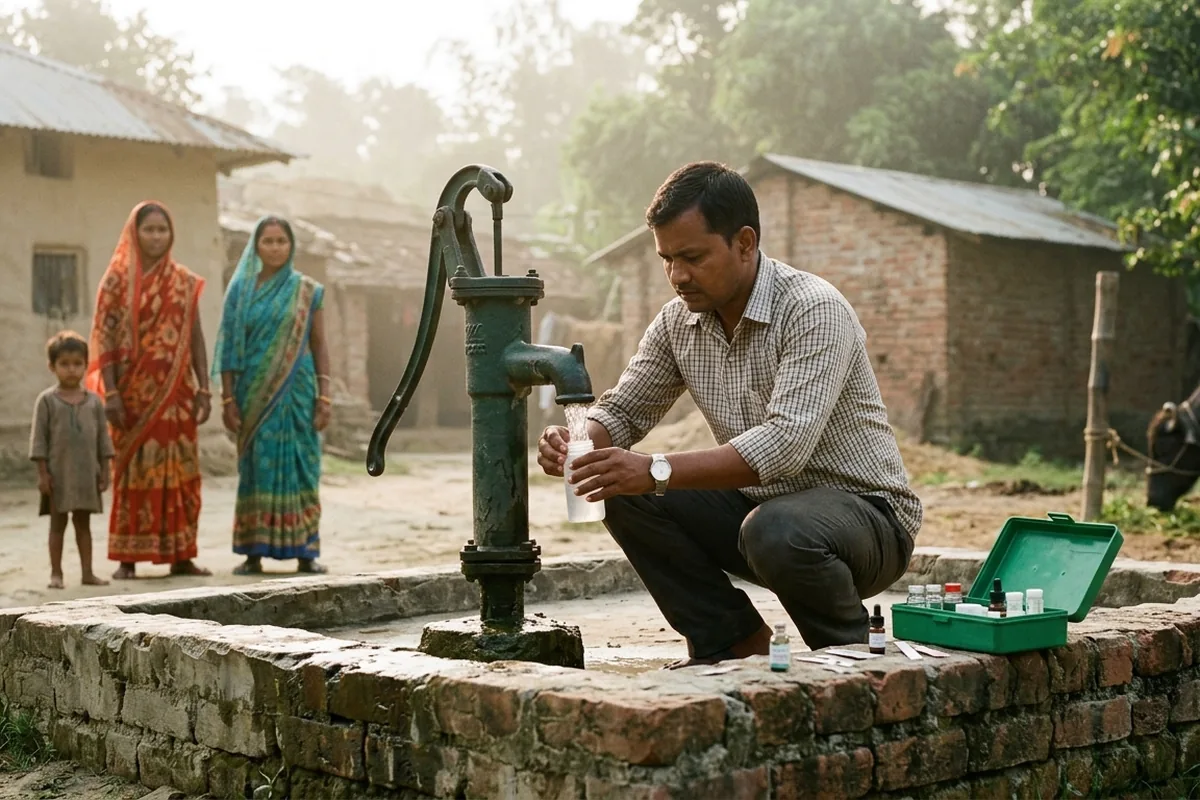
- Tube well water testing in Nepal: how a Dhanusha household actually gets it done
- If the result is above the limit
- Frequently asked questions
- If you want your ward's wells checked
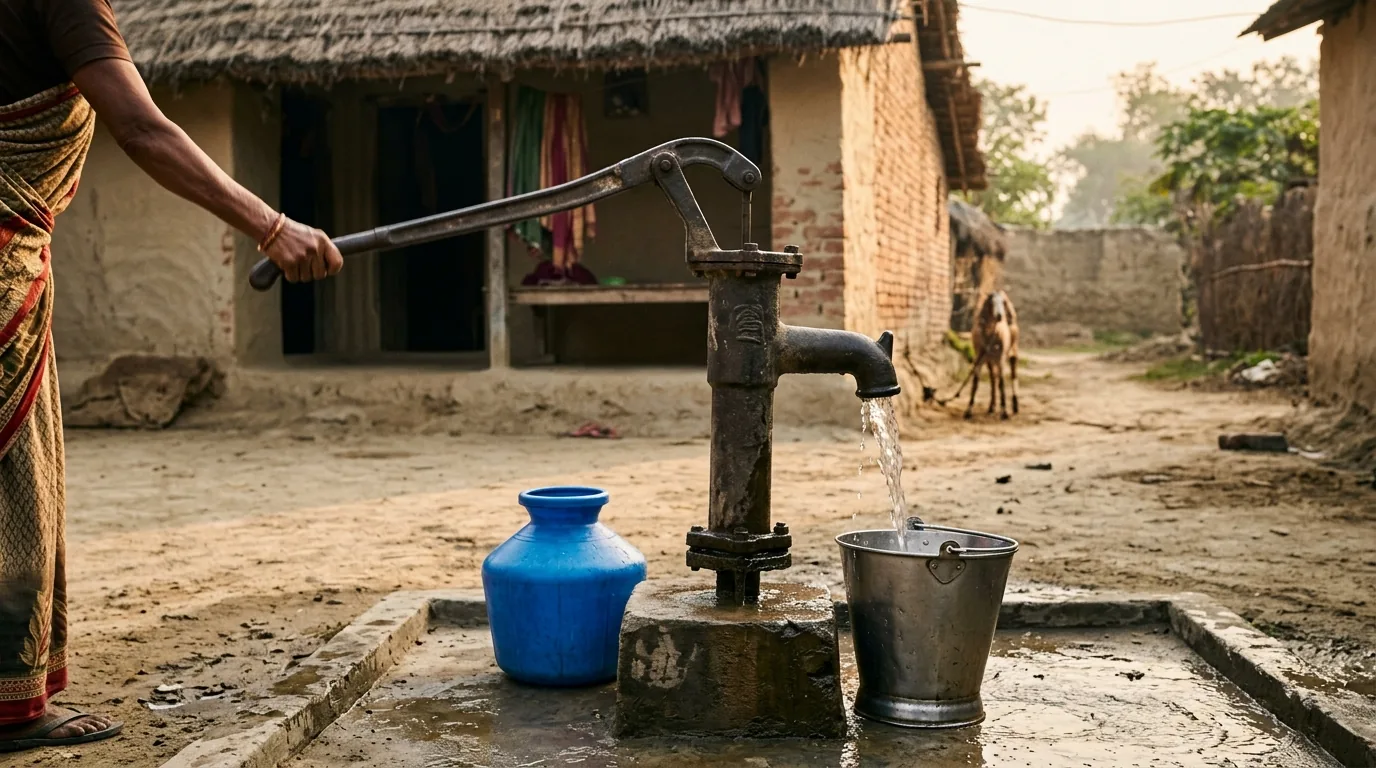
If your family drinks from a hand tube well in the Terai, the only honest answer to "is our water safe?" is: have it tested. Arsenic in tube well water is colourless, tasteless and odourless — you cannot judge it from how clear the water runs, and you cannot boil it out. Nepal's National Drinking Water Quality Standards set the maximum at 0.05 mg/L, which is 50 micrograms per litre (µg/L). The World Health Organization's health-based guideline is five times stricter, at 10 µg/L. Dhanusha is one of the Terai districts where testing has turned up wells in both bands — between 10 and 50, and above 50. This guide covers what a test involves, who does it, and what a household can realistically do if the number comes back high.
What testing across the Terai has actually found
Nepal did not guess at this. Between 2005 and 2008, a blanket testing programme covered 20 Terai districts, well by well. A national review of that work reports 737,009 groundwater samples analysed across 25 districts, with 89.8% below 10 µg/L, 7.9% between 10 and 50 µg/L, and 2.3% above the national limit of 50 µg/L (Thakur et al., Water 2011).
Two things follow from those numbers, and both matter for a household in Ganeshman Charnath.
- Most wells in the Terai are fine. Nine in ten samples were below even the strict WHO guideline. Arsenic is not a reason to abandon tube wells.
- The risk is concentrated and local. Nawalparasi in the west is the worst-affected district, where close to 12% of tube wells exceed 50 µg/L. Elsewhere the share is far lower — but "far lower" is no comfort if yours is one of them. The district average tells you nothing about your own hand pump.
Across the country, an estimated 2.7 million people — roughly a tenth of the population — were drawing water above the WHO guideline as of 2011 estimates.
Why one hand pump can be contaminated and the next one clean
The arsenic in Terai groundwater is geogenic. It is not dumped by a factory; it is released from minerals in the sediment the Himalaya has been washing down for millennia. That sediment is not laid down evenly, which is why arsenic levels can differ sharply between two wells in the same village.
Depth helps, but it does not decide the matter. Concentrations generally fall in deeper wells, and in studied areas low levels have been found at 40–50 m. Yet heavily contaminated water above 400 µg/L has also been recorded at specific depth ranges. A new well being deeper than the old one is a reasonable bet, not a guarantee — it still needs a test after drilling.
The practical consequence: your neighbour's result is not your result. If a well was painted or tagged during an earlier testing round, that mark belongs to that well, on that day, at that depth.
What long-term exposure does to the body
Arsenic poisoning from drinking water is slow. According to the WHO, the earliest visible signs — pigmentation changes, skin lesions, and hard patches on the palms and soles — usually take a minimum of five years of exposure to appear. Longer exposure is linked to cancers of the skin, bladder and lung, and to cardiovascular disease and diabetes. Exposure in the womb and in early childhood has been linked to increased mortality in young adults.
A study in Nawalparasi communities, where average tube well arsenic was extremely high, found arsenicosis in 15% of those examined, and found it more often in people with lower body mass index at similar exposure levels (Maharjan et al.). Poor nutrition and arsenic exposure compound each other.
One caution worth stating plainly: dark patches or thickened skin on palms and soles have many ordinary causes, and skin changes alone do not diagnose arsenic poisoning. If someone in the household has these signs and drinks from an untested well, take them to the health post and get the well tested. Do not diagnose it at home either way.
Tube well water testing in Nepal: how a Dhanusha household actually gets it done
- Check the well itself first. Look for an old paint mark or tag from a previous testing round. If there is one, treat it as a starting point only — those rounds were years ago, and if the well has since been deepened, re-bored or re-sited, the mark no longer describes the water you are drinking.
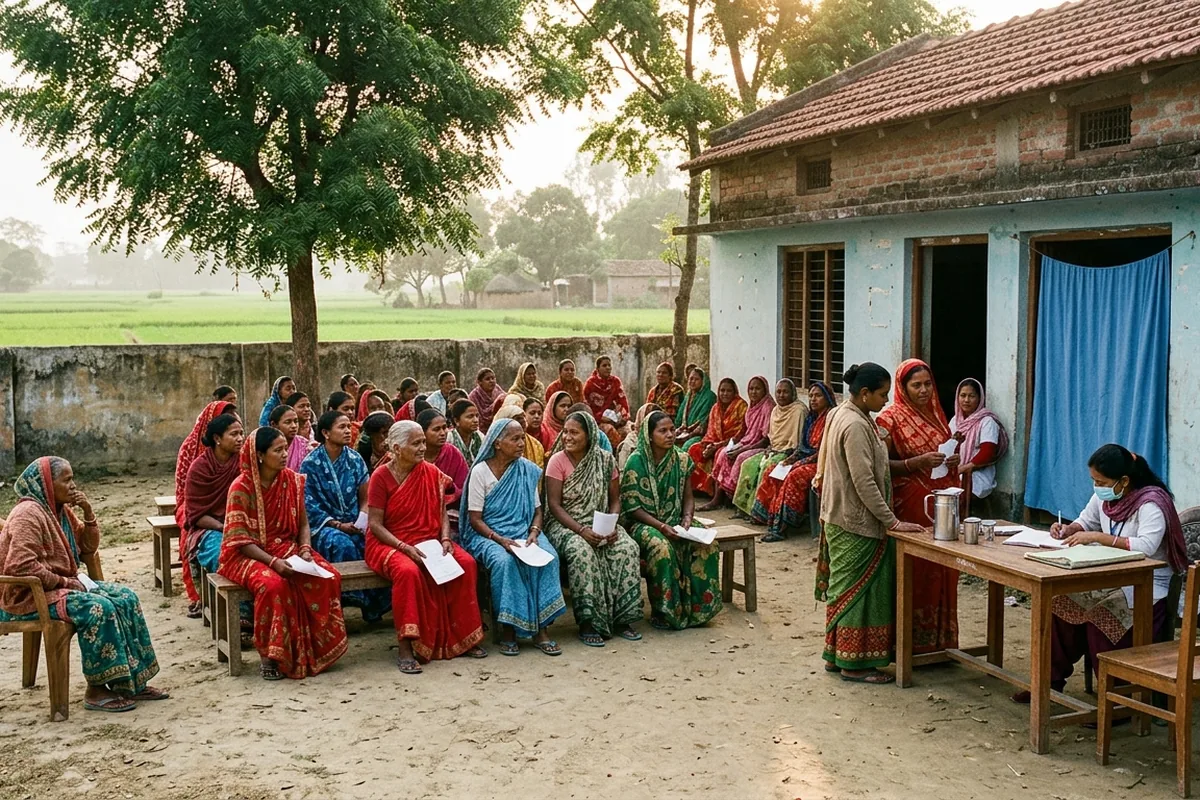
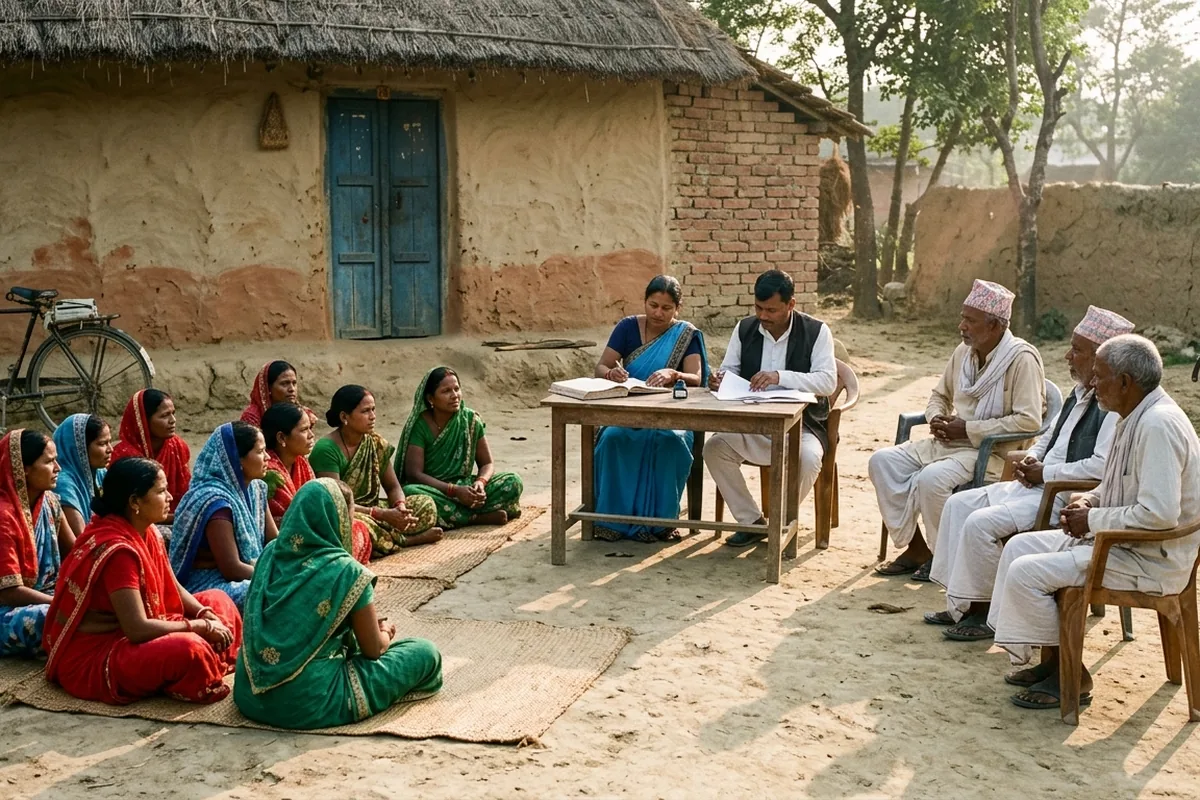
- Go to your ward office and the municipality. Water-quality monitoring sits with local government, and wards are usually the fastest route into a testing round or a campaign when one is running in your area.
- Contact the Water Supply and Sewerage Management Office, Janakpur. It is the federal office covering Dhanusha along with Sindhuli, Siraha, Saptari and Mahottari, and it is listed with the phone number 041-590210 on the Department of Water Supply and Sewerage Management website. Ask whether your ward has been covered and how a single household sample is submitted.
- Use an accredited laboratory for a number you can act on. Field test kits give a quick colour band at the well head, which is enough to sort obviously safe from obviously unsafe. A laboratory gives you a figure in µg/L. If a field result lands near 50 — or anywhere above 10 — get the laboratory number before spending money on a solution.
- Test for more than arsenic. Terai groundwater commonly carries iron, manganese and bacterial contamination too. Nepal's standard also sets limits for iron (0.3 mg/L), manganese (0.2 mg/L), nitrate (50 mg/L) and E. coli (zero per 100 ml). Asking for a small panel rather than arsenic alone usually costs little more and tells you far more.
Charges differ between laboratories and change over time, and free testing comes and goes with whichever programme is active in the district, so ask the division office or the lab for current rates rather than relying on a figure you read online.
If the result is above the limit
| Option | What it involves | What to watch |
|---|---|---|
| Switch to a tested source | Draw drinking and cooking water from a nearby well or piped scheme that has tested low | Needs to be close enough that the household actually uses it every day, in every season |
| Deepen or re-drill | A new or deeper bore, where local geology allows | Depth reduces risk but does not remove it — test the new well before anyone drinks from it |
| Household treatment | An arsenic biosand filter of the Kanchan type, or reverse osmosis | Performance drops as the iron media ages; the treated water must be retested, not assumed |
A two-year evaluation of over a thousand Kanchan arsenic filters in rural Nepali villages found they typically removed 85–90% of arsenic along with most iron and coliforms (Ngai et al.). That is a genuinely useful technology, and also a reason to retest: 85–90% removal from a very high starting figure can still leave water above the limit.
Be equally clear about what does not remove arsenic: boiling (which concentrates it as water evaporates), chlorine solutions such as Piyush, straining through cloth, and activated carbon or candle filters on their own. Those measures address bacteria and turbidity, which are real problems in their own right — they simply do nothing about this one.
Frequently asked questions
Does boiling water remove arsenic?
No. Boiling kills bacteria but leaves the arsenic behind, and because some water evaporates, the concentration in what remains goes slightly up rather than down.
Can I tell by looking at or tasting the water?
No. Arsenic has no colour, taste or smell at these levels. Water that runs clear and tastes fine can be over the limit, and water that stains clothes orange with iron can be perfectly free of arsenic.
Is deep tube well water automatically safe?
No. Deeper wells are lower-risk on average, but high concentrations have been measured at particular depths. Any new bore should be tested before the household switches to it.
My well was tested years ago and passed. Do I need to test again?
If the well has been deepened, re-bored, moved or repaired since, yes — you are effectively drinking from a different well. If nothing has changed, a periodic recheck is still sensible; ask the division office what interval they advise for your area.
Where do I go first in Dhanusha?
Your ward office, then the Water Supply and Sewerage Management Office in Janakpur on 041-590210. If a local organisation is running a water-quality programme in your ward, that is usually the quickest route to a result.
If you want your ward's wells checked
Shrijanshil Nepal works on safe drinking water in Ganeshman Charnath and the surrounding wards of Dhanusha, alongside our health camps and education work — you can read how that work has taken shape in clean drinking water reaching rural Dhanusha and see the rest on our projects page. If you are a ward representative, a school, or a tole committee that wants the wells in your settlement tested, get in touch with our office and tell us which ward and roughly how many hand pumps are involved. That is a far more useful message to us than a general enquiry, and it is how a testing round gets planned.