NGO Annual Report in Nepal: The Four Papers to Ask For
Ask a registered Nepali organisation for its annual report and you should get four things, not one. Here is each document, who holds it, when it falls due, and what a refusal to show it actually means.
In this article (6)
Ask a registered Nepali organisation for its NGO annual report and you should get four things, not one: the audit report for the closed fiscal year, the annual progress statement, the general assembly decision that adopted the income and expenditure, and proof that the registration was renewed at the District Administration Office. Those four are the file that every non-profit organization in Nepal has to assemble anyway, because the DAO will not renew a certificate without them. A donor, a member or a ward secretary is entitled to ask for the whole set.
Shrijanshil Nepal is registered in Ganeshman Charnath Municipality, Dhanusha, Madhesh Province, and files the same four every year. What follows is each document, who holds it, when it falls due, and what it means when an organisation will not show you one.
What an NGO annual report in Nepal actually consists of
| Document | Nepali name | Who holds it | When |
|---|---|---|---|
| Audit report | लेखापरीक्षण प्रतिवेदन | The organisation; a copy sits in the DAO renewal file | After the fiscal year closes at Ashad end |
| Annual progress statement | वार्षिक प्रगति विवरण | The organisation; copy in the DAO file | Prepared with the audit, before renewal |
| General assembly decision on income and expenditure | साधारण सभाको निर्णय | The minute book | Assembly held before renewal is applied for |
| Renewed registration certificate | नवीकरण भएको दर्ता प्रमाणपत्र | The organisation; the register is at the DAO | Annual |
| Report to the Social Welfare Council (only if affiliated) | वार्षिक प्रतिवेदन, समाज कल्याण परिषद् | The Council, Kathmandu | Within six months of the fiscal year end |
Nepal's fiscal year runs Shrawan 1 to Ashad end. FY 2082/83 closed on 16 July 2026, so an organisation asked today should be able to produce a 2082/83 audit, or say honestly where in the process it is.
1. The audit report
This is the only one of the four with a statutory basis you can quote back. Section 9 of the Associations Registration Act, 2034 says the management committee "shall have to submit each year the statements of accounts of its Association to the Local Authority, along with the report of the auditor". The same Act, at Section 2(b), says that where no other authority has been notified in the Gazette, the Local Authority is the Chief District Officer. In practice that means the audit goes to the DAO.
The auditor has to be licensed. District Administration Offices ask for the auditor's licence copy alongside the audit report itself, which is why a genuine report carries a name, a licence number and a signature rather than an unsigned spreadsheet. Three things are worth reading on it: the fiscal year it covers, whether income is broken out by source, and whether administrative cost appears as its own line instead of being folded into programme expenditure.
2. The annual progress statement
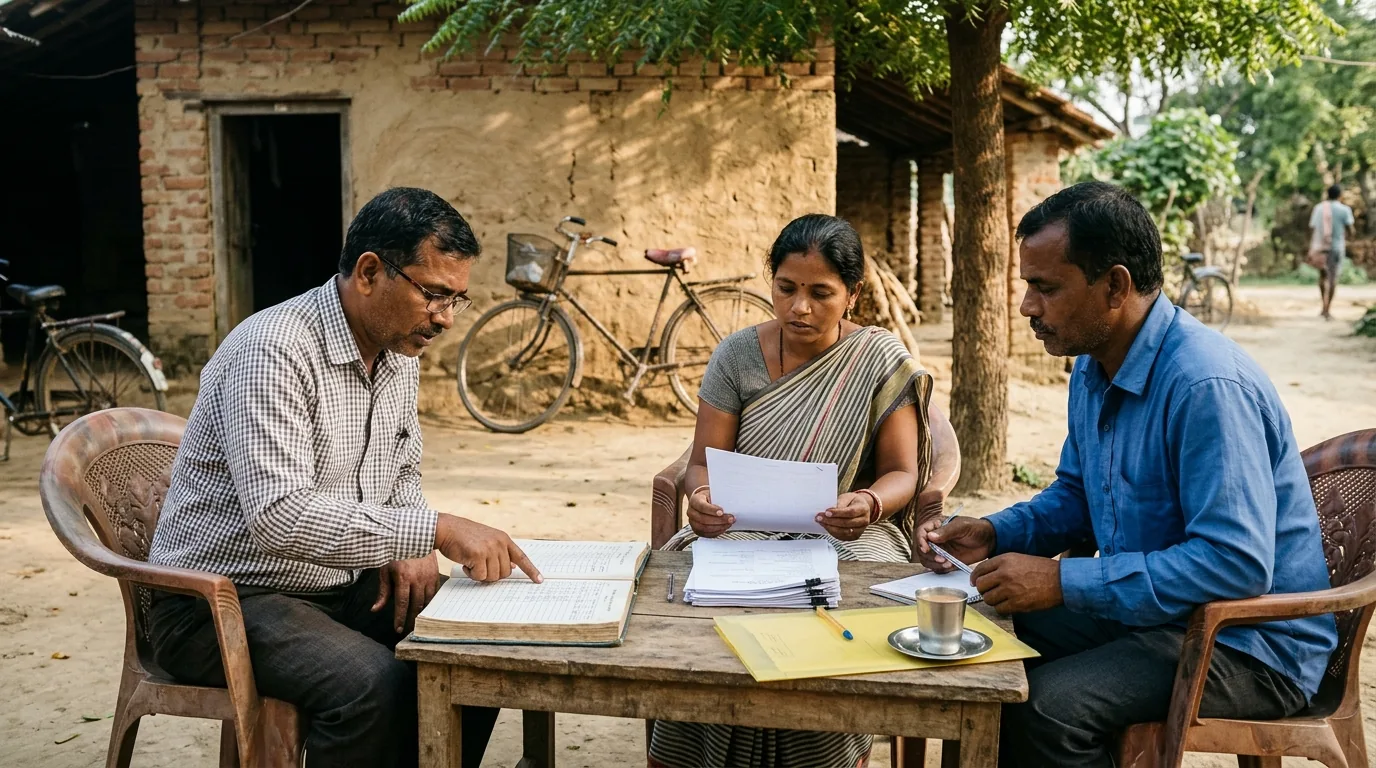
This is not a brochure. It is a plain account of what was done in the year: activities, dates, wards, how many people were reached, what was spent where. It is the document that lets you cross-check the audit. A camp described in the progress statement with no matching expenditure in the accounts, or a large expenditure line with no activity behind it, is the single most useful question a donor can ask.
3. The general assembly decision
An organisation registered under the 2034 Act is not owned by whoever founded it. Its members meet, and the general assembly both adopts the year's accounts and appoints the auditor for the coming year. DAO checklists ask for exactly that: proof that the general assembly appointed an auditor for the current fiscal year, plus the audit report for the year being closed, a certified list of committee members and the general membership roll.
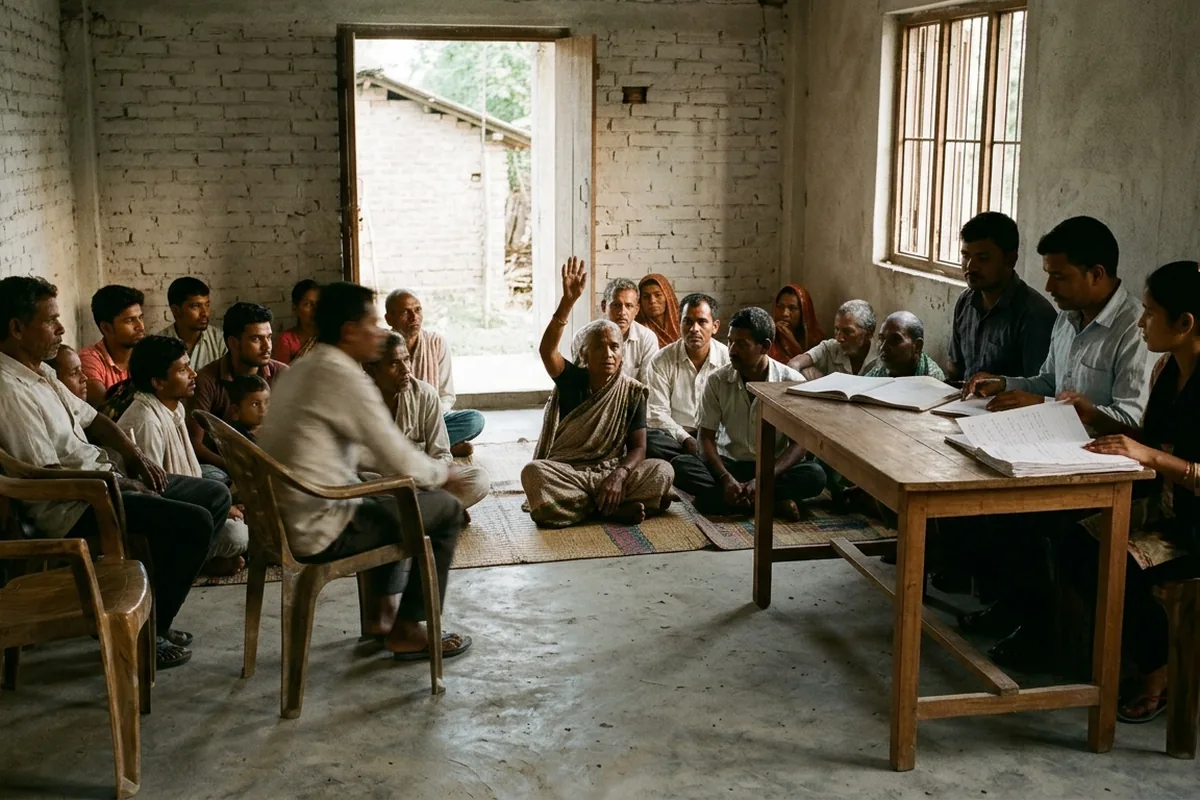
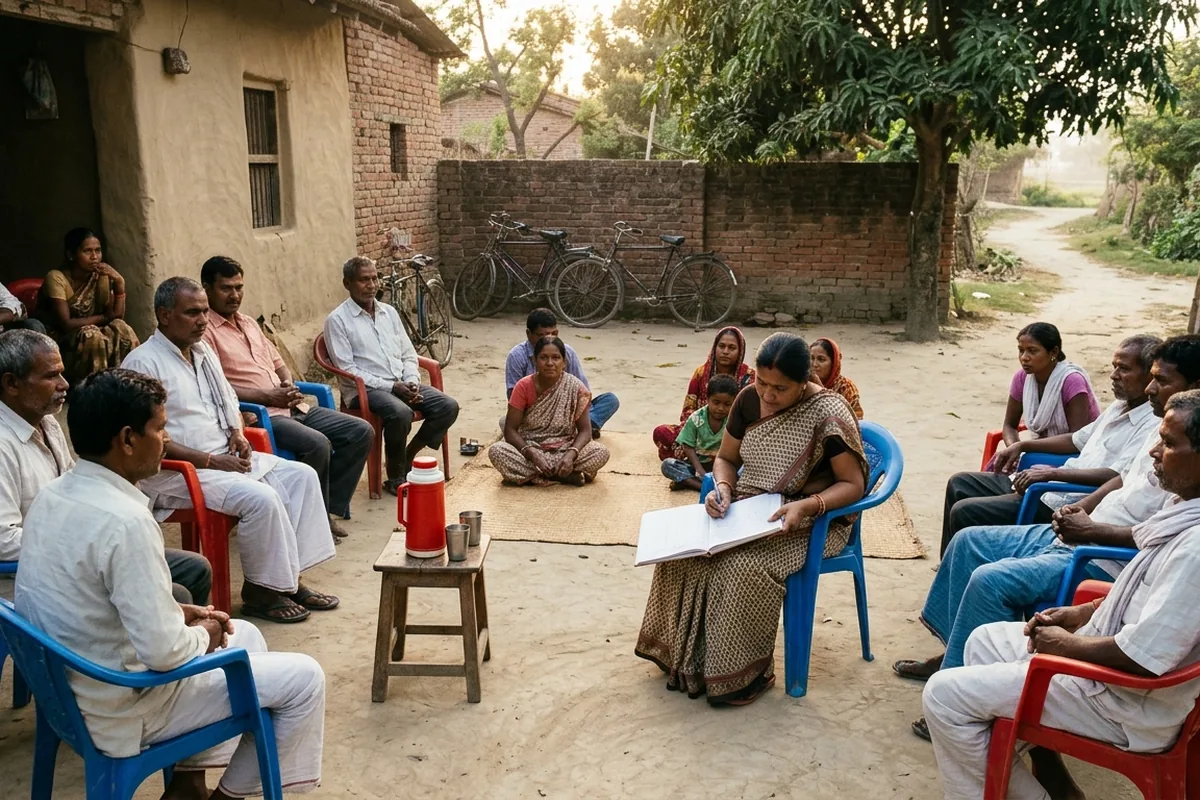
When that decision is read out in front of the community rather than filed quietly, it becomes a social audit. We have written the longer Nepali version of that process in सामाजिक परीक्षण र वार्षिक प्रतिवेदन, including who may attend and what may be asked.
4. Renewal at the District Administration Office
Renewal is annual, and the file an organisation submits is effectively the annual report in bundled form. The Panchthar DAO page lists it plainly: the application, the original registration certificate, the audit report, the auditor's licence, the annual progress statement, the executive committee decision, the general assembly decision taken before renewal, and a local-level recommendation with proof of tax clearance. The stated charge is a Rs 10 stamp and a Rs 500 renewal fee, with a late fee as prescribed in the Rules, and the office issues it the same day when the file is complete.
So an organisation that cannot show a current renewal is telling you something either about its accounts or about its general assembly, because it cannot have passed the counter without both.
The fifth document, if the money came from outside Nepal
Affiliation with the Social Welfare Council adds a separate obligation. Section 23 of the Social Welfare Act, 2049 requires that organisations affiliated with the Council "submit audit report, to the Council within the period of six months after the completion of fiscal year along with the detail descriptions of their work and activities". For FY 2082/83 that falls around mid-January 2027. Section 16 of the same Act is the one donors abroad usually have not heard of: foreign assistance needs Council permission, coordinated with the concerned ministry, before it is accepted. We set out what that means for an overseas transfer in where your donation actually goes.
Reporting at this level is also where the national picture is thinnest. Average annual INGO expenditure tracked by the Council runs to about Rs 21.25 billion, and officials quoted in that report concede that only organisations which supply details to the Ministry of Finance appear in budget information at all, so more is being spent than the figure shows. The gap is at the top of the sector, not at ward level, but it is the reason donors are right to ask small organisations for paper too.
Why a non-profit organization in Nepal can be asked for all four
Two reasons, one narrow and one broad. The narrow one is that the documents already exist and are already in a government file, so sharing them costs nothing but willingness. The broad one is the Right to Information Act, 2064, whose definition of a public body reaches non-governmental organisations operated with money obtained directly or indirectly from the Government of Nepal, a foreign government or an international organisation. An organisation inside that definition is expected to publish information periodically and to answer a written request through an information officer. A purely member-funded tole-level body may sit outside it; the Section 9 filing duty still applies to everyone.
What a refusal means
- "The audit is not finished yet." Reasonable in Bhadra or Asoj for the year that just closed. Not reasonable for a year that closed two fiscal years ago.
- "We do not share financial details publicly." The DAO already holds them, and so does the Council if the organisation is affiliated. This is a choice, not a restriction.
- No current renewal. The organisation may be dormant. Nepal's register carries a very large number of entries and only a fraction are active.
- An SWC name offered instead of a certificate. Affiliation has its own certificate with its own validity. Ask for it by name.
The sequence of checks, including the phone call that settles most of them, is in how to check if an NGO in Nepal is registered.
Our own file
Shrijanshil Nepal is a non-profit organization in Nepal registered and based in Ganeshman Charnath Municipality, Dhanusha. The work the accounts have to answer for is listed on the causes this charity in Dhanusha runs, from drinking water testing and scholarships to the free cervical cancer screening camp held with support from the Ministry of Health and Population, Madhesh Province. Our registration, committee and history are summarised on the page about our non-profit organization in Nepal.
If you want the current year's audit report, progress statement or general assembly decision, write to us through the contact page and say which year you want. You can also verify the registration independently at the District Administration Office, Dhanusha, in Janakpur, on 041-420510.
Questions people ask
Is an NGO in Nepal legally required to publish its annual report online?
No. The duty is to file with the District Administration Office and, where affiliated, with the Social Welfare Council. Publishing on a website is voluntary, which is why so few small Nepali organisations do it. Filing is mandatory, so the document exists whether or not it is online.
How do I get a copy of an NGO's audit report in Nepal?
Ask the organisation first, in writing, naming the fiscal year. If it receives government or foreign funding, it falls within the Right to Information Act's definition of a public body and a written request should be answered. Otherwise the realistic route is the DAO where it is registered.
Who is allowed to audit a Nepali NGO?
An auditor licensed in Nepal, appointed by the general assembly for that fiscal year. The DAO asks for the licence copy with the report, so an audit signed by someone without one will not get past renewal.
What happens if an organisation does not renew?
It cannot lawfully operate, open or run accounts in the normal way, or receive local-level programme support, and districts periodically run record-cleaning drives against long-unrenewed entries. A missing renewal is the fastest single signal that an organisation has stopped working.
Does every NGO in Nepal report to the Social Welfare Council?
No. Council affiliation and reporting apply to organisations affiliated with it, in practice those handling foreign assistance or Council-approved programmes. A purely locally funded organisation still has the full DAO obligation.
If you are weighing up whether to fund, partner with or volunteer for an organisation in Dhanusha, ask for the four documents before you ask anything else, and ask us for ours at the same time. An organisation that will not show its file is answering the question for you.
Leave a comment
Your email address will not be published. Required fields are marked *