
Youth Sports Event Promotes a Drug-Free Society
Nepal counted 130,424 people using drugs, about 76% of them under 30. Why a regular match does more than a slogan, what families can watch for, and where to get help.
In this article (5)
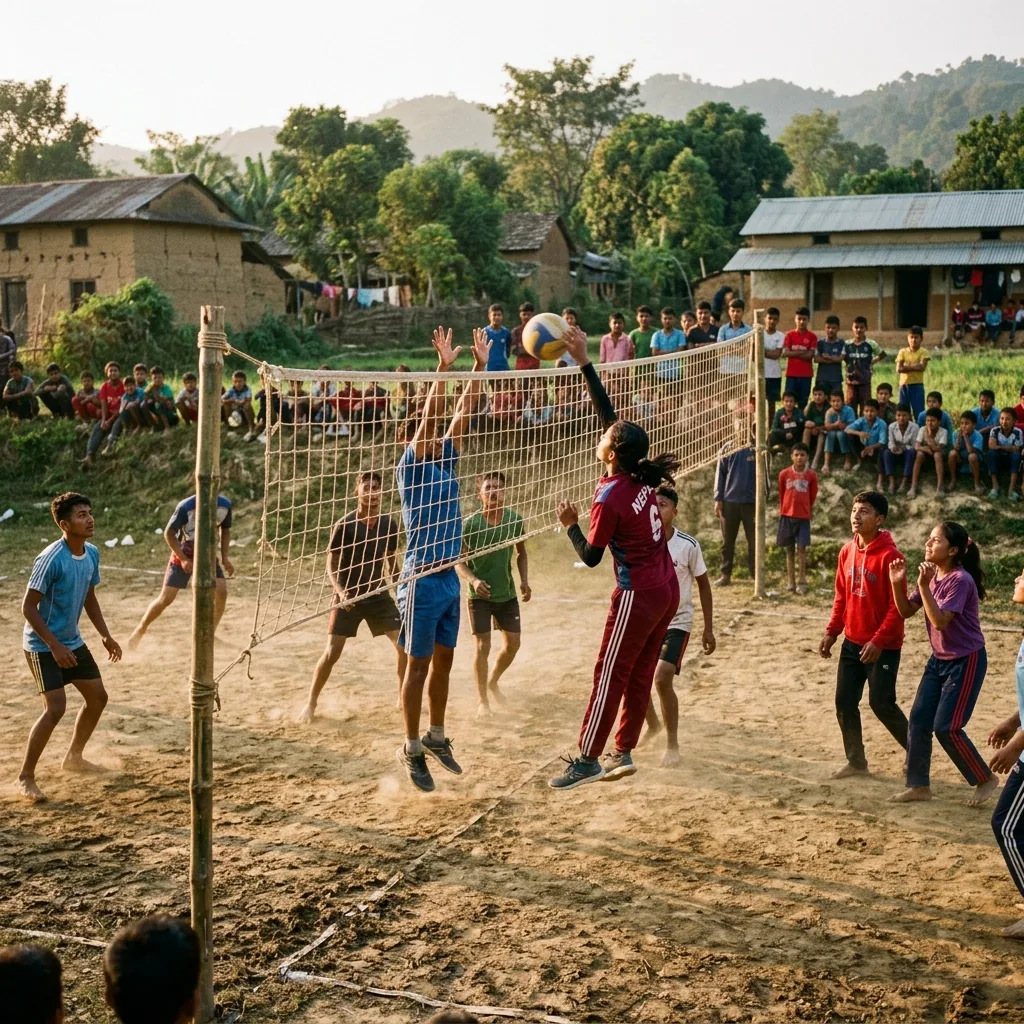
Shrijanshil Nepal hosted a community sports event to engage young people in healthy, positive activity and to carry the message of a drug-free society. Behind that simple idea is a problem with real numbers attached, and young men in districts like ours are squarely in its path.
Drug abuse among youth in Nepal: the scale of it
The Home Ministry's Nepal Drug Users Survey 2076 counted 130,424 people using drugs nationally — roughly three times the figure recorded in 2008. The age breakdown is the part that should concern any parent or teacher: about 76% of those counted were under 30, and the largest groups were in their early and mid-twenties.
Those are national figures, not district ones, and surveys undercount. But the direction is not in doubt, and it matches what ward members and school teachers in Dhanusha describe: it starts younger than families expect, and usually with something legal or cheap before anything else.
Why a volleyball match is a drug programme
Lecturing teenagers about drugs has a poor record. What does work is duller and harder: filling the hours when nothing is happening, and making sure a young person is known by adults who are not their parents.
An unemployed nineteen-year-old in a village with no ground, no club and no work has a great deal of empty time and a peer group that fills it. A regular match gives three things at once — a reason to be somewhere at a fixed time, a set of older players who notice when someone stops turning up, and a standing in the tole that is worth protecting. None of that shows up in a slogan, and all of it does more than the slogan does.
What families and teachers can watch for
- A sharp change in the friend group, particularly one that avoids the house
- Money or small items going missing, or unexplained cash
- Dropping out of things they used to want to do — sport, study, work
- Sleeping through the day and awake all night, with weight loss
- New secrecy about a bag, a room or a phone
Any one of these alone is ordinary adolescence. Several together, over weeks, are worth a conversation — one that starts with a question rather than an accusation, because a young person who expects to be beaten or thrown out will simply lie better next time.
Where to get help
Start at your local health post: health workers can advise and refer, and the referral route runs to treatment centres that are registered and supervised rather than to whatever facility is nearest. Before admitting anyone to a rehabilitation centre, ask whether it is registered, ask to see what the daily programme actually consists of, and ask whether families can visit. A centre that will not answer those questions is not one to hand a family member to.
Possession and supply are criminal offences under Nepal's narcotic drugs law, which is exactly why families hide the problem until it is severe. Bringing it to a health worker first, rather than to the police, is usually the route that gets a young person treated.
What we are trying to build
Sport is one part of it. The rest is work and purpose — which is why youth activity sits alongside skill training and education support in what we do, rather than standing on its own as an awareness campaign. A young person with a trade and an income is dealing with a different set of choices.
If your tole or school wants to run a tournament, or you have young people who need something to turn up for, get in touch. A ground, a date and a handful of adults willing to be there every week is enough to start with.
This article is general information, not medical advice. If someone is dependent on a substance, speak to a qualified health worker or your nearest health facility.
Leave a comment
Your email address will not be published. Required fields are marked *