
Free Health Camp Serves Our Community
What a free health camp in Ganeshman Charnath actually provides, what it cannot do, what to bring, and how a ward or school can request the next one - plus the health services you are entitled to year-round.
In this article (4)
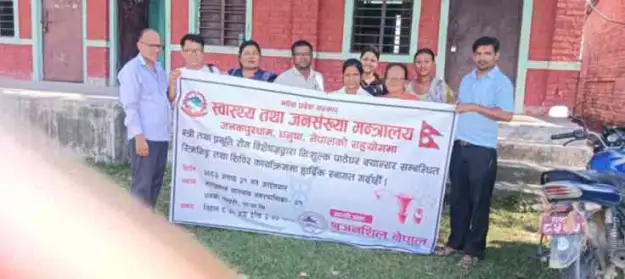
Shrijanshil Nepal organised a free health camp in Ganeshman Charnath Municipality, offering check-ups, basic treatment and health-awareness sessions to residents. No fee, no ticket, no referral letter — that is what "free camp" means in practice, and it is worth explaining what such a camp does and does not do before the next one.
What a free health camp in Dhanusha provides
The exact services depend on which doctors and equipment reach the venue, but a one-day camp in this district usually covers:
- A consultation with a doctor for everyday complaints — fever, cough, stomach trouble, skin problems, joint pain
- Blood pressure measurement, especially for anyone over 30
- Blood sugar testing where equipment is available
- Women's health consultation when a gynaecologist is part of the team
- A few days' supply of free medicine for what is diagnosed
- A referral slip for anything that needs a hospital
What a camp cannot do is equally important: no X-ray, no surgery, and no ongoing treatment of a chronic condition. If the doctor writes a referral, that slip is the most valuable thing you take home — keep it.
What you are entitled to when there is no camp
A camp happens once or twice a year. Basic health care is a year-round right. The Public Health Service Act 2075 implements the constitutional guarantee of free basic and emergency health services, and in practice that means:
- Free essential medicines. The government supplies a list of essential drugs free of charge at health posts, primary health care centres and basic hospitals.
- NCD screening. Blood pressure is measured at health posts and blood glucose at primary health care centres under the PEN programme, which has been scaled across the country's primary care system.
- Cervical cancer screening. National guidelines provide free VIA screening for women aged 30 to 60 every five years at local health facilities — see the national screening strategy. We ran a specialist-led screening camp at Dhanki Pokhari for exactly this reason.
- Health insurance. A family of up to five members contributes Rs 3,500 a year for up to Rs 100,000 of treatment. A camp is not a substitute for this.
What to bring to the next camp
- Any identity document, for the registration form
- Your health insurance card, if the family has one
- Old reports and prescriptions
- The actual strip or box of any medicine you are taking — bring the packet, not the name from memory
- The mother-and-child card, if you are pregnant
Arrive early. Pregnant women, new mothers, small children, elderly people and people with disabilities are usually seen first.
Getting a camp to your ward or school
Camps do not appear on their own — somebody asks for one. A tole committee, a school, a mothers' group or a ward member can start the process:
- Put the request to the ward office in writing, with the settlement, the expected number of people and why it is needed. Wards can budget for health camps in their annual plan.
- Involve the local health post from the start, so anyone diagnosed at the camp can be followed up afterwards through the regular system.
- Arrange the venue: two or three rooms including a private one for women's examinations, drinking water, light, chairs and shade for the queue.
- Announce it at least a week ahead — tole by tole, through the school, and over a loudspeaker.
Upcoming camps are listed on our events page. If your ward or school wants to be considered for the next one, write to us with the location, a workable date and the number of people you expect.
This article is general information, not medical advice. For any diagnosis or treatment decision, consult a qualified health worker or your nearest health facility.
Leave a comment
Your email address will not be published. Required fields are marked *