
Drug Abuse Among Youth in Madhesh Province Starts Early
Nationally, 7.4 percent of Nepal's drug users are under 20. In Madhesh the figure is 14.8 percent. That one gap decides what prevention here has to look like — and what a local organisation can honestly promise.
In this article (5)
Drug abuse among youth in Madhesh Province begins earlier than in the rest of the country. The government's Nepal Drug Users Survey 2076 found that 14.8 percent of drug users in Madhesh were under the age of 20, against 7.4 percent nationally. Shrijanshil Nepal is a non-profit organization in Nepal registered in Ganeshman Charnath Municipality, Dhanusha, and that single figure sets the terms for prevention work here. Whatever a school, a ward office or a local organisation plans, it has to reach children a few years earlier than a programme designed for Kathmandu.
What the national survey actually says
The 2076 survey counted 130,424 drug users in Nepal, 93.3 percent of them male, and 76.9 percent under the age of 30. The trend line is the part most coverage skips: 43,309 users in 2063, 91,534 in 2069, 130,424 in 2076 — an average annual growth of about 5.06 percent.
The age distribution reported by the Narcotics Control Bureau is concentrated in the twenties:
| Age group | Share of drug users, Nepal |
|---|---|
| 15–19 | 7.2% |
| 20–24 | 34.3% |
| 25–29 | 35.2% |
| 30–34 | 12.6% |
One correction worth making, because it circulates locally as fact: Madhesh does not have the largest number of drug users in Nepal. Bagmati does, with 46,480 recorded in the same survey. Madhesh's distinction is not volume, it is age. Double the national share of users here are teenagers. A province can have fewer users and still have the harder prevention problem.
Enforcement figures tell you about policing, not prevalence, but they are the only district-level numbers available. Between 17 July 2022 and 7 February 2023 the Madhesh Provincial Police Office arrested 625 people on drug-related charges across the province, 48 of them in Dhanusha — Parsa and Siraha accounted for the largest shares.
Why the age gap exists in the Terai
Nobody has run a causal study on Madhesh specifically, so what follows is the best available explanation rather than proof.
- Absent supervision. Districts in Madhesh sit at the top of Nepal's foreign employment lists. When fathers work abroad and mothers carry the full household load, adolescents spend long unsupervised afternoons. This is the point Dr Ganesh Mandal makes in the myRepublica piece cited above, and it matches what families here describe.
- Supply is close. A 2021 qualitative study in Rupandehi, another Terai district on the Indian border, found youth citing easy availability in local markets, pharmacies and near the Indo-Nepal border as a direct reason for starting. Dhanusha's border geography is no different.
- Initiation is a peer event. In the same study, first use was almost always with friends, and most participants started between 13 and 20 — some considerably younger.
- Stress with nowhere to go. Psychosocial counsellor Bina Kadari, quoted in the Onlinekhabar report, points to unemployment, family neglect and domestic disputes as the main drivers she sees in Madhesh.
Read together, these say something uncomfortable about timing. If a seventeen-year-old is using regularly, the window to reach him was at twelve or thirteen — before the afternoons emptied out, before the friend group formed around it. Awareness programmes aimed at college students in this province are arriving late.
What an NGO in Madhesh Province can actually deliver
It is worth being blunt about the limits. We are not a treatment provider. We do not run detoxification, we do not operate a rehabilitation centre, and we do not prescribe or dispense anything. A family dealing with dependence needs a doctor, a psychiatrist or a licensed treatment centre, not a community organisation.
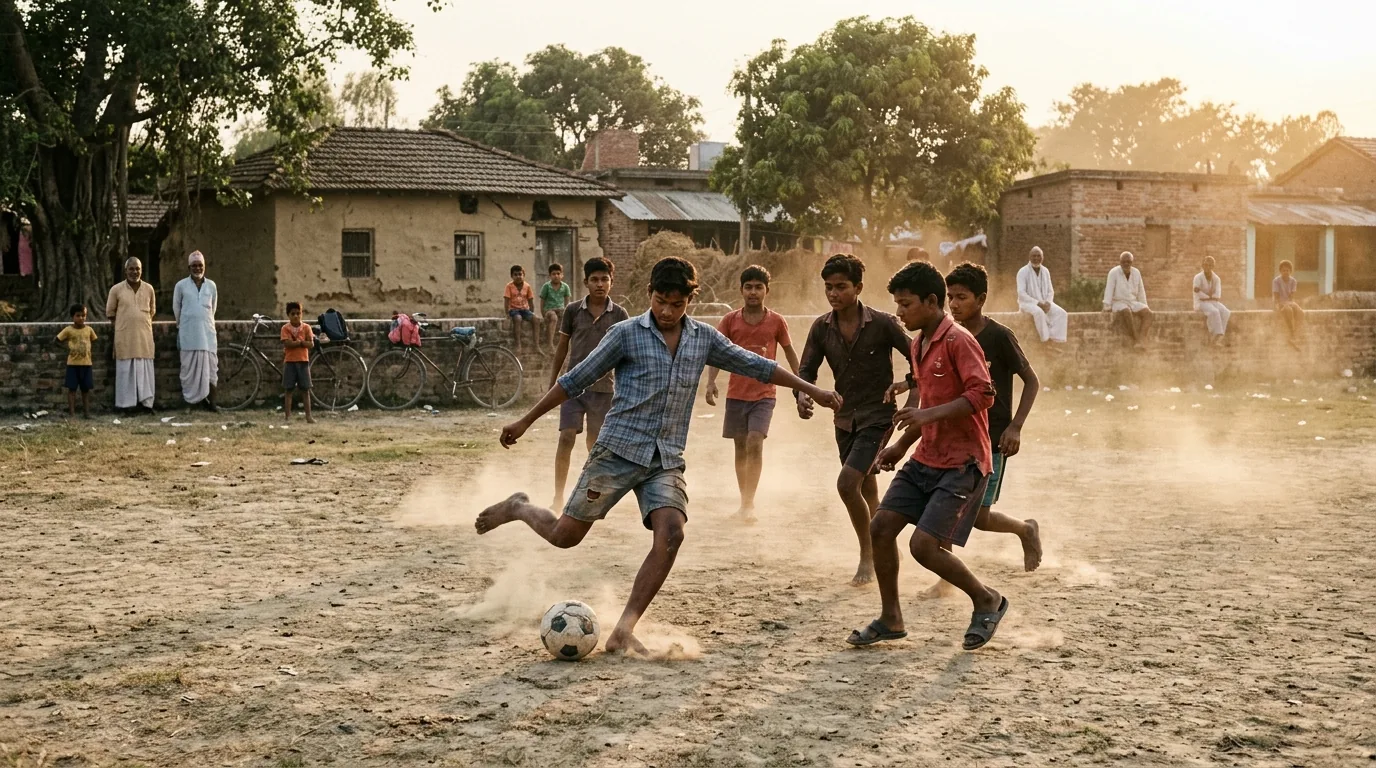
What a local body can supply is structure: supervised hours, a named adult who notices when a child stops turning up, and a reason to be somewhere at four in the afternoon. That is the thinking behind our youth sports event for a drug-free society and the Youth Rally for a Drug-Free Society that followed it.
We would rather not oversell either. The international evidence on sport as drug prevention is genuinely mixed — participation tracks with lower illicit drug use in some studies and with higher alcohol use in others, and sport on its own has never been shown to be a prevention programme. What a regular fixture does is occupy the hours that the survey data says matter, and put an adult in contact with boys and girls at the age when initiation happens. That is one modest input, not a cure, and it only counts if the match happens every week rather than once a year with a banner.
The practical test we apply to our own work: is there an attendance register, is the same adult present each time, and does someone follow up when a regular stops coming? A one-day event fails all three. These are the same standards we try to hold across the causes this non-profit runs in Ganeshman Charnath.
What families and ward offices can do now
For families, the honest advice is narrow. Sudden changes in sleep, money going missing, a child dropping out of school or withdrawing from the friends he had last year are reasons to talk to a health worker — not reasons to diagnose anything yourself. Start at the local health post or the district hospital in Janakpur and ask for a referral. Nepal's free national helpline, 1166, operates round the clock for mental health and emotional distress and is staffed by counsellors trained with WHO and TPO Nepal support.
For ward offices and school management committees, the two things within reach are enforcement of sales restrictions to minors at local shops and pharmacies, and a standing after-school activity with a named supervisor. Neither requires a budget line from the province.
Questions people ask
Which province in Nepal has the most drug users?
Bagmati, with 46,480 users recorded in the 2076 survey. Madhesh's problem is the age profile, not the headcount.
How many drug users are there in Nepal?
130,424 in the most recent national survey, up from 91,534 in 2069 and 43,309 in 2063.
At what age do young people here start using?
The Rupandehi study found most participants started between 13 and 20, with some beginning considerably earlier. The Madhesh under-20 share of 14.8 percent is consistent with that.
Does playing sport stop a young person using drugs?
Not on its own, and anyone promising otherwise is overstating the research. It fills supervised time and creates adult contact at the age initiation happens, which is a real contribution and a partial one.
Can our ward or school ask for a programme?
Yes. We work ward by ward in Ganeshman Charnath and nearby, and what we can commit to depends entirely on whether a local adult will run the sessions. You can read more about our non-profit organization in Nepal, including registration details, before you approach us.
If you live in Dhanusha and can give two hours on the same afternoon every week — supervising a match, keeping the register, calling the house when a boy stops coming — that is the specific thing this work is short of. Register as a volunteer and say which ward you can cover.
Leave a comment
Your email address will not be published. Required fields are marked *